Nigeria and South Korea forge new economic ties amid global aid decline
Nigeria and South Korea strengthen economic bonds in minerals and industrial development

Nigeria and South Korea are looking to reset their economic relationship, with a sharper focus on critical minerals and industrial development. The shift follows a recent seminar hosted by the Nigerian Institute of International Affairs alongside the Embassy of the Republic of Korea, where both parties signalled a move toward more practical, growth-oriented cooperation.
Korean Chargé d’Affaires Tak Namgung said the global aid landscape is changing rapidly. Official Development Assistance (ODA) fell by $174 billion in 2025, a 23% drop and one of the significant declines in recent years. Bilateral aid to Sub-Saharan Africa could shrink by as much as 28% as major donors scale back their commitments.
Against this backdrop, Namgung questioned the long-term viability of the traditional donor-recipient model. He argued that the current economic climate calls for partnerships built on shared knowledge, stronger institutions and mutual accountability, a shift away from dependency toward collaboration.
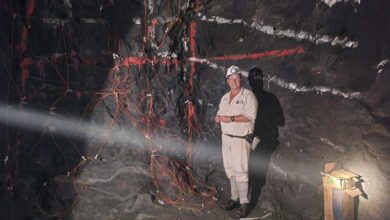
Critical minerals are emerging as a key area of alignment. South Korea imports more than 95% of its critical mineral requirements, making resource-rich countries like Nigeria increasingly important. With significant deposits of lithium, graphite and other minerals essential to electric vehicles and clean energy technologies, Nigeria is well-positioned to play a strategic role.
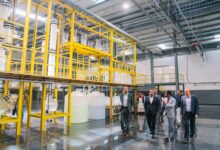
Namgung stressed that extracting resources alone will not deliver sustainable results. He pointed to the need for transparency, trust and strong institutions as the foundation for long-term industrial development.
Korea’s keen interest in Nigeria’s critical minerals is not a new development. In 2023, South Korea expressed interest in mining Nigeria’s lithium resources after the Nigerian government issued permits enabling companies to commence operations in this lucrative sector. The groundwork for this cooperation was further laid when Dr Pyeong Koo-lee, President of the Korean Institute of Geosciences and Mineral Resources (KIGAM), extended an invitation for collaboration in exploring Nigeria’s significant lithium-bearing pegmatite deposits.
As Nigeria and South Korea embark on this renewed economic journey, the emphasis on mutual growth through collaboration offers a promising outlook amid the shifting dynamics of global economic partnerships.