Digital Mining in Low-Connectivity Environments: Designing Systems That Work Where It Matters Most
Designing resilient mining systems for low-connectivity realities
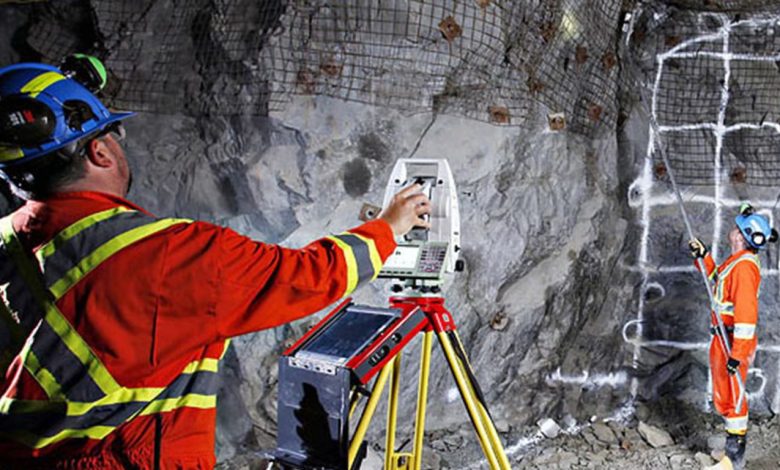
Across much of Africa’s mining landscape, operations are shaped by distance, infrastructure constraints, and environmental complexity. Connectivity is often inconsistent, and in many cases entirely absent. Yet many digital mining systems continue to be designed with the assumption of constant network access, creating a disconnect between system capability and actual operational reality.
At the centre of this challenge is data. Geological, operational, and production information is generated and collected in the field, often in remote or underground environments where connectivity cannot be guaranteed. When systems are unable to function under these conditions, data capture becomes fragmented. Information is delayed, badly reconstructed, or lost, introducing inefficiencies that extend into planning, reporting, and decision-making.
A more effective approach begins by designing systems around how mining actually works. Mineware’s Syncromine platform reflects this shift, operating as a unified mine management system that connects field activity with centralised oversight, while remaining fully functional in low-connectivity environments.
This starts at the point of data capture. Syncromine enables geological and operational information, including borehole data from both exploratory and day-to-day drilling, to be recorded directly in the field. Whether capturing details related to mineral composition, underground structures, faulting, water, or methane, the system ensures that data is entered once, accurately, and in context. Crucially, this process is not dependent on connectivity. Field teams can continue capturing and accessing information in real time, even when completely offline.
When connectivity becomes available, data synchronises seamlessly with a centralised database. This removes the need for manual consolidation and ensures that all stakeholders are working from a consistent and up-to-date dataset. The result is continuity between field and office environments, allowing information to move efficiently across the operation.
Within Syncromine, this data feeds into a broader operational framework that integrates production, planning, safety, maintenance, and financial systems into a single platform. Production can be tracked against plan in real time, enabling more responsive decision-making. Geological and survey inputs support more accurate mine design and scheduling, while safety and inspection data contribute to improved risk management.
From Data Capture to Predictive Maintenance
One of the most significant benefits of this integration is what it enables beyond the point of capture. Consistent, field-accurate equipment and operational data forms the foundation of effective predictive maintenance. When asset condition, usage patterns, and inspection outcomes are recorded reliably and in context, maintenance teams gain the visibility needed to move from reactive schedules to condition-based intervention.
Syncromine’s maintenance and asset management functions support this directly. Equipment history, inspection records, and performance data are tracked within the same platform that manages production and planning, rather than in isolated systems that require manual reconciliation. This means that when patterns indicating potential failure begin to emerge, they are visible across the operation, not buried in a disconnected spreadsheet or delayed by a connectivity gap in the field.
In environments where unplanned downtime carries significant operational and financial cost, this capability is not an enhancement. It is a core operational requirement.
Practical by Design
Importantly, this approach also addresses practical barriers to adoption. Systems that require high-end hardware or continuous connectivity can be difficult to scale across sites, particularly in cost-sensitive environments. Syncromine is designed to operate on smaller, more accessible devices, reducing infrastructure requirements and enabling broader deployment across teams.
At the same time, the platform connects operational outputs with costing and performance data, providing a clearer view of how day-to-day activities translate into financial outcomes. This level of integration enables mining operations to move from fragmented systems toward a more unified and transparent model of management, one that supports stronger alignment between technical decisions and business performance.
Building Digital Systems for the Real World
As mining continues to evolve across regions where infrastructure cannot be taken for granted, the definition of digital transformation is shifting. It is no longer enough for systems to be advanced in theory. They must be reliable in practice, functioning without dependency on ideal conditions and delivering value in the environments where mining actually takes place.
Data captured accurately in the field, synchronised reliably when connectivity allows, and integrated across maintenance, production, planning, and financial functions — this is what operational continuity looks like in practice. And in an industry where the margin between planned and unplanned is often measured in hours and cost, systems that deliver this capability regardless of location are not just preferable. They are essential.
Designing for low-connectivity environments is not a constraint on digital ambition. It is the foundation on which genuinely resilient mining operations are built.