Mantashe calls for stronger accountability after Samancor tailings facility failure
The Mineral and Petroleum Resources Minister says tailings facilities must be treated as part of mining operations as government assesses the damage caused by the Dikwena failure
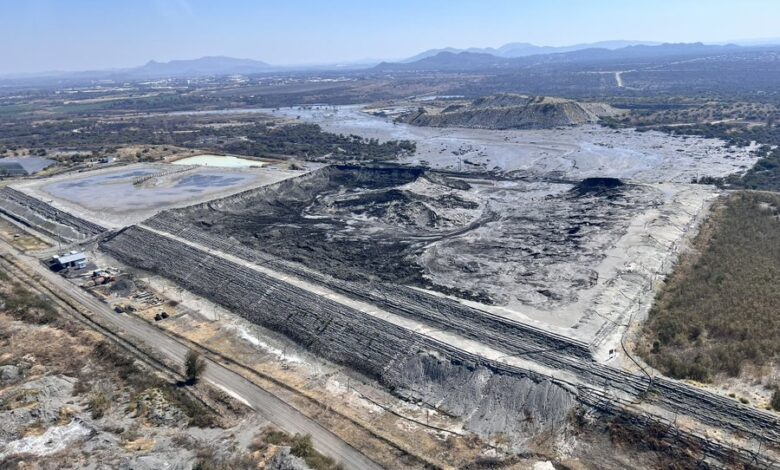
Minister of Mineral and Petroleum Resources Gwede Mantashe has called for stronger accountability in the management of mine tailings facilities following the structural failure of a sidewall at Samancor’s Dikwena Chrome Mine near Brits in the North West.
Mantashe, accompanied by Water and Sanitation Deputy Minister David Mahlobo, senior officials from both departments and specialised engineering teams, visited the mine to assess the impact of the incident, which occurred on August 13.
The team received a detailed briefing from Samancor management on the circumstances surrounding the failure and the mine’s response to the incident.
The collapse affected mine infrastructure as well as nearby railway infrastructure and Eskom power lines. The release of tailings also raised environmental concerns, prompting water-quality monitoring and assessments of potential impacts downstream.

Despite the extent of the damage, Mantashe was relieved that that no fatalities or injuries had been reported.
“We are very lucky that there is no fatality. Let us start from there. Nobody is dead; there is a disaster, but there is no death. That we must accept,” he said.
However, Mantashe stressed that the incident should not be viewed solely through the lens of water management or environmental regulation.
“But managing slime dams cannot be treated as a water issue. It is a mining issue, inherently linked to the core mining operations and structural accountability,” he said.
The joint inspection brought together the responsibilities of the two departments, with the Department of Mineral and Petroleum Resources focusing on mining safety and operational accountability, while the Department of Water and Sanitation assessed water-related and environmental risks.
The incident has also highlighted the wider consequences that can follow a failure at a tailings storage facility. Beyond the mine itself, the release disrupted infrastructure connected to electricity and rail operations and created potential risks for surrounding water resources.
Government has indicated that technical and environmental investigations will be expanded to establish the extent of the failure and determine the appropriate response.
The investigation is expected to provide a clearer picture of what caused the structural failure and whether any shortcomings in the facility’s management, monitoring or oversight contributed to the incident. Government teams are also continuing to assess environmental and water-related risks associated with the release.
While the absence of fatalities has been welcomed, the damage to infrastructure and the potential environmental consequences mean the incident remains a serious concern for South Africa’s mining sector.