Ghana to boost gold reserves through landmark geological survey agreement
Ghana signs agreement to enhance gold reserves and support artisanal mining through geological surveys
In a strategic move that underscores Africa’s commitment to expanding its mineral wealth, state agencies in Ghana have formalised an agreement with the Ghana Gold Board and the Ghana Geological Survey Authority to conduct comprehensive geological surveys in the Funsi, Atuna, and Bensere East regions. This strategic initiative is set to enhance the country’s gold reserves, increase output, and support the formalisation of artisanal mining operations, thereby contributing to a robust national mining framework.
This development is part of a wider trend across Africa, where mineral-rich nations are actively pursuing national geomapping programs to strengthen production capabilities, de-risk exploration projects, and position the continent as a pivotal player in the global mineral supply chain. The new partnership is not merely a localised effort; rather, it reflects a continental ambition to unlock Africa’s vast but underexploited mineral resources, valued at an estimated $8.5 trillion.
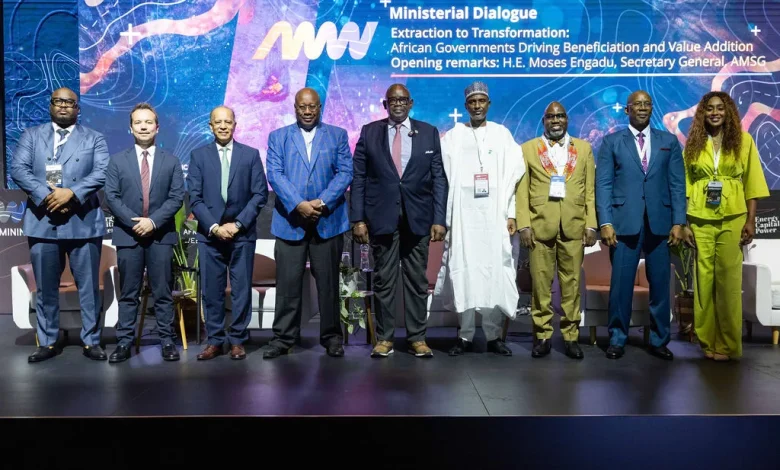
The significance of geomapping initiatives will take centre stage at the upcoming African Mining Week (AMW) Conference and Exhibition, scheduled for October 14-16 in Cape Town. This prestigious event, known as one of the most influential mining conferences in Africa, aims to connect global investors and geophysical technology providers with African regulators and project developers, paving the way for strategic collaborations that could catalyse greenfield developments across the continent.
The theme for AMW 2026, “Mining the Future: Unearthing Africa’s Full Mineral Value Chain,” encapsulates the growing resolve among African mining jurisdictions to unlock their mineral potential. Recent partnerships across several African nations serve as illustrative examples of this trend, with Burundi embarking on a mid-March collaboration with U.S. firms Lifezone Metals and KoBold Metals to evaluate the Musongati Nickel project, and the Democratic Republic of Congo engaging Xcalibur Smart Mapping to analyse an expansive area of 700,000 square kilometres in pursuit of its untapped $24 trillion worth of mineral reserves.
So far, Zambia has completed 55% of its national geomapping project to identify new copper deposits, aiming to achieve ambitious production targets by 2031. Nigeria has also advanced its geomapping strategies following the approval of a substantial N1 trillion budget for 2026, which will be directed towards unlocking the potential of 44 critical minerals. Nations such as Tanzania are now following suit, while South Africa emerges as a key supporter, offering technical assistance to countries like Gabon, South Sudan, and Nigeria.
Moreover, Liberia is set to undertake an ambitious plan to geomap 80% of its largely unexplored geology. In an exclusive pre-AMW 2026 interview, Liberia’s Minister of Mines and Energy, Matenokay Tingban, emphasised their pursuit of geomapping and exploration partners, remarking, “With Liberia’s vast but largely untapped mineral resources, access to geoscientific data will allow us to negotiate stronger investment deals and unlock downstream infrastructure development.”
The surge in geomapping initiatives not only reflects Africa’s dedication to reviving and growing its mining sector but also presents monumental opportunities for global exploration, drilling, and geophysical technology providers. As AMW 2026 prepares to showcase ongoing geomapping progress, it promises to be a vital platform for connecting African stakeholders with international partners, thus laying the groundwork for partnerships that could significantly enhance the future of Africa’s mineral exploration and production landscape.
Edited by Thobile Mazibuko