South Africa’s revised electricity pricing policy puts transparency and accountability under the spotlight
New pricing framework aims to give consumers a clearer view of what they are paying for, while tackling inefficient losses and supporting households, businesses and industry
It is no secret that the electricity bill is quite expensive in South Africa. Most households find themselves paying so much just to keep the lights on, and the rising tariffs have left them questioning exactly what they are paying for, and whether they are being charged fairly.
That is the issue the government’s revised Electricity Pricing Policy (EPP) is now seeking to address.
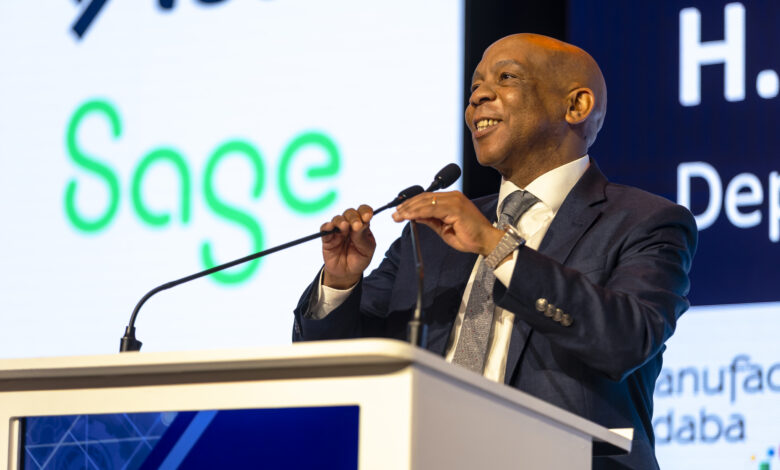
On Tuesday, August 18, the Minister of Electricity and Energy Minister Dr Kgosientsho Ramokgopa outlined the proposed changes ahead of the publication of the revised policy for public comment on August 21.
The policy updates South Africa’s 2008 Electricity Pricing Policy and is intended to bring the country’s pricing framework in line with changes in the electricity sector, including Eskom’s unbundling, the Electricity Regulation Amendment Act and the move towards a more competitive electricity market.

Transparency remains at the center of the policy as Dr Ramokgopa said consumers should no longer receive a bill that simply states how much electricity they owe without showing how that amount was calculated.
Under the proposed approach, tariffs would be unbundled so that consumers can see the different costs involved in getting electricity to their homes or businesses, from primary energy and generation to transmission, distribution and retail.
Dr Ramokgopa said that one of the reasons consumers receive high electricity tariffs is because municipalities, including Eskom, are burdening everyone.
“Many municipalities, including Eskom, they are burdening everyone, especially the diligent consumer, who struggles on a daily basis twice and that person choses to pay their electricity bill at the end of the month. But that person is burdened by the following, illegal connections on the tunnel, technical loses, meaning the municipality has not yet invested in maintaining the expanded asset base so there are loses. For every R10 electricity they buy at Eskom, before it can reach their house, it is lost in the system for around R3. So, the municipality wants to recover that R3 from you, but that electricity was not delivered to your house. This is the result of a municipality that is inefficient,” said Dr Ramokgopa.
That is why the revised policy proposes an acceptable ceiling for electricity losses, meaning municipalities would not simply be able to pass excessive inefficiencies on to consumers.
The approach recognises that some losses are unavoidable, but seeks to establish a threshold against which municipal performance can be measured.
For businesses, the policy points towards cost-reflective and non-discriminatory tariffs, while providing for structured negotiated pricing agreements and greater access to the grid. This is meant to strengthen competitiveness and support investment.
The proposed framework also addresses prosumers- consumers who generate their own electricity, such as households and businesses with rooftop solar. Net billing and time-of-use tariffs are intended to ensure that these customers are fairly rewarded for contributing electricity while still contributing towards the costs of maintaining the electricity network.
For municipalities, a national tariff framework would standardise customer categories and the cost of different supply methods, with benchmarked loss levels intended to encourage greater efficiency.
At sector level, the government is also looking towards greater pricing transparency, a 10-year price outlook and stronger compliance measures to support the long-term financial sustainability of the electricity industry.
The revised policy is therefore an attempt to make the pricing system easier to understand, ensure that consumers are not unfairly penalised for inefficiencies elsewhere in the network and create a pricing framework that can support South Africa’s changing electricity market.
Cabinet has already approved the policy for public comment, with government stating that it is intended to protect vulnerable users and strategic economic sectors while moving towards cost-reflective tariffs.
The public will now have an opportunity to look at the proposed framework when it is published on August 21 and have a say in how South Africa’s electricity pricing system evolves.