Dangote launches US$2.5bn fuel storage and pipeline project in Namibia
The development includes a 600-million-litre petroleum storage facility and a proposed 1,700km pipeline network aimed at improving fuel distribution across Southern Africa

Nigeria’s richest man Aliko Dangote has launched a US$2.5 billion fuel storage and regional pipeline project in Namibia, in a development that could strengthen the country’s position as a distribution hub for petroleum products across Southern Africa.
The project, launched in Walvis Bay on November 4, 2026, was attended by Namibian President Netumbo Nandi-Ndaitwah. It forms part of Dangote Group’s broader strategy to expand its energy infrastructure and improve the distribution of refined petroleum products across African markets.
The development will include a petroleum storage facility with a capacity of approximately 600 million litres, equivalent to four million barrels. Of this capacity, 360 million litres will be allocated to diesel and 240 million litres to petrol.
Located on approximately 70 hectares at Farm 58, about 10km east of Walvis Bay, the facility will also incorporate truck-loading and dispensing infrastructure to support the onward distribution of fuel.
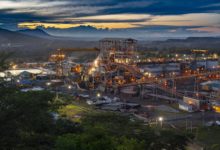
Once completed, the storage facility will have eight times the capacity of Namibia’s existing 75-million-litre National Oil Storage Facility, operated by the Namibia Petroleum Corporation (Namcor).
A key component of the development is the proposed 1,700km regional pipeline network, which is expected to connect Walvis Bay with inland markets, including Botswana, Zimbabwe and Zambia, with potential extensions into the Democratic Republic of Congo (DRC).
The proposed network is intended to establish an integrated supply corridor between Namibia’s Atlantic coast and landlocked markets that rely heavily on imported petroleum products.
According to Dangote, the final pipeline route and length will be determined through detailed engineering studies, route surveys and regulatory approvals.
The development could also change how refined petroleum products are transported across the region. By moving fuel through pipelines rather than relying exclusively on road tankers, the infrastructure could improve distribution efficiency, reduce long-distance road freight movements and lower transportation costs.