
Advanced blasting supports sustainable mining
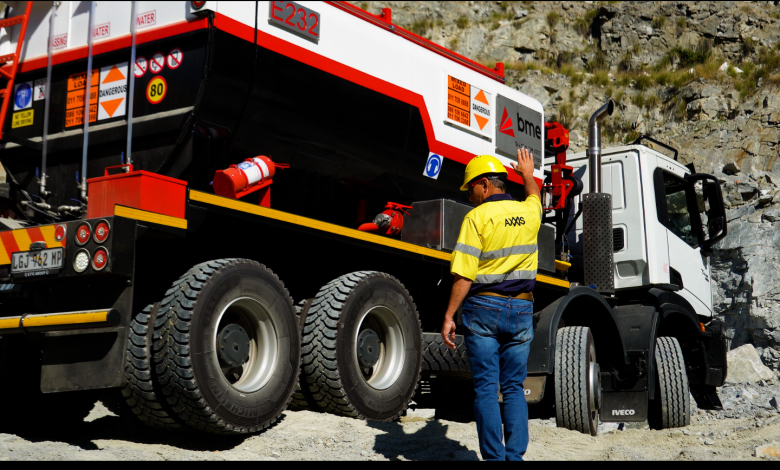
Environmental stewardship and sustainability are set to shape discussions at this year’s Investing in African Mining Indaba in Cape Town. Among those contributing to the conversation is Omnia Holdings subsidiary BME, whose blasting solutions and mining chemicals teams will share insights on how innovation is reducing mining’s environmental footprint.

According to Dr Ramesh Dhoorgapersadh, General Manager: Operational Excellence & SHERQ at BME, mining companies across Africa are responding to a rapidly evolving environmental, social and governance (ESG) landscape.
“Our technological advancements have drastically transformed blasting operations,” said Dhoorgapersadh, adding that by harnessing innovation, modern blasting is efficient, resulting in productivity gains as well as energy and cost savings in downstream processes.
“This has a lower environmental impact and is safer,” he said.

Data-informed blasting operations
A key driver of this shift is data-driven blasting technology.
“The integration of robust sensors and real-time monitoring ensures precise blasting, optimising rock fragmentation,” he said.
“This, in turn, improves productivity while reducing energy consumption and operating costs in excavation, loading and haulage, comminution and processing, such as flotation, leaching and sorting.”
Beyond efficiency gains, improved blast precision mitigates environmental impacts such as noise and vibration. Greater control over blast timing, placement and energy release also reduces environmental risk while optimising overall performance.
“Data-driven blasting also improves pre-splitting. By establishing predefined fractures, blast energy can be directed more precisely, increasing control over fragmentation, enhancing rock wall stability and reducing flyrock,” he explained.
BME’s XPLOSMART™ platform integrates data analytics and artificial intelligence (AI) to help mines analyse geological and operational data. The AI-enabled suite supports integrated mine-to-mill solutions, bringing geospatial tools and AI-driven modelling together on a single data platform.
“Streamlined workflows integrate geospatial, time-series and visual data with intelligent analytics to provide powerful predictive insights, post-blast analysis and optimisation across the mine-to-mill value chain,” he said.
Dual-salt emulsions reduce emissions
On the product development front, BME has introduced dual-salt ammonium nitrate (AN) and calcium nitrate (CN) emulsions designed to reduce nitrogen oxide (NOx) emissions during detonation.
“A more complete detonation and lower levels of residual nitrates also minimise the risk of chemical leaching into surface or groundwater,” he said.
Enhanced stability and higher energy output allow for improved detonation control and flexible density loading, supporting optimal blast fragmentation.
“Furthermore, our dual-salt ANCN emulsions have a longer shelf life, again reducing waste, preventing environmental contamination and enhancing operational efficiency,” he added.
Improved energy control for varying rock conditions means less explosive is required per volume of rock. Controlled Velocity of Detonation (VoD) also mitigates environmental consequences, including ground vibrations, airblast and flyrock.
In parallel, BME’s Innovex™ 300D high-shear emulsion is engineered to withstand challenging surface mining conditions, including dynamic water, highly friable geology, free ammonia and acidic sulphate soils.
“This reduces the likelihood of misfires and incomplete explosions, as well as nitrate leaching,” he said.
“NOx fumes are also reduced, considering that dynamic water can lead to higher emissions due to explosives dampening.”
Advancing cleaner explosives manufacturing
Through its partnership with Hypex Bio Explosives Technologies, BME is rolling out hydrogen peroxide emulsions (HPE) in the Southern African Development Community.
“HPE completely eliminates NOx gas, nitrate leeching and ammonia-related issues,” he said.
Trials have demonstrated improved environmental performance in water, sludge and air quality.
“According to water analysis, ammonia levels associated with HPE use are between 0,03ppm and 0,77ppm, compared to ANE’s 0,90ppm to 4,64ppm,” he said.
Meanwhile, the oxidiser phase of HPE production emits just 0.23 kg of CO₂, compared to 2,3 kg of CO₂ for a kilogram of ammonium nitrate emulsion (ANE), representing a 90% reduction.
“This enables BME to further reduce its own operational footprint, complementing other initiatives such as the use of recycled waste oil in the manufacture of explosives,” he said.
BME currently uses about 30 million litres of used oil annually, reducing reliance on virgin oil and diverting hazardous waste from landfills or incineration. The initiative also supports a network of small, medium and micro enterprises that collect used oil, while contributing to water savings in water-stressed mining regions.
“The initiative has also led to water savings, an overriding factor, especially in water-stressed mining areas,” he said.
A shared responsibility
Dhoorgapersadh emphasised that explosives manufacturers must remain focused on reducing their operational impacts.
“This is critical considering that 20 million tonnes of explosives are used worldwide annually, presenting environmental challenges where they are used and because their manufacture is energy- and carbon-intensive,” he said.
While technological innovation continues to improve blast efficiency and environmental performance, he stressed that sustainable mining depends on collective accountability.
“Complacency condones poor blasting performance, resulting in more explosives being used and the generation of additional airblast, flyrock and emissions. It is our duty to guard against this to mine responsibly,” he concluded.