The Guinean Minister of Mines and Geology, Bouna Sylla, represented his country to settle disputes with Guinea Alumina Corporation (GAC) and Emirates Global Aluminium (EGA).
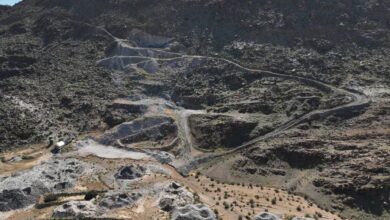
GAC, the bauxite mining subsidiary of EGA, the world’s largest producer of premium aluminium, terminated all its activities in August last year following the illegal expropriation of its assets by the Republic of Guinea. In response, Guinea assumed responsibility for the operation and security of GAC’s facilities, infrastructure, equipment, and materials.
It all started when Guinea revoked GAC’s mining title, transferring it to Nimba Mining Company S.A. in 2024. Negotiations between the parties continued until this week, when discussions were held under the supervision of the incumbent President of the Paris Bar Association.
Settlement Agreement

According to a joint statement, the agreement, subject to certain conditions, outlines two key elements:
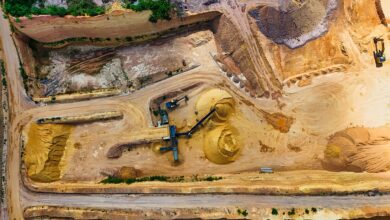
Payment to GAC: The Republic of Guinea was ordered to pay a lump sum to GAC in exchange for the transfer of its assets to Nimba Mining Company (NMC), enabling exploitation of the Sangarédi bauxite project.
Renewal of supply agreements: Bauxite supply contracts between CBG and EGA will be renewed under mutually beneficial commercial terms.
Strategic Implications
The settlement aligns with the guiding principles of the Simandou Strategic Committee, reflecting a constructive effort to normalise and strengthen trade relations between Guinea and EGA. For Guinea, the deal ensures continuity of mining operations through NMC, while EGA secures renewed access to Guinean bauxite, a critical raw material for its global aluminium production.
This resolution marks a turning point in Guinea’s mining sector, potentially restoring investor confidence after months of uncertainty. It also underscores the importance of international arbitration and negotiation in resolving complex disputes within Africa’s resource industries.

Arbitration and Critical Minerals Context
Such disputes were also discussed at Johannesburg Arbitration Week (JAW) on Wednesday, May 6, where trade-related conflicts over critical minerals were highlighted. Jackwell Feris, Head of Industrials, Manufacturing & Trade Sector at Cliffe Dekker Hofmeyr, explained how the Guinea case exemplifies a broader trend.
“The rise in critical mineral disputes is evident. One example is the Guinea case involving bauxite, essential for aluminium production, and by extension, the renewable energy and automotive sectors. The government argued that licenses were not benefiting the country and terminated them, while investors claimed they were operating lawfully. This tug of war reflects a wider pattern: governments are pushing for more value addition, while investors seek stability and protection,” said Feris.
He further noted that similar tensions are emerging elsewhere, citing Namibia’s recent export restrictions on lithium aimed at promoting downstream beneficiation.
“We are seeing several potential disputes arising from the criticalness of critical minerals. Governments want to ensure local value addition, and this aligns with global frameworks such as the G20 declaration. But it also sets the stage for more arbitration as Africa balances its own interests with global demand,” he added.
The Guinea–EGA settlement is more than a resolution of a single dispute; it is emblematic of the shifting dynamics in Africa’s mining sector. As governments assert greater control over critical minerals to secure value addition and long-term economic benefits, investors are increasingly turning to arbitration to safeguard their interests. The balance between sovereignty and investment protection will define the future of resource governance across the continent.
For Guinea, the agreement restores stability and signals a willingness to engage constructively with international partners. For the wider industry, it serves as a cautionary tale and a reminder that arbitration is no longer peripheral but central to the future of mining and trade in Africa’s critical minerals.