Features
Proximity Detection and Collision Avoidance Systems (CAS)
Zero Collisions, Compliant Mining
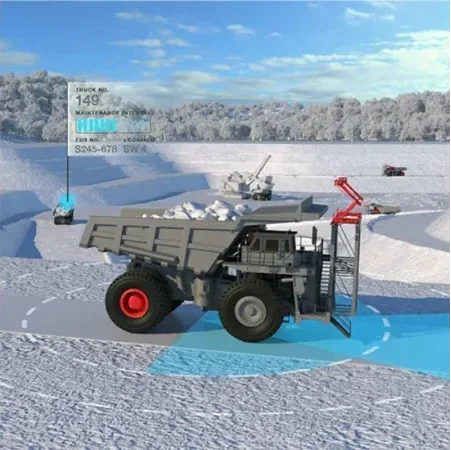
In mining, when it comes to safety, there is a rule of thumb: the more the activity, the higher the risks. This is the current situation in African mining, especially in gold and critical minerals operations, with high global demand for these commodities. There is a lot of movement of large fleets of mobile equipment – haul trucks, loaders, and excavators – at any point in time, performing different tasks in tight corridors. This increases the risk of vehicle-to-vehicle collisions, as well as vehicles hitting structures or personnel. Level 9 compliance Level 9 compliance, a global safety benchmark, obligates mining companies to mitigate these risks by investing in suitable proximity detection and collision avoidance technologies. The regulation requires the integration of multiple safety systems that monitor vehicle movement, detect potential collisions, and prevent incidents before they occur. While this may seem a grudge undertaking to most mining companies, understandably, given the huge OPEX burden, most companies are recognising it as a necessity. Thankfully, increasingly advanced collision avoidance and proximity detection technologies are making it relatively easier for mining companies to reduce accidents and meet safety requirements. They enable proactive hazard mitigation and real-time operational control. The enabling technology Proximity detection systems utilise radar, LiDAR, ultrasonic sensors, and camera technologies to continuously monitor the environment around mobile equipment. These systems alert operators to hazards by automatically applying braking or even stopping vehicles where hazards are detected. Going a step further, collision avoidance technology alerts operators and actively prevents incidents. For instance, modern haul trucks, loaders, and excavators can now be equipped with automatic braking, steering corrections, and geofencing to maintain safe distances from other equipment, structures, and personnel. Providing more detail, Gert Roselt, CEO of Probe Integrated Mining Technologies, states: “Electronic systems automatically slow down the machine and apply a controlled stop if a dangerous interaction is detected when the operator has failed to take evasive action to the prior Level 7 and Level 8 alerts.” Significant pay-off There is concrete evidence of a significant pay-off from adopting these technologies through increased operator safety and improved operational efficiency. Mines that implement proximity detection systems report fewer vehicle collisions and lower equipment damage rates. Generally, these mines consistently achieve regulatory compliance. Beyond safety, by reducing collisions and equipment damage, mines save significant repair costs. In addition, avoiding operational downtime ensures equipment availability. Last but not least, actionable data gathered from alerts and incidents helps operators refine processes, identify high-risk zones, and implement preventative strategies. This ensures zero collisions and compliant mining. Side Bar 1 Organisational readiness While there is no question about the pivotal role of technology in enabling Level 9 compliance, equally important is the organisation’s readiness to embrace it. However, this is not always the case, as Anton Lourens, CEO of Booyco Electronics, explains: “Many operations are still not ready to operationalise PDS within their daily activities, safety systems, or workflows. Successful adoption demands coordinated involvement from all stakeholders, including the mine’s own management, operators, regulators, technology suppliers, and TMM OEMs.” In a nutshell, effective collision avoidance requires not just hardware, but a culture of safety and coordination throughout the mine. Side Bar 2 Zambian copper mine reduces risks by 60% There is an uptake of these Level 9 technologies in African mining. A case in point is a leading copper mine in Zambia, which recently integrated proximity detection and collision avoidance across its entire fleet of haul trucks and underground loaders. The benefits this brought to the mine within the first three months were tangible: near-miss incidents decreased by 60%. What does this prove? One thing is clear: Level 9 compliance, which integrated CA and PDS facilitate, is not just a regulatory requirement, but a measurable operational benefit. Side Bar 3 Integration with autonomous vehicles There is no debate about this: one of the emerging trends to watch in 2026 is the integration of CAS and PDS with autonomous and semi-autonomous vehicles. Vehicles with Level 9 compliance capability can safely operate with limited human intervention, while still ensuring that emergency braking and hazard detection are fully functional. This is especially useful for night operations in surface mines and underground mining, where human visibility and reaction time are limited.