Pilot Crushtec targets junior miners with locally built mobile screening solution
South African-built mobile scalping screen targets junior miners, contractors and quarries with a compact, flexible and cost-effective screening solution
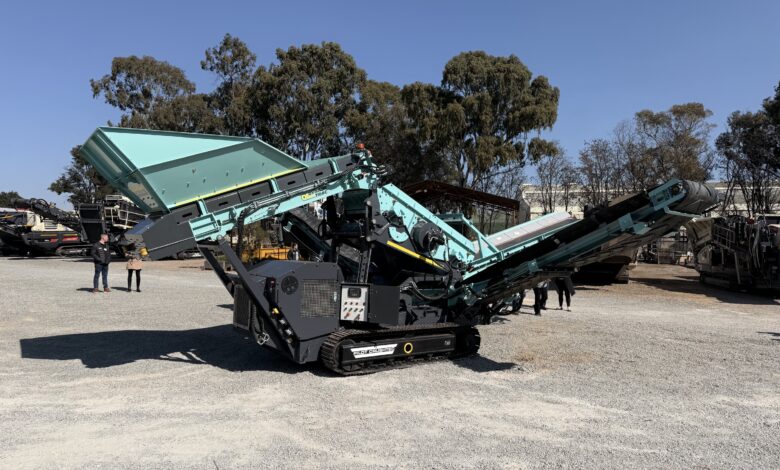
As mining projects become smaller, more mobile and increasingly decentralised, equipment manufacturers are being challenged to rethink traditional processing solutions. Pilot Crushtec believes it has answered that challenge with the launch of its new DynamiTrac XS200 Xtreme Mobile Scalping Screen. Unveiled at the company’s Jet Park headquarters on Thursday, July 9, the XS200 is the first machine of its kind to be designed and manufactured in South Africa. Rather than targeting large mining operations, the compact mobile screen has been developed specifically for contractors, junior miners and smaller quarries looking for a practical and affordable screening solution.
One of the machine’s standout features is its compact footprint. The XS200 is small enough to fit into a standard shipping container, making it easier and more cost-effective to transport between sites, an important consideration for operators working across Africa, where logistics can often account for a significant portion of project costs. But while portability was clearly a design priority, Pilot Crushtec says the machine was equally engineered with the operator in mind. Speaking during the launch, Francois Marais, sales and marketing director at Pilot Crushtec, said the company had focused on making routine maintenance simpler by improving access to key service areas.
“Mobile machines are often very compact, which makes maintenance difficult. We’ve spent a lot of time thinking about the ergonomics of this machine to ensure operators can easily reach the areas they need to service. Maintenance will always require effort, but we’ve tried to make it as straightforward as possible,” said Marais. He added that the XS200 was also designed to handle a wide range of materials and operating conditions without requiring extensive modifications. Operators can adjust feeder speed, alter the screen angle depending on the material being processed, and change screening media to suit different applications, whether screening wet or dry material or processing coal, aggregates or recycled material. “We wanted to build enough flexibility into the machine so operators can make adjustments based on what they’re trying to achieve,” he said.
Beyond its technical specifications, Pilot Crushtec sees the XS200 as lowering the barrier to entry for smaller mining businesses. Speaking on whether compact mobile equipment could change the way smaller mines approach crushing and screening, particularly as mining projects become more decentralised, Marais said affordability and flexibility were becoming increasingly important. “A lower capital barrier makes this type of machine much more attractive. It allows operators to move around a site, test different ore bodies and generate production data before committing to larger investments.

That gives them more flexibility and reduces the risk of making significant capital decisions too early,” he said. According to Jorge Abelho, Director: Technical Support at Pilot Crushtec, not every operation requires a large, high-capacity plant. “Many smaller operations simply need a machine that can move quickly, screen efficiently and be deployed without major transport or infrastructure costs,” he said. Designed for scalping and classifying run-of-mine, blasted and recycled material, the XS200 removes oversize material and fines before crushing, improving downstream efficiency while helping to protect crushing equipment from unnecessary wear.