

Ghana approves new mining bill to overhaul royalties, licensing and community benefits
Proposed legislation introduces a price-linked gold royalty system, tighter exploration rules and stronger community participation in mining projects

Ghana’s Cabinet has approved a new mining bill that proposes sweeping reforms to the country’s legal and fiscal framework for the mining sector, including a new gold royalty regime linked to commodity prices, tighter licensing rules and greater involvement of host communities in mining projects.
The proposed legislation, which will be presented to Parliament by Minister for Lands and Natural Resources Emmanuel Armah-Kofi Buah, is intended to replace key provisions of the Minerals and Mining Act, 2006, which has governed the sector for nearly two decades.
According to Buah, the reforms are designed to modernise Ghana’s mining legislation while promoting greater local participation, encouraging downstream value addition and strengthening environmental protection.
“The policy seeks to indigenise mining by strengthening local content through domestic value addition to minerals, improving linkages with the manufacturing sector, and dealing decisively with illegal mining while protecting the environment,” he said.
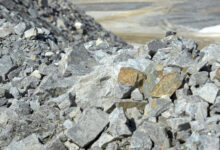
One of the most significant changes is the introduction of a sliding-scale royalty system for gold, with royalty payments linked to prevailing gold prices. The government has also indicated that it plans to gradually phase out fiscal stability agreements, a move that could have implications for major mining companies operating in Ghana, including Newmont, Gold Fields, AngloGold Ashanti, Zijin Mining and Perseus Mining.
The draft legislation also proposes changes to the country’s mineral licensing regime. Reconnaissance and prospecting licences would be replaced by a single exploration licence valid for up to five years. Extensions would depend on a review of work completed during the first two years, with the aim of discouraging companies from holding exploration licences without carrying out meaningful exploration.
“If, after five years, no work has been done, we will take the licence back,” Buah said, noting that the measure is intended to curb speculation and encourage active investment in mineral exploration.
Mining leases would continue to be issued for a maximum of 20 years. However, mining companies would be required to negotiate separate community development agreements directly with host communities, giving local stakeholders a more formal role in determining how mining projects contribute to socio-economic development.
The proposed law would also establish district mining committees, allowing communities to participate earlier in the licensing process and strengthening oversight at the local level.
If passed by Parliament, the reforms would mark one of the most significant updates to Ghana’s mining legislation in almost 20 years, as the country seeks to maximise the benefits of its mineral resources while improving governance, investment and community participation.
Source: Reuters



One Comment