Features
From Reaction to Prediction
The incorporation of telematics in the huge fleets of mobile equipment in African operations has significantly improved availability and reliability, besides enhancing safety and helping mines achieve Level 9 compliance
One area where the adoption of digital technologies in fleet management has had a profound impact is predictive maintenance, where equipment reliability has improved through significantly reduced downtime and increased uptime.
To appreciate the scale of the advantage that digital technologies have given reliability managers and maintenance managers, one needs to examine the limitations of traditional maintenance.
Traditional maintenance schedules
For all its benefits—of course, it serves the purpose in some respects—traditional maintenance schedules have limitations where greater accuracy is needed.
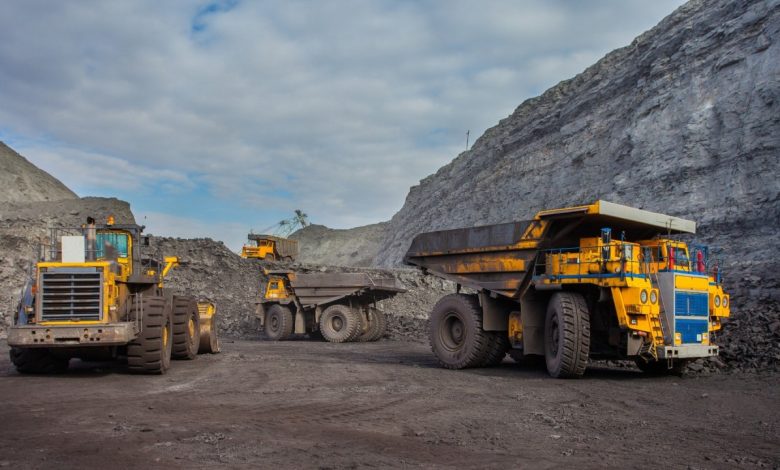
Traditional maintenance schedules involve fixed intervals for servicing equipment. Doubtless, this method ensures some level of operational reliability. Of course, it serves the purpose. However, it can lead to unnecessary downtime or unexpected failures, particularly when vehicles experience highly variable operating conditions. It is difficult to imagine the impact of this on haul availability at a gold mine in South Africa. Even short periods of downtime disrupt ore volumes supplied to mills.
The digital edge
In contrast, the incorporation of sensors and IoT devices on critical mobile equipment deployed across mining operations enables real-time data collection and analysis. This provides fleet managers with insight into the condition of their mobile equipment and helps them determine the actions to take.
Telematics use sensors, satellite navigation, onboard diagnostics, telecommunications, and data analytics (machine learning algorithms) to monitor the actual condition of critical components, such as engines, brakes, hydraulics, and tyres. No guesswork. Effectively, they remove guesswork from maintenance schedules.
For instance, using algorithms, the system detects patterns that signal emerging wear or potential failure. It generates maintenance alerts before breakdowns occur, allowing mines to schedule interventions proactively.
But predictive maintenance is only one part of the wider operational visibility that telematics brings to fleet management.
Cliff de Wit, Managing Director South Africa & Group Chief Innovation Officer at Accelera Digital Group (former Chief Technology Officer at Netstar), explains: “Using telematics, mines can track vehicles, gather data and enable insights to enhance safety, boost production, and ensure legal compliance.”
Ensuring equipment reliability and availability
To boost production by reducing the risk of unnecessary equipment downtime, mines can utilise telematics and artificial intelligence to carry out predictive maintenance. In this way, they can ensure equipment reliability and availability.
A critical point de Wit raises is that “telematics and intelligent fleet analytics give operators the ability to see what was previously invisible.” He states that with granular data on vehicle performance, mines can proactively manage risk, driver behaviour, and road conditions.
From small gains to substantial benefits
And the small gains from predictive maintenance compound to substantial benefits: avoiding costly breakdowns and extending the lifespan of expensive equipment. In mining, haul trucks and loaders can cost several million dollars each. So, extending operational life by even a few percent can translate into significant savings.
Side Bar
‘Big Brother’ for Better Behaviour
Truant operator behaviour is an understated problem in mining fleet management. But it is the reality – in fact, one of the causes of collision accidents.
Ideally, it is assumed that operators are responsible enough to follow regulations and drive responsibly. However, this does not take into account inherent human lapses in concentration due to fatigue or substance abuse, equipment failure (which is something out of their control), or even sheer negligence.
Where humans fall short, telematics fills the gap, encouraging better driver behaviour.
Cracking the whip
It acts as a ‘big brother’ of some sort, cracking the proverbial whip at the operator in the cabin at the slightest hint of trouble.
In remote areas, any lapse in monitoring or operator awareness can lead to accidents with severe consequences, such as fatalities, irreparable equipment damage, and possible environmental pollution from engine oil spills or fuel leaks.
Real-time alerts
Conveniently, telematics continuously monitor vehicle location, speed, direction, and operational status. They provide mine control centres with real-time alerts for unsafe behaviour or potential collisions. Operators receive immediate warnings when entering restricted zones, approaching hazards, or exceeding speed thresholds.
Integrated proximity detection and collision avoidance systems come into play, automatically slowing vehicles if risk thresholds are breached. Drivers receive instant feedback on unsafe acceleration, sharp cornering, and harsh braking.
In the end, these systems do not merely monitor vehicle location, but also create a culture of accountability and awareness among operators. Over time, this improves overall driver behaviour, which contributes to reducing incidents that can disrupt production.