On July 14-15, Manufacturing Indaba hosted its 13th annual conference at the Sandton Convention Centre, bringing together government leaders, manufacturers, investors, policymakers, industry experts and innovators from across Africa under the theme “Made in Africa: Scaling Growth and Shaping Trade.”
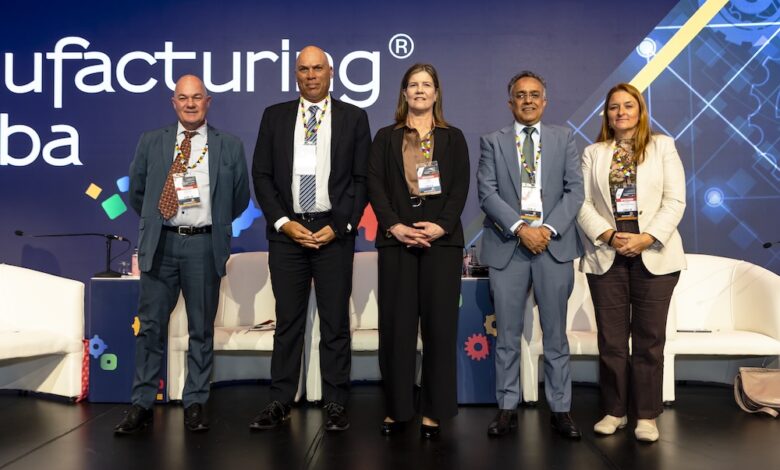
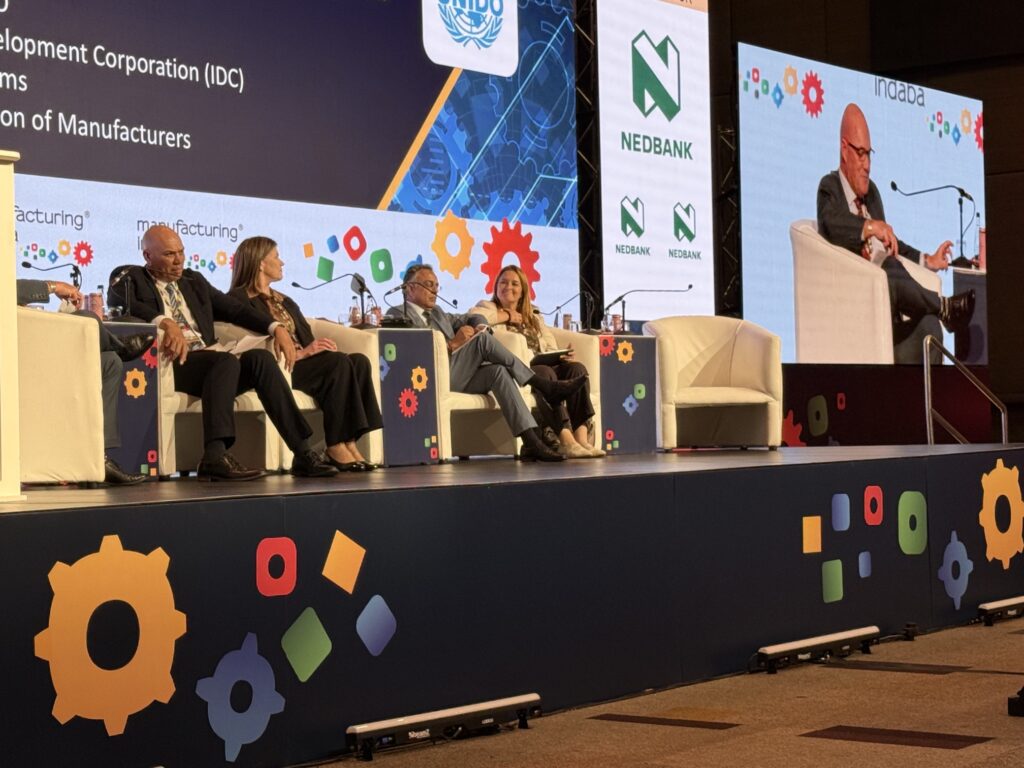
One of the standout sessions on day one was the “Africa’s Industrial Future: From Raw Materials to Global Manufacturing Hub” plenary panel. Moderated by Duncan Bonnett of Africa House, the discussion featured Karin Reiss-Haimbala of the United Nations Industrial Development Organization (UNIDO), Mark Goliath of the Industrial Development Corporation (IDC), Tanya Lerm of NewSpace Systems and Ashu Sagar of the Zambia Association of Manufacturers.
The panel explored how Africa can transition from being primarily an exporter of raw materials to becoming a globally competitive manufacturing hub by strengthening infrastructure, expanding energy access, developing regional value chains and increasing local value addition.
Reiss-Haimbala argued that Africa’s greatest opportunity lies not simply in expanding manufacturing, but in becoming an active participant in global and regional value chains.

She highlighted the global energy transition as a once-in-a-generation opportunity for the continent, noting that Africa possesses abundant renewable energy resources and many of the critical minerals required for clean energy technologies.
“The question is whether we continue exporting resources and importing technologies, or whether we use this moment to build industries around them,” she said.
According to her, achieving this requires four key priorities: reliable and affordable energy, stronger local demand, investment in technology and skills, and deeper regional integration.
She stressed that renewable energy should be viewed not only as infrastructure but also as an industrial opportunity capable of creating markets for African manufacturers and suppliers.
“Manufacturing follows markets,” said Reiss-Haimbala, adding that predictable demand for products such as solar panels, batteries, electric mobility solutions and energy-efficient appliances would strengthen the business case for local manufacturing.
Reiss-Haimbala also emphasised that no single African country, or any country in the world for that matter, can produce every component needed for technologies such as batteries, solar systems or electric vehicles.
Instead, she said, countries should leverage the African Continental Free Trade Area (AfCFTA) to specialise, scale production and build interconnected regional supply chains.
Sagar focused on what he described as the continent’s most overlooked obstacle to industrialisation: access to its own raw materials.
He said Africa already possesses two significant competitive advantages, its natural resources and its youthful population, with an average age of just 19 years.
However, he argued that these advantages cannot translate into meaningful industrial growth if African manufacturers are unable to access locally produced raw materials at competitive prices.
Using Zambia’s copper industry as an example, Sagar explained that local manufacturers often purchase domestically mined copper at international market prices, including transport and warehousing costs, eroding the country’s natural advantage.
“What Africa needs to realise when it comes to real industrialisation is that without access to raw materials, you’re going nowhere,” he said.
Sagar clarified that he was not advocating for nationalisation but rather for mechanisms that reserve a small percentage of production for local manufacturers at competitive prices. He believes this would enable African businesses to add value locally before exporting finished products. “We don’t talk enough about using what belongs to us,” he said.
From an investment perspective, Goliath said industrialisation should be viewed through the lens of entire ecosystems rather than isolated projects.
He explained that major investments in mining, energy and refining create opportunities for manufacturing industries that can supply equipment, services and infrastructure to support those developments. “We don’t look at an investment as a singular event,” said Goliath.
He used the Democratic Republic of Congo (DRC) and the Lobito Corridor as a prime example, noting that while the corridor was initially developed to facilitate mineral exports, it also presents an opportunity to establish manufacturing industries that can support mining operations and stimulate regional economic growth.
He further highlighted the African Union’s Agenda 2063 vision for a Pan-African rail network, arguing that such infrastructure projects should drive the development of industries including steel production, locomotive manufacturing and wagon assembly.
“What does that mean? Is the opportunity not now to develop industries such as steel, locomotive manufacturing and wagon manufacturing to support that vision?” he asked.
Representing South Africa’s high-tech manufacturing sector, Lerm said Africa should move beyond conversations centred solely on potential and instead recognise its proven capabilities.
She pointed to NewSpace Systems as an example of an African company successfully competing in the global space industry.
“I think it is amazing that we can move from speaking about Africa as potential to Africa’s capability,” she said.
Lerm noted that Africa’s space sector is expanding rapidly, with more than 20 African countries already operating active space programmes and the African Space Agency established to coordinate continental collaboration.
She emphasised that while opportunities in the sector continue to grow, success depends on maintaining world-class standards.
“Quality is not a competitive advantage. It’s the minimum requirement,” she said.
According to Lerm, companies seeking to compete internationally must consistently deliver reliable, high-quality products that meet global expectations.
Throughout the discussion, the panellists agreed that Africa has the resources, talent and growing markets needed to become a manufacturing powerhouse. However, they stressed that achieving this ambition will require coordinated investment in infrastructure, energy, skills development, regional collaboration and policies that enable greater local value addition rather than continued dependence on exporting raw materials.