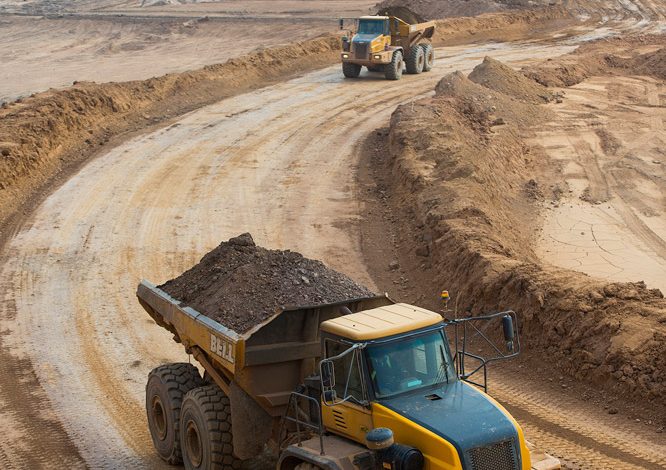
The mining sector in the Democratic Republic of Congo (DRC) has once again come under scrutiny after Chinese mining giant Jinchuan Group International Resources uncovered alleged financial misconduct at its Ruashi Mine operations in Haut-Katanga.
The revelations, which point to a sophisticated misappropriation scheme within the mine’s finance department, have reignited concerns about governance, accountability, and investor confidence in one of Africa’s most resource-rich nations.
According to a statement released by Jinchuan Group International Resources, an internal investigation found that certain senior personnel within the finance team at Ruashi Mine allegedly exploited weaknesses in the mine’s internal control systems, including procurement and payment processes, to carry out what the company described as an “organised and premeditated misappropriation scheme.”
“Given that Ruashi Mine’s internal control systems, including but not limited to its procurement and payment processes, were exploited by certain senior personnel within the finance team of Ruashi Mine, who allegedly misused their approval authorities and carried out an organised and premeditated misappropriation scheme during specific periods, the Company has procured the current management of Ruashi Mine and Metorex to implement or will implement various remedial measures,” the company stated.
The company further confirmed that the alleged misconduct was formally reported to the Public Prosecutor of the Court of Appeals of Haut-Katanga on December 12, 2025, with investigations currently ongoing.
As part of its response, the mining group said it would pursue legal action against all individuals implicated in the alleged scheme across the appropriate jurisdictions. Several employees at the mine have already been suspended, while relevant work-related data has been preserved for forensic and legal review.

In addition, the company has appointed an Internal Control Consultant to review the mine’s governance structures and recommend improvements to strengthen financial oversight and operational controls.
The fallout has also reached senior leadership. The company confirmed that the mine’s General Manager and Chairman of Ruashi SAS, identified in the statement as Employee A, was suspended from his duties in February 2026 and is in the process of being removed from his leadership positions due to his oversight responsibilities.
The incident is yet another reminder of the governance challenges that continue to plague parts of Africa’s mining sector despite the continent’s vast mineral wealth and strategic importance in the global energy transition.
The DRC remains one of the world’s leading producers of copper and cobalt, minerals that are essential for electric vehicles, renewable energy technologies, and battery manufacturing. However, persistent concerns around corruption, regulatory uncertainty, and weak institutional oversight continue to undermine investor confidence.
For international investors, governance failures of this magnitude raise difficult questions about operational risk, transparency, and accountability within African mining jurisdictions. At a time when Africa is positioning itself as a key supplier of critical minerals to the global economy, incidents involving alleged fraud and financial misconduct threaten to damage not only the reputation of individual operations but also the credibility of the continent’s broader mining industry.
While the actions taken by Jinchuan Group International Resources suggest an attempt to address the issue decisively, the controversy highlights the urgent need for stronger governance frameworks, tighter financial controls, and a culture of ethical leadership across the sector.
Africa’s mining industry has the potential to drive economic growth, industrialisation, and job creation on a massive scale. However, this potential can only be realised if companies and officials entrusted with managing these resources prioritise accountability and transparency over personal enrichment.