By Rejoice Ndlovu
There was a time in African mining when conveyor automation was viewed as an afterthought. That is no longer the case: automation has become a necessity, and leading companies recognise it as the difference between compliance and violation, profit and loss. They have embedded it in their core operations.
 To sustain their operations in the current operating environment and beyond, African mining companies need to embrace new ways of doing things from pit to port, if needs be. This will ensure they are environmentally friendly, safer, more efficient, and cost-effective.
One avenue which presents an opportunity to achieve this is materials handling – in this context, conveyor monitoring.

A manual process
Traditionally or conventionally, conveyor monitoring has been a manual process involving personnel. For all the good it does, this approach has its own limitations. These renders achieving contemporary objectives while using this approach a big challenge.
Automation’s Strategic Prominence
Automation is gaining strategic prominence as one of the practical alternative ways through which conveyor monitoring can be turned into a strategic advantage.
For a better understanding and appreciation of the compelling business case for conveyor automation, it is worth highlighting the shortcomings of conventional monitoring.
Shortcomings of Conventional Monitoring
Usually, conventional conveyor monitoring involves sending personnel for physical inspections. This exposes them to hazards like fire and injury from slipping and falling at height, or from a component falling on them. These incidents could result in serious injury or fatalities.
Needless to say, gathering data manually is prone to error, which can result in inaccuracies. It is inconceivable to witness such data being utilised in maintenance
schedules. You are more likely to have downtime, or, in a worst-case scenario, wrong data may result in wrong decisions, increasing the risk of accidents.
A Practical Response
On the other hand, conveyor automation has emerged as a practical response, offsetting the limitations of traditional monitoring and offering more in terms of capabilities.
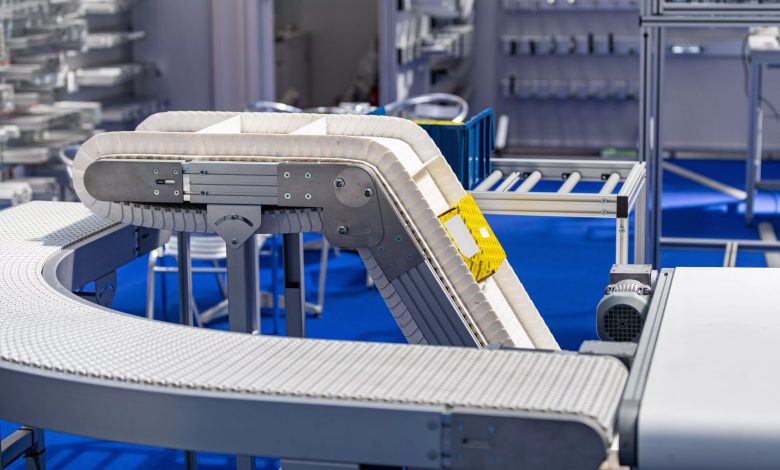
Automated systems integrate sensors, programmable logic controllers, and data analytics platforms to create intelligent material handling networks. Highly valued for their versatility, they continuously monitor belt speed, vibration, temperature, alignment, and load. They transmit real-time data to central control rooms, which informs decisions to be taken.
Equipped with these tools, operators can identify abnormal conditions early, adjust parameters remotely, and prevent minor issues from escalating into costly failures.
The Considerable Payback
These features offer considerable payback in a myriad of areas; perhaps the most important ones are:
i. Proactive Maintenance
Without doubt, the most vital benefit from a conveyor reliability perspective is in enabling proactive maintenance.
By providing real-time data on critical areas, automated systems reduce interruptions caused by manual inspections or reactive maintenance. For instance, predictive maintenance tools analyse performance data to forecast component wear. This allows maintenance teams to schedule interventions during planned shutdowns.
This is a significant convenience from an asset availability perspective.
Improved alignment monitoring and condition tracking extend the lifespan of belts, idlers, and pulleys. And the gains are immense: replacement and repair expenses are reduced.
This cannot be overlooked.
Bear this in mind: in large-scale mining operations running twenty-four hours a day, even short periods of downtime can result in significant revenue losses.
All in all, by improving equipment availability and stabilising throughput, automated conveyors help mines meet production targets more reliably.
ii. Efficiency
Automated systems regulate material flow automatically. This prevents overloading, spillage, and blockages that traditionally disrupt production.
iii. Safety Improvements
One cannot overstate the benefits of conveyor automation without mentioning enhanced safety: a vital obligation.
The safety improvements from adopting automation of conveyor monitoring are immense.
Conveyor automation eliminates or reduces instances where personnel work near hazards on conveyor belts to perform tasks. Their role is handled by remote monitoring, automated shutdown systems, and emergency stop mechanisms, which significantly reduce accident risk.
Conveyor automation directly contributes to safer working conditions by reducing the need for personnel to operate near moving machinery.
iv. Labour Costs
Automation also reduces labour costs by limiting manual supervision and repetitive inspection tasks.
Thinking Long-Term
Granted, the upfront cost of transitioning from manual to automated conveyors doesn’t come cheap. This is in addition to the need for skilled personnel – like technicians, control room operators, and data specialists – to manage the systems. This is especially true for smaller operations (junior miners), which may not even have the necessary digital infrastructure.
The Main Takeaway
The main takeaway is that, for Africa’s mining sector, conveyor automation is no longer a future concept but a present-day business imperative. It has transformed conveyor systems through improving reliability and safety, and increased efficiency.