The integration of Artificial intelligence in cameras has raised the capability of mining-specific Collision Avoidance Systems (CAS).
In the underground environment, at any point, there are always risks that can cause collision between machines and personnel such as restricted access, small spaces, reduced visibility, operator fatigue and poor decisions. These days owing to advances in Collision Avoidance Systems (CAS) or Proximity Detection Systems (PDS) mining companies are sufficiently equipped with the necessary tools to manage these risks better. No question, underground mines are safer than they once were.
Sharpening precision and widening capabilities
Boding well with the increased obligation for improved safety in mines, the latest technological innovations are sharpening the precision and widening capabilities of CAS. One of them changing the game is Artificial Intelligence (AI). This is based on products that have been unveiled whose uptake is growing.
AI camera system
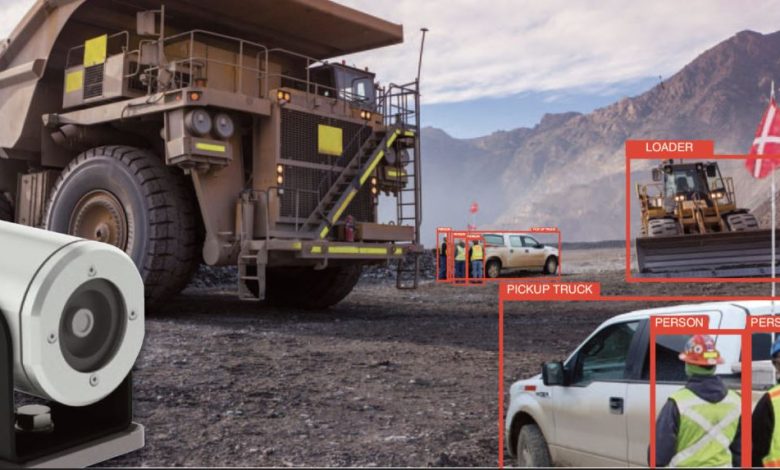
An AI camera system, which can be used either as CAS or PDS, employs a stereoscopic vision system (stereo camera technology). Remarkably, without the use of active signals such as radar, lidar, laser or Radio Frequencies (RF), it can differentiate between articulated dump trucks pedestrians, forklifts, and light delivery vehicles, among others. The operator is alerted of their presence within a mobile equipment unit’s projected travel path. Via alerts, it teaches operators and pedestrians safe habits, preventing future accidents.

Improving safety is an ongoing process
By and large, AI-enabled cameras and other technologies have made mining in underground environments safer. However, the risk of collision accidents always persists, wherever there is mining activity. For this reason, keeping track of machine movements and mitigating risks across sites should be an ongoing process. Wherever feasible, it is worthwhile to adopt new technologies to reduce the risks of collisions.