When mine damage ends but production loss continues
Why restoring physical assets is only the first step in mining recovery, and how risk planning can help prevent prolonged business interruption
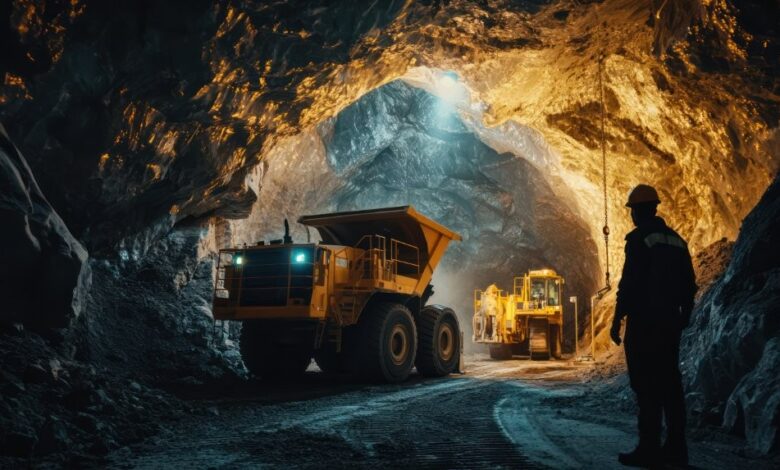
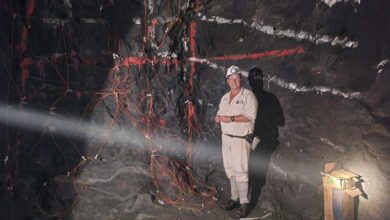
A fire deep underground burned for days. Mechanical methods were used to deprive the fire of oxygen, but extinguishing it was only the beginning of the recovery.
Production was disrupted for 16 months. The loss reached the full R3 billion policy limit, with business interruption accounting for most of it.
The case illustrates a fundamental distinction in mining risk: repairing the physical damage does not necessarily restore production. Recovery is achieved only when the operation can resume safely and reliably.
“The physical repair is only one part of the recovery,” says Brandon Botha, Senior Corporate Underwriting and Reinsurance Manager at Alpha. “If a critical part of the production chain remains unavailable, the mine is still not producing and the business interruption loss continues.”
On a mine, individual assets form part of a production chain. Extraction, conveying, processing, storage, power and water systems depend on one another. The failure of a single production-critical component can therefore stop output across the operation, even when the physical damage itself appears contained.
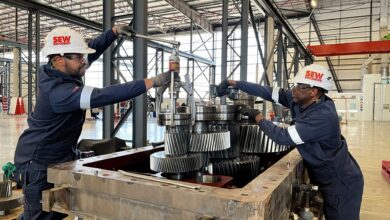
Long lead times compound the problem. Specialist machinery or components may need to be sourced from an original equipment manufacturer overseas, transported to a remote site, installed and commissioned before production can restart. Business interruption losses can continue accumulating throughout that process.
Recovery planning must reflect operational reality
The length of an interruption depends not only on what fails, but on whether the mine has identified its critical dependencies in advance.
A credible Disaster Recovery Plan should identify single points of failure, critical spares, replacement lead times, alternative suppliers and the specialist skills needed for installation and commissioning. It should also account for the safety checks and operational approvals required before production can resume.
Risk surveys provide an opportunity to test those assumptions before an incident occurs. During a third-party risk survey conducted as part of the underwriting process, a concentration of rubber conveyor systems feeding into a mine’s storage warehouse was identified. The conveyor material was not fire-retardant, while the available cut-off sprinkler protection was inadequate.
A friction-related fire could have travelled along the conveyor and into the warehouse, turning a localised equipment fire into a wider property and production loss. The mine subsequently acted on the survey recommendation to install additional cut-off sprinklers.
The intervention was relatively contained, but it addressed a vulnerability capable of interrupting a much larger part of the operation.
The economic cost of lost production
The consequences of mine downtime extend beyond the repair bill. Employees, contractors and suppliers remain exposed, customer deliveries may be delayed and export commitments can be affected.
The scale of South African mining makes production continuity an economic issue as well as an operational one. In 2025, the sector contributed approximately R439.2 billion, or 5.8%, to national GDP and directly employed about 469,765 people. It generated R1.1 trillion in turnover, R813.6 billion in mineral exports and more than R100 billion in taxes, royalties and VAT, according to the Minerals Council South Africa.
At the same time, total mining production increased by just 0.1% in 2025, according to Statistics South Africa. Against that narrow growth margin, an extended interruption at a major operation can have consequences across employment, procurement, logistics and export earnings.
Understanding the operation behind the risk
These operational realities have informed Alpha’s expansion from opencast into underground mining risks.
Alpha provides capacity of up to R3.5 billion per event for opencast mining operations and up to R575 million per event for underground mines. Its portfolio includes more than 100 mines operated by over 30 mining companies across South Africa, Zambia and Zimbabwe.
“Our expansion into underground mining reflects the need for meaningful capacity supported by a detailed understanding of each operation,” says Botha. “That means identifying the vulnerabilities that could stop production before a loss occurs and remaining closely involved throughout the recovery process.”
For mines, the central question is therefore not simply how quickly a damaged asset can be repaired. It is how quickly the entire production system can be returned to safe, stable operation.