The real test of mining partnerships is turningambition into economic value
Leading industry platform Mining Indaba 2027 examines the practical barriers shaping investment, local value creation and industrial development across African mining
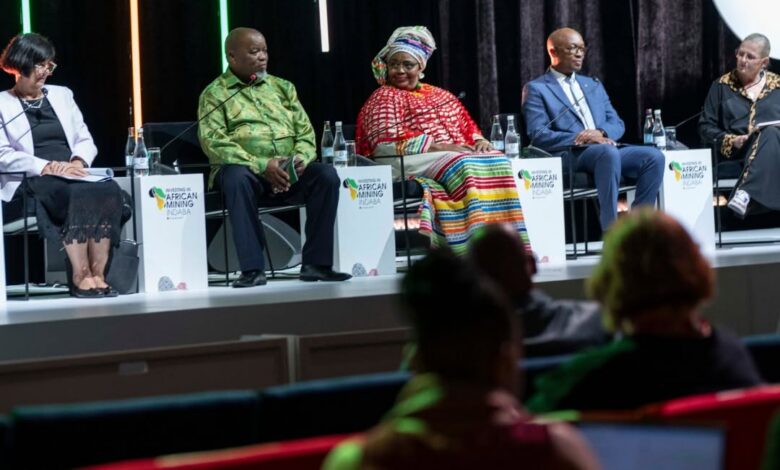
The mining industry is facing a fundamental question: Can governments, investors and mining companies turn ambitious plans into projects that are financed, built and able to deliver lasting economic value? That question runs through the agenda of the forthcoming Mining Indaba 2027, where industry leaders will examine the forces shaping the future of mining, from capital and
policy to infrastructure, technology, local value creation and the supply chains that connect mines to wider economies.
Under the theme “Stronger Together: Partnerships in Practice”, Mining Indaba focuses on what happens when partnerships move from discussion to action.
The right partnerships
Laura Nicholson, Industry Director at Mining Indaba, says closing the gap between ambition and delivery will require the different parts of the mining value chain moving closer together.
“Investors and mining companies are watching returns and project timelines,” says Nicholson. “Governments are looking at how to attract investment while securing greater economic value from their mineral resources. Downstream industrial buyers need supply, price, quality and security. All three need to move closer together. Partnership is not about bringing more people into the room. It is about getting the right people to solve the right problems, connecting different parts of the value chain and making something happen.”
But these priorities do not always move at the same speed.

One of the biggest tensions facing the industry is the speed at which decisions need to be made. Mining projects can take decades to develop, investors are under pressure to deliver returns within much shorter cycles, while governments are balancing long-term
development with political realities. Mining Indaba 2027 will examine how these competing timelines can work together without sacrificing long-term value.
The local upside
The debate around local value creation is equally important. Ntokozo Nzimande, DDG: Mining, Minerals & Petroleum Policy Development at the Department of Mineral Resources and Petroleum, indicates that greater value will not come from policy ambition alone. It depends on creating the conditions for local businesses and industries to grow.
“Local value creation succeeds when policy, infrastructure and private capital move in lock step,” says Nzimande.
That means clearer policy, stronger local suppliers, reliable energy and logistics, skills development and access to regional markets. It also means building local capacity in a way that allows businesses to compete on quality, scale and price.
The challenge extends into industries that sit downstream of mining. Victoria Backhaus Jerling, Chief Executive Officer of the African Association of Automotive Manufacturers (AAAM) highlights the scale required to build competitive African manufacturing industries.
“No African country can fully realise the continent’s automotive potential in isolation,” says Backhaus-Jerling. “There is a massive upside to be unlocked. African countries import billions in vehicles and components a year, but only a small proportion of that is imported from other African countries.”
For mining, the message is equally relevant. Processing, manufacturing and downstream industrial industries cannot be built through isolated projects. They require markets, infrastructure, skills, investment and trade links that connect across borders.
Government partnerships
The relationship between governments and investors is also changing. Jito Kayumba, Special Assistant to the President of Zambia for Finance and Investment, points to the need to build domestic capacity alongside investment.
“A genuine partnership means governments and investors working collaboratively to build domestic capacity over time,” he says.
Mining Indaba 2027 Commodity Focus sessions will highlight the plans by Zambia, which already produces 4% of the world’s copper to boost copper production from 800 000Mt to 3 million Mt per year by 2032. It’s an ambition only achievable through partnerships, as governments seek greater local participation and economic value from mining investment, while investors need
predictable policy, commercial viability and confidence that projects can deliver returns.
These pressures are reflected across the Mining Indaba 2027 agenda. Discussions at the event will examine whether export restrictions can create competitive domestic industries, how mineral corridors can serve both regional and global markets, and what infrastructure is needed to support industrial value chains. Other sessions will look at what is required to turn a critical-mineral endowment into a globally competitive industry, how technology can move beyond pilot projects, what is
driving copper investment and how the industry should think about mine closures.
An ecosystem of success
The common thread is clear: Ambition alone does not build mines, processing facilities, supply chains or industries. The conditions around them have to work. Capital needs infrastructure. Local content needs capable suppliers. Processing needs
reliable and affordable power. Investment needs policy certainty. Technology needs to move from pilot projects into operations.
That is where partnerships face their real test.
Mining Indaba 2027 will bring investors, mining companies, governments, downstream industrial buyers and industry stakeholders together around the decisions that will determine what gets financed, built and delivered. The conversation is moving from what mining could achieve to what needs to change to make those outcomes possible. The event asserts that the real measure of partnership is not agreement. It is what gets delivered.
- Registration is now open for Mining Indaba 2027, the industry’s premier meeting
place. The event takes place in Cape Town from February 8 – 11, 2027.