South Africa moves closer to 5 200 MW nuclear procurement
The government's commitment to proceed with new nuclear capacity is opening the way for renewed investment in local fuel production, reactor technology and nuclear infrastructure
South Africa is moving closer to implementing its planned nuclear expansion, following confirmation that the Minister of Electricity and Energy, Dr Kgosientsho Ramokgopa, will issue a ministerial determination for the procurement of 5 200 MW of nuclear power.
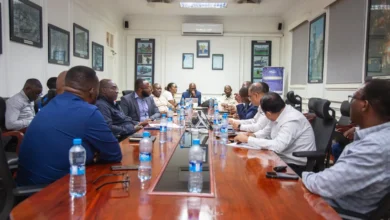
The announcement was made at the Nuclear and Clean Energy Conference, held in Irene, Centurion, on 10 and 11 November 2026, where government and industry representatives discussed ways of translating the country’s energy policies into projects.
The determination, which is included in the Integrated Resource Plan (IRP) 2025, will be subject to concurrence from the National Energy Regulator of South Africa (Nersa) and National Treasury.
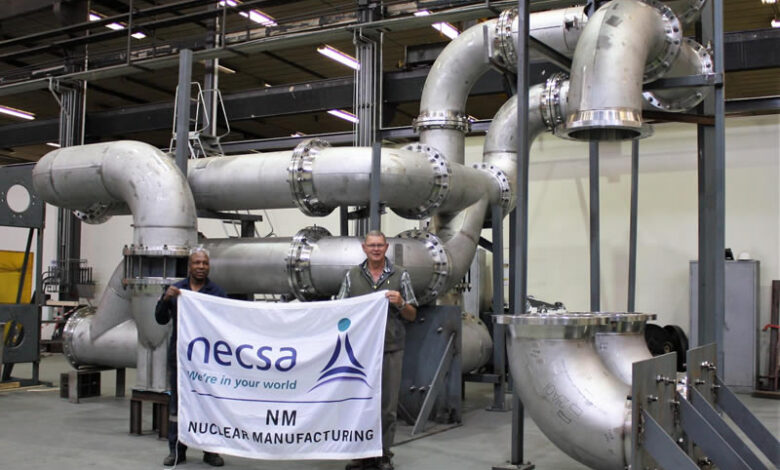
The South African Nuclear Energy Corporation (Necsa) said this is an opportunity for them to strengthen the country’s participation in the nuclear industry, particularly through local manufacturing and fuel-cycle development.

Necsa Group CEO Loyiso Tyabashe said the IRP provides for multiple applications of Small Modular Reactors (SMRs), including electricity generation, process heat and isotope production.
He also highlighted the organisation’s intention to advance nuclear fuel-cycle beneficiation by rebuilding South Africa’s uranium conversion, enrichment and fuel fabrication capabilities.
Developing these capabilities would reduce dependence on imported nuclear fuel while creating opportunities for local companies to participate in the supply chain. It would also support the supply requirements of existing and future reactors, with the potential to create skilled employment.
Necsa Board Chairperson David Nicholls said South Africa could draw on international experience to explore funding models that reduce reliance on state financing for nuclear construction.
He highlighted the country’s established nuclear operating experience, regulatory institutions and technical expertise as factors that could help attract investment.
Meanwhile, Cabinet approval for the construction of the Multi-Purpose Reactor (MPR) at Pelindaba is expected to support the continued production of medical isotopes.
The new reactor will operate alongside SAFARI-1 during the transition period, ensuring that isotope production is maintained as the existing facility is replaced. SAFARI-1 has been operating since 1965 and supplies medical isotopes used by hospitals in South Africa and international markets.
Beyond isotope production, the MPR will expand research and materials testing capabilities, including fuel testing and neutron science, while providing training opportunities for future nuclear scientists and operators.
Another development is the decision to move the Pebble Bed Modular Reactor (PBMR) programme out of care and maintenance. This will allow Necsa to assess the intellectual property and technical knowledge retained from the programme for possible future applications.
The organisation will explore industrial opportunities linked to SMRs and the development of high-temperature gas-cooled reactor fuel, with plans to progress from its Fuel Development Laboratory towards a pilot plant.
Necsa said it would continue working with the Department of Electricity and Energy and Eskom, with the National Nuclear Regulator maintaining its oversight role as the country’s nuclear programme advances.