Mgcina calls for stronger support for women shaping SA’s mining future
Deputy Minister of Mineral and Petroleum Resources Phumzile Mgcina highlights women’s progress in mining while calling for greater access to funding and opportunities
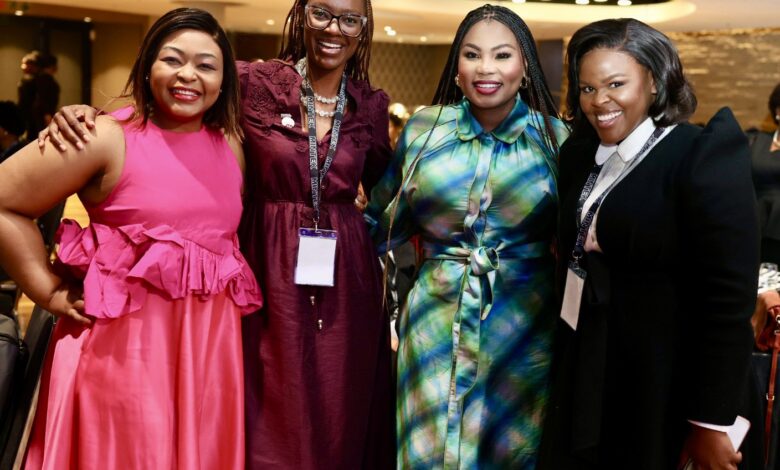
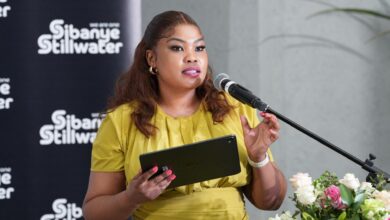
On Thursday, August 28, Deputy Minister of Mineral and Petroleum Resources Phumzile Mgcina attended the Women in Minerals Leadership Engagement in Melrose Arch, closing Women’s Month on a high note by celebrating the women helping shape the future of South Africa’s mining industry.
Addressing women leaders, professionals, entrepreneurs and decision-makers in the sector, Mgcina acknowledged their contribution against the backdrop of a mining industry that historically excluded women.
She said their presence and leadership today were significant, considering that although South Africa has been a mining nation for more than a century, women were prohibited by law from working in the mining industry for much of the country’s history.
“At the same time, the black majority, whose livelihoods had historically been rooted in agriculture, was systematically dispossessed and economically marginalised. Many were forced into the migrant labour system that sustained the mining industry. Even those who were permitted to work in the mines faced profound discrimination,” said Mgcina.

Despite this history, she said South Africa’s story was also one of courage, resistance and resilience.
“Recognising the injustice upon the people of South Africa, distinguished women such as Lilian Ngoyi, Helen Joseph, Rahima Moosa, and Sophia Williams-De Bruyn, together with thousands of other courageous women, took to the streets to challenge the apartheid regime.
“United in their demand for human rights, gender equality, and social justice, in August 1956, they marched to the Union Buildings under the powerful banner: ’Wathint’Abafazi, Wathint’Imbokodo’.
“It is, therefore, fitting that we meet today – not simply as women, but as senior government officials, industry executives, investors, and professionals – to reflect on how far we have come, and more importantly, how much further we still need to go.”
Mgcina said conversations around women’s empowerment and transformation in mining could not be separated from the legacy of the women of 1956, who laid the foundation for generations to come.
“From an industry in which women were once prohibited from working underground, we now have more than 78 000 women actively participating in core mining activities, including exploration, mining, and mineral processing. Some of these women, are in this room today. I must say that we are proud of you. We are proud of your achievements, your resilience, and your contribution to the transformation of our industry,” she said.
Creating opportunities for the next generation
Mgcina said government must continue opening doors for the next generation of women in mining by strengthening programmes that improve access to funding and opportunities.
She highlighted initiatives such as the Artisanal and Small-Scale Mining Fund and the Junior Mining Exploration Fund (JMEF), which are aimed at addressing some of the challenges faced by emerging players in the sector.
“Since the establishment of the R400 million JMEF to address the challenge of access to funding for early-stage exploration, at least 13 projects are now benefitting from the fund. We are encouraged that women-led projects are among those benefitting from this fund.
“Through the Artisanal and Small-Scale Mining Fund, we also continue to provide financial support to qualifying beneficiaries, thus contributing to government’s broader efforts to expand opportunities for historically disadvantaged South Africans.
“At least 20 artisanal and small-scale mining projects were supported through the 2025/26 financial year allocation of R59.7 million. A further R31.12 million from the Department’s allocation for the current financial year has been set aside to expand this programme.
“We are also working on partnership mechanisms with the Department of Small Business Development to strengthen support for artisanal and small-scale miners, with the objective of expanding both the reach and impact of this important programme,” she said.
For Mgcina, the progress made by women in mining is worth celebrating, but the work of transformation is far from complete.
The challenge now is to ensure that the doors opened by previous generations remain open, and that more women have the resources, opportunities and support needed to walk through them and build lasting careers and businesses in the mining industry.