Gwede Mantashe says South Africa’s energy transition must go beyond coal versus renewables
The Minister of Mineral and Petroleum Resources says the country needs a diverse energy mix while tackling the affordability crisis that leaves some households using electricity only for lighting
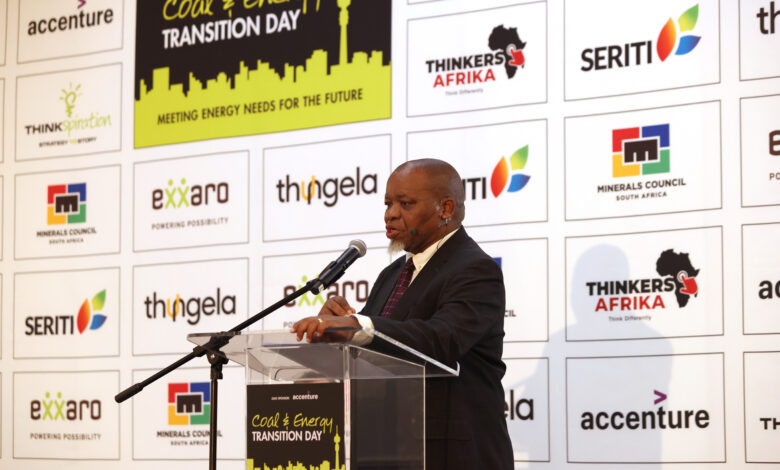
South Africa’s energy transition should not be reduced to a choice between coal and renewable energy, according to Minister of Mineral and Petroleum Resources Gwede Mantashe.
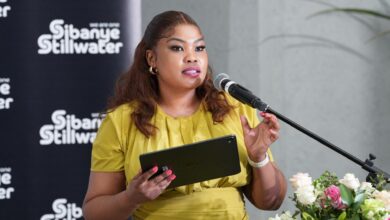
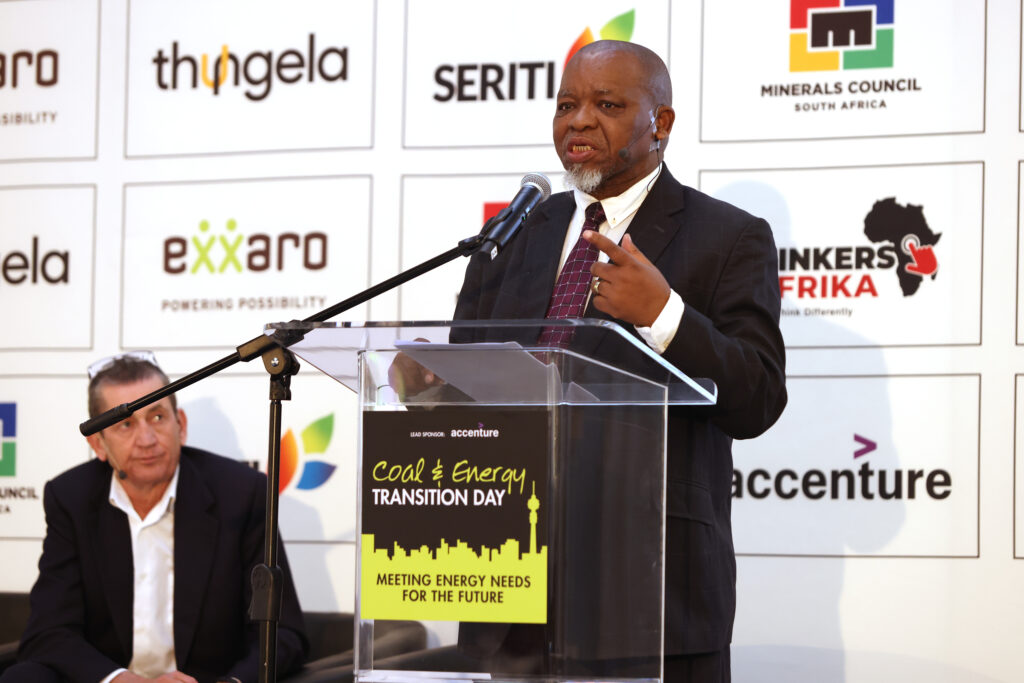
Closing the 2026 Coal and Energy Transition Day recently held at the Country Club in Johannesburg, Mantashe challenged industry experts to look beyond the conventional coal-to-renewables narrative and focus on a more fundamental issue facing the country: the affordability of electricity.
He pointed to South Africa’s significant progress in expanding electricity access since 1994, but said access does not necessarily mean households can afford to use electricity for more than basic needs.
“When we took over power, only 34% of South Africans had access to electricity. Today, it’s 94%,” Mantashe said.
However, he questioned what this access means for households that cannot afford to use electricity extensively.
“If I go to Cala, where I come from, people use electricity to light and nothing more, because it is just too expensive. They still use wood, coal, all other means. Electricity is too expensive to use,” he said.
For Mantashe, the affordability of electricity should be central to the country’s energy debate.
His challenge to the energy sector was direct: how can South Africa bring electricity prices down to levels that ordinary people can afford?
“If we answer that question, I wouldn’t even have to say anything,” he told delegates.
Transition should not mean abandoning coal
Mantashe also questioned the way South Africa defines the energy transition.
He said the conversation is often framed as a transition “from coal to renewables”, but argued that this oversimplifies what the country should be trying to achieve.
“Many say it’s transition from coal to renewable, and I say no, it’s transition from high-carbon emissions to low-carbon emissions, that’s it,” he said.
This, he argued, means South Africa should pursue a combination of energy sources rather than attempting to replace one source with another.
“You don’t need to move from coal to renewables,” Mantashe said.
He described himself as a “coal fundamentalist”, noting that he had worked in coal mining, but said this did not mean South Africa should rely exclusively on coal.
“The important reality is that we should put our heads together to determine the future energy sources for South Africa. And it’s not a particular source, it’s a range of them,” he said.
Nuclear must form part of the conversation
Mantashe said the country’s energy discussions should also give greater consideration to nuclear power, arguing that the technology could play a significant role in South Africa’s future energy mix.
He pointed out that renewables currently account for around 12% of the country’s energy sources, while suggesting that a single nuclear power station could provide a significant amount of generation capacity.
“Nuclear is going to be very important and is going to take a sizeable share from what we have received,” he said.
Mantashe called on renewable energy players to broaden their thinking around investment and consider a wider range of energy sources.
“People in renewables must begin to diversify sources of energy that they invest in,” he said.
South Africa cannot simply copy Europe
The minister also warned against applying energy-transition approaches designed for developed economies to South Africa without considering the country’s own developmental needs.
“We are a developing economy, we can’t do what Europe does,” he said.
He used carbon taxation as an example, arguing that South Africa needs to carefully consider the impact of measures introduced to align with international markets.
Mantashe said South Africa is one of the few countries outside the European Union to have a carbon tax, partly because the country trades processed products with Europe and needs to align with that market.
He questioned whether South Africa could be undermining its own economic interests in trying to accommodate the priorities of developed economies.
“It’s a mad debate in a sense that we are shooting ourselves in the foot to fit somebody else’s interest and that must be addressed by us,” he said.
For Mantashe, the energy transition therefore needs to be grounded in South Africa’s own realities, including affordability, economic development, energy security and the need to reduce emissions.
Instead of abandoning coal outright, he believes the country should build a broader and more diverse energy system that combines different sources while moving towards lower-carbon energy.
The bigger question, he suggested, is not simply what South Africa should transition away from, but what it should transition towards, and how it can ensure that the resulting energy system remains affordable to the people it is intended to serve.