Eskom secures LNG supply pathway for 3GW gas-to-power programme
Heads of Agreement with Zululand Energy Terminal strengthens energy security plans, supports renewable integration and addresses South Africa's looming gas supply gap
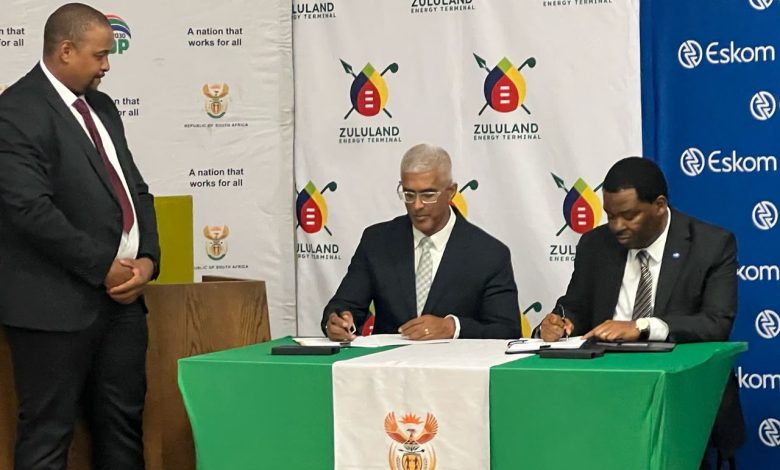
Eskom has taken a significant step forward with its 3,000 MW gas-to-power program by signing a Heads of Agreement (HOA) with Zululand Energy Terminal (ZET). This agreement positions Eskom as the foundation customer for a proposed liquefied natural gas (LNG) import, storage, and regasification facility in Richards Bay.
The HOA, signed on June 5, establishes a long-term strategic partnership to support South Africa’s gas-to-power ambitions. It is designed to strengthen energy security and facilitate the country’s transition to a lower-carbon energy future.
Under this agreement, Eskom will secure access to LNG infrastructure to support its planned 3,000 MW gas-to-power project, scheduled for development within the Richards Bay Industrial Development Zone (RBIDZ) in KwaZulu-Natal. The initiative is supported by the Ministry of Electricity and Energy, the Ministry of Transport, and Transnet. It is expected to play a crucial role in facilitating gas-to-power development by providing flexible and dispatchable generation capacity needed to complement renewable energy sources and maintain grid stability.
Eskom Group Chief Executive Dan Marokane emphasised that natural gas will serve as a critical bridge fuel during South Africa’s transition to a cleaner energy system. “Gas is being used as a bridge fuel to support the transition to a low-carbon energy system. These gas plants are designed to complement intermittent renewable sources like solar and wind, ensuring reliable 24/7 power while clean energy technologies are developed and integrated onto the grid,” he said.
Marokane added that dispatchable generation is essential for integrating renewable energy into the national grid and for supporting industrial activity. “Securing foundation customer status at the Zululand Energy Terminal is a critical enabler for our 3,000 MW gas program. This long-term contracting approach aims to minimise volatility and support system reliability while aligning with the Integrated Resource Plan (IRP) 2025 objectives.”
The IRP 2025 outlines a target of 6,000 MW of gas-fired generation capacity by 2030, with half expected to be procured through the Gas Independent Power Producer (IPP) Programme and the remaining 3,000 MW to be delivered by Eskom.
According to Eskom, this partnership addresses three key strategic priorities. First, it will enhance energy security by providing a reliable source of flexible generation capacity that can support the growing contribution of intermittent renewable energy while reducing reliance on coal-fired power generation.
Second, gas generation is expected to complement other grid stabilisation technologies, including battery energy storage systems and pumped hydro schemes, while helping to reduce diesel consumption for mid-merit operations.
Third, the project responds to South Africa’s anticipated “gas cliff” – the expected decline in domestic and imported gas supplies in the coming years. Beyond power generation, this development is also expected to support broader industrialisation efforts by creating infrastructure that can serve industrial gas users.