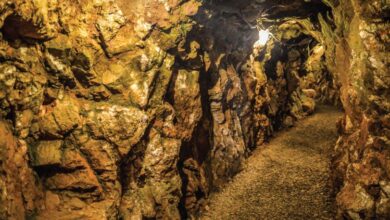
Zamboye mine disaster: When a closed mine keeps operating, who is responsible?
The collapse that killed more than 100 people at an illegal gold-mining site in the Central African Republic raises difficult questions about enforcement, livelihoods and responsibility
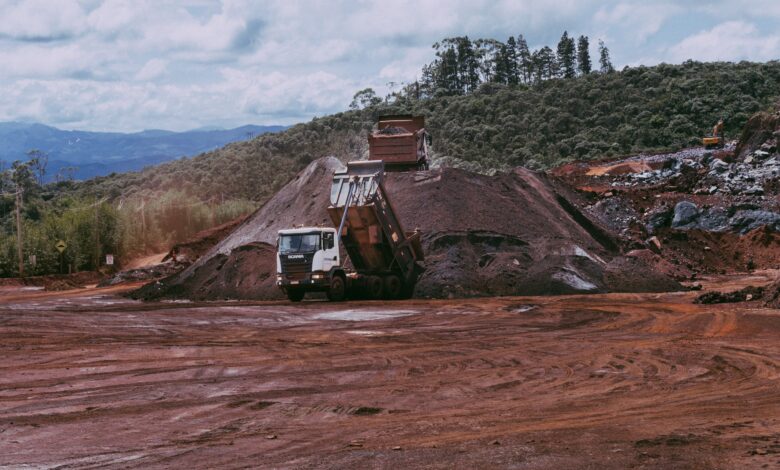
The collapse of the Zamboye gold-mining site in the Central African Republic has raised a difficult question beyond the immediate cause of the disaster: what happens when a mine has been closed, but people continue to work there?
More than 100 people are believed to have died after the artisanal gold-mining site in western CAR collapsed on August 18. The site is located about 50 kilometres from Baboua, near the border with Cameroon.
The government has since shut down the site, citing non-compliance with mining standards and administrative directives.
But an important detail has been established. It is reported that Zamboye had already been closed before the disaster.

Despite the closure, illegal miners continued to operate at the site. According to the government, the miners were working outside the legal framework and without the protections and oversight that come with formal mining operations.
This means that the miners were operating illegally, exposing themselves to known risks by working without the required safety measures and regulatory oversight.
However, he fact that hundreds of people could continue working at a closed mining site raises questions about how effectively the closure was enforced. It also brings us to the question of poverty, that how hungry are people that they would rather risk their lives mining for scraps?
If a site is considered too dangerous or does not meet regulatory requirements, simply issuing a closure order does not necessarily prevent people from returning.
The Zamboye disaster shows the difficulty of dealing with artisanal and small-scale mining in a country where mining is an important source of income.
This means that small-scale mining is not just an economic opportunity for some people, it can be a means of supporting their families in an economy where alternative sources of income are limited.
A local youth representative, Bertrand Be Yangué, described the victims as people who had gone to the mine in an effort to support their families.
Which then gives an understanding that illegal mining is not just about breaking the law. For some people, it is means of survival, no matter the risk.
That is why when people continue entering a closed mining area, the question cannot only be why they ignored the order. It must also ask what was compelling them to take the risk in the first place.
The answer does not make illegal mining safe right, but it helps explain why enforcement can be difficult.
The challenge for governments is therefore twofold: preventing people from working in dangerous and unauthorised areas while also addressing the economic conditions that drive communities towards informal mining.
The situation is further complicated by the fact that Zamboye attracted miners from across national borders. The government initially identified victims from the Central African Republic, Cameroon and Chad, illustrating how artisanal mining activity can draw a mobile workforce into mineral-rich areas.
And such situations are not limited to Central Africa only. In South Africa, 14 illegal miners recently died in Rustenberg, North West, after a mine dump collapsed. The fact that some of the miners were from Lesotho shows that there is a problem Africa needs to address about people who flee their countries to mine illegally in closed mining sites.
Therefore, Zamboye tragedy can’t be reduced to a story of miners breaking the rules or a government failing to enforce them.
It is a much more complicated picture involving illegal mining, weak enforcement, economic dependence on gold and the lack of safe working conditions in artisanal mining.
The investigation into the collapse will have to establish what caused the disaster and whether anyone should face criminal responsibility.
But whatever the final findings, it is clear that closing a dangerous mine on paper is not enough if people are still able and willing to enter it.