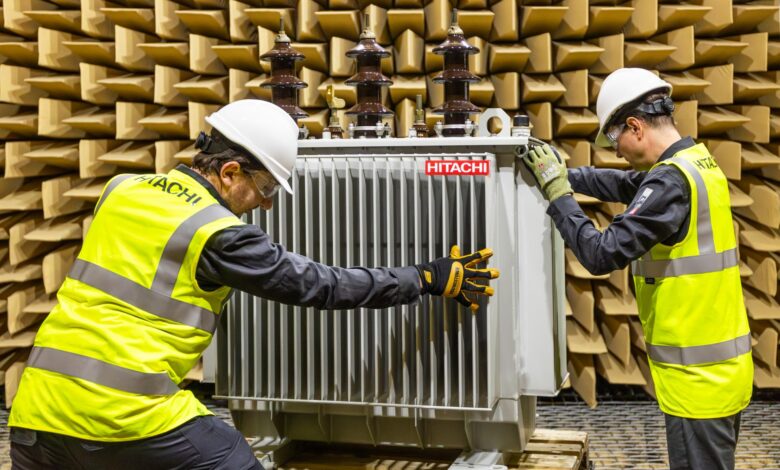
Electricity is one of the most important aspects of mining. It is not simply another input into production, but what keeps the operation moving.
From extraction and material handling to processing and smelting, mines depend on large, often heavily loaded electrical assets operating reliably under harsh conditions. Among those assets is a transformer, which is critical because when one fails, the consequences can extend far beyond the substation.
A transformer failure can therefore have both operational and financial consequences. Depending on the role of the transformer within the mine, a failure can interrupt extraction, processing or smelting, leaving equipment and personnel idle while repairs are carried out. The financial impact extends beyond the cost of repairing or replacing the transformer to include lost production, labour and other operational costs associated with an unplanned shutdown.
Replacement can also take considerable time, with an estimation for put lead times for power transformers at more than 12 months for many units, with the largest transformers taking 24 months or more.

Martin Kuhlmann, Energy Solutions Digital Head for Hitachi Energy South Africa, says one of the challenges mining operators face is maintaining the health of electrical equipment while it is exposed to harsh environmental and operating conditions.
“Without energy, the mine stops. Nothing happens. It costs them a huge amount of money per day. So the reliability of that is intense,” Kuhlmann says.
“It’s really that harsh environment, and then understanding in that harsh environment, how to maintain and keep their assets, whether it’s a transformer, switchgear in a substation, or rotating equipment like pumps, motors, et cetera. That has to be maintained in that harsh environment.”
Understanding transformer stress
A transformer operating at a mine can be subjected to several forms of stress. High ambient temperatures, heat generated within the transformer, electrical loading, harmonics, switching events, and the demands of heavy industrial processes can all affect its condition.
For example, in smelting operations, furnace transformers can be subjected to extensive electrical loads while their tap changers operate continuously to maintain the required conditions.
To simplify the stress on the transformer and its maintenance, Kuhlmann uses a human body analogy.
“If you understand the stress similar to a human body, if we can manage stress as a human being, our health improves. It’s the same thing like a transformer,” he says.
“So if you understand the stress that’s caused on that transformer, and mitigate that stress through a planned maintenance programme, then one can obviously extend the life of that transformer and create reliability.”
The analogy is particularly relevant because a transformer can continue operating while its condition is deteriorating. By the time a serious failure becomes obvious, the opportunity for a relatively simple intervention may already have passed.

What operators need to monitor
Temperature is one of the most important indicators of transformer health, but Kuhlmann says it cannot be considered in isolation.
For oil-filled transformers, monitoring the gases dissolved in the transformer oil is also critical. Changes in gas composition can indicate stress or developing faults inside the transformer.
The condition of the oil and the paper insulation around the windings can provide important clues about the health of the asset. If degradation goes undetected, insulation failure can ultimately result in a major transformer failure.
Other parameters can also provide valuable information, including bushings, partial discharge, capacitance, dissipation factors, relays, and the condition of tap changers.
The latter is particularly important in applications such as smelting, where tap changers can operate continuously under demanding conditions.
“If a tap changer fails, end of production,” Kuhlmann says.
That makes the ability to detect changes in its condition before failure an operational issue instead of a maintenance concern.
From periodic testing to continuous insight
Traditionally, understanding the condition of a transformer has often involved sending technicians to the site to carry out physical inspections or take oil samples for laboratory analysis.
The limitation is that these inspections provide only a snapshot of an asset’s condition.
According to Kuhlmann, oil sampling in the mining and utility sectors can take place every six months, annually, or even less frequently. And a lot can happen between two tests.
Digital sensors help close that gap by continuously collecting information from the transformer and converting it into data that can be analysed.
The system does not need millisecond-level information because it is designed for condition monitoring rather than controlling the electrical system. Instead, measurements at intervals of minutes can reveal changes and trends that periodic testing may miss.
“So now we’re doing it every 10 minutes, for example. Now they’re getting a lab result every 10 minutes. You can pick up the trend. You can pick up the early warning,” Kuhlmann says.
“And it’s that early warning that now helps us create a maintenance programme and a recommended action to mitigate that.”
He likens the approach to medical monitoring, where the value is not simply in collecting information but in identifying a developing problem early enough to act.
“Again, coming back to the human analogy, if you pick up cancer early enough, you can fix it. If it’s too late, you can’t fix it. And that’s the difference here,” he says.
“So it’s really about getting information on what’s happening, understanding what is actually happening, and then how do we fix that in a very short space of time?”
Turning data into maintenance decisions
Collecting more information does not automatically make an asset more reliable. The data has to be interpreted in a way that allows maintenance teams to make decisions.
Hitachi Energy uses digital models to assess transformer condition against different indicators. Kuhlmann says the company works with around 1,200 models that can analyse combinations of data and identify patterns associated with developing problems.
For example, an increase in temperature alongside changes in dissolved gases can indicate that a transformer is experiencing a particular form of stress.
The important factor is not necessarily a single abnormal measurement, but how different parameters change over time.
That allows operators to move away from maintenance based solely on fixed intervals and towards maintenance based on the actual condition of the asset.
The result can be earlier intervention, better planning, and potentially longer asset life, while reducing the likelihood that a transformer failure will cause an unexpected interruption to production.
Working with existing mine infrastructure
For mining companies, introducing digital monitoring also has to fit within the existing infrastructure.
Kuhlmann says Hitachi Energy’s approach is designed to work across different manufacturers and existing systems as opposed to creating a closed environment in which customers are required to use only one supplier’s equipment.
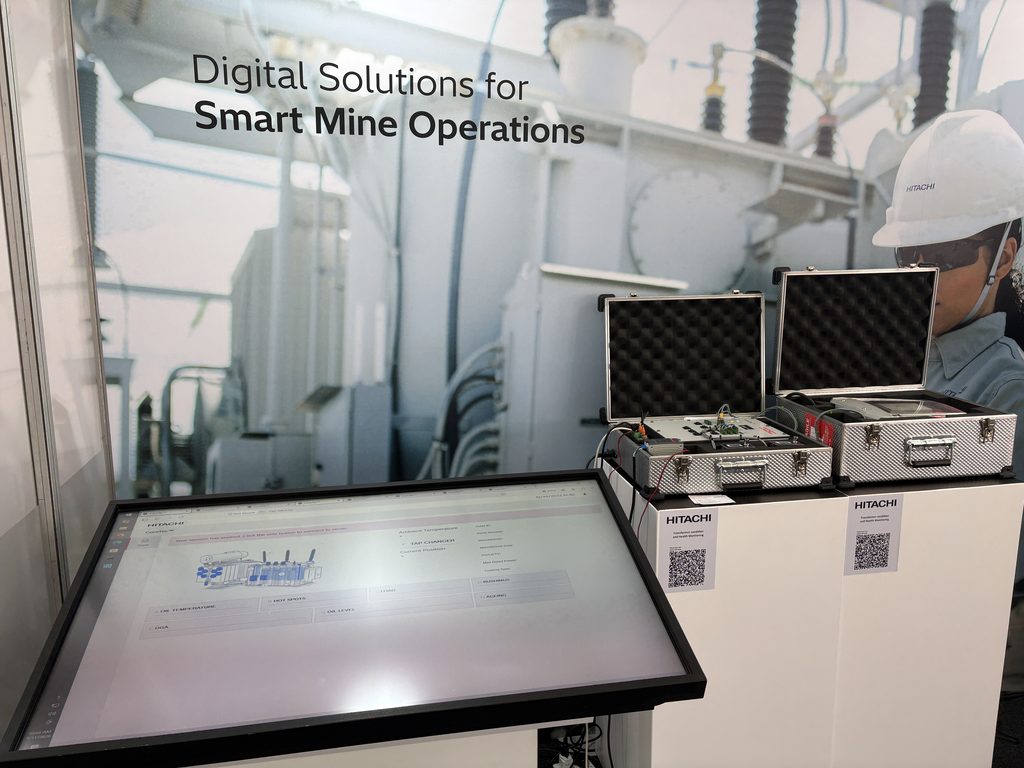
The company’s monitoring platform can integrate with enterprise asset management systems, such as SAP, and other systems for managing work orders, maintenance teams, and equipment fleets.
Once a certain condition issue has been identified, the information can be transferred into an existing maintenance workflow, allowing a work order to be generated and assigned for investigation.
The same principle applies to sensors. While Hitachi Energy has its own dissolved gas analysis technology, Kuhlmann says its platform can also integrate data from sensors supplied by other manufacturers.
For mining companies with large fleets of equipment from different suppliers, this interoperability is important because replacing existing infrastructure solely to introduce a digital monitoring platform is neither practical nor economical.
The next step: AI and the wider mine
Kuhlmann sees artificial intelligence playing a growing role as companies begin monitoring more than transformers.
Conveyors, pumps, motors, electric vehicles, and electric trucks can all generate large quantities of operational data. As the number of monitored assets increases, the challenge becomes processing that information quickly enough for maintenance teams to act on it.
AI could help analyse those large datasets and identify patterns across different types of equipment.
But Kuhlmann does not see the technology replacing the people responsible for maintenance decisions.
“It’s not going to take away the human element, because the human element at the end of the day needs to understand those reports and then make an informed decision about what they’re going to do,” he says.
“But it’s the analytics that process that information quickly enough for us to get that informed report and then make something happen with it.”
That distinction is particularly important for mining operators. Digital monitoring does not eliminate the need for engineers and maintenance teams. Its value lies in giving them a clearer picture of what is happening inside critical equipment before a developing problem becomes a production stoppage.
And for transformers operating under the equivalent of years of industrial “stress”, knowing what is happening inside the asset may be the difference between a planned intervention and an unplanned shutdown.