Joburg Indaba: Mining leaders call for accountability, collaboration to unlock South Africa’s growth
Joburg Indaba: Mining leaders call for accountability, collaboration to unlock South Africa’s growth
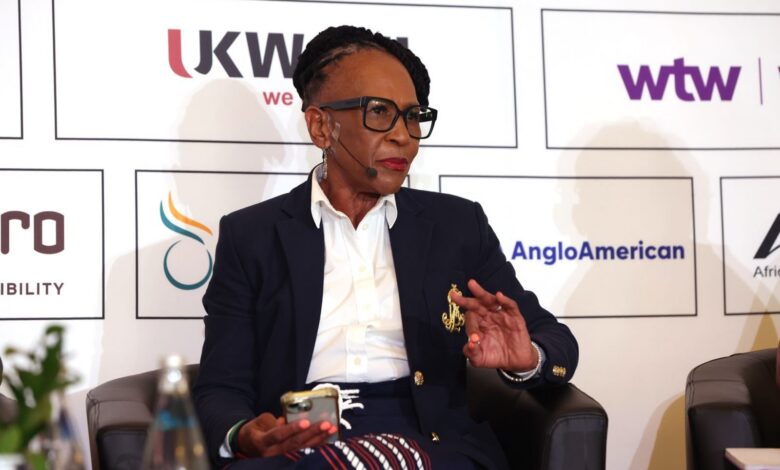
Industry policymakers, mining executives and other stakeholders gathered at the Inanda Club in Johannesburg on October 7 and 8, 2026 for the annual Joburg Indaba, with discussions on the future of South Africa’s mining industry focusing on accountability, leadership, policy certainty and the implementation of critical projects.
Day one featured discussions on whether South Africa is approaching a new phase of economic progress or risks falling further behind, alongside an update on the Minerals Council South Africa’s investment and growth strategy and a panel examining policy, regulation and investor confidence.
Across the sessions, speakers emphasised that while progress had been made in certain areas, translating commitments into tangible results remained essential to unlocking the country’s economic and mining potential.
The session, South Africa’s Next Crossroads: New Beginnings or a Slide Backwards?, chaired by Bernard Swanepoel and co-chaired by Sue Olivier, Managing Director and Africa Lead of Accenture’s Natural Resources, Energy and Utilities practice, examined the leadership and institutional challenges confronting the country.
Accountability and leadership at a crossroads
Advocate Thandi Orleyn, Chair of Impala Platinum Holdings, highlighted the need to confront persistent governance and service-delivery challenges while ensuring that commitments made by public and private sector leaders translated into action.
“We should not pretend that there are no problems. The municipality is absent in action. We need to engage in a very intentional way. If whoever is not going to implement what they said they would, it’s a waste of time.”
Orleyn also addressed women’s representation in leadership, arguing that expanding access to senior positions requires both institutional support and confidence among women seeking to advance their careers. She called for an environment in which women are enabled to compete for top positions and take on greater responsibility.
Martin Kingston, Chair of Business for South Africa (B4SA), highlighted the country’s capacity constraints and the importance of ensuring that diversity initiatives are accompanied by the right skills and people in positions of responsibility.
He also pointed to accountability as a central consideration in the post-election environment, reinforcing the need for leadership to translate commitments into measurable outcomes.
Mxolisi Mgojo, President of Business Unity South Africa, emphasised mining’s role in addressing challenges in communities, particularly through infrastructure development and partnerships between government and business.
“Many things that we talk about at a local level, mining has played a huge role in dealing with crises faced by many communities. It cannot happen without government support and business playing a huge role in driving infrastructure in those communities. There needs to be a will to execute. If you don’t have a willing partner who is willing to take tough decisions, it won’t happen.”
Mgojo challenged the industry and government to focus on delivering critical projects and infrastructure commitments. Looking ahead, he said he wanted to see tangible progress on the work expected of mining companies and government, with implementation taking precedence over further promises.
Women’s leadership and coalition governance
With the elections coming up next month, Lindiwe Mazibuko, Founder and CEO of Futurelect, brought the discussion to the importance of political representation, voter awareness and the barriers women face when seeking positions of power.
While women occupy many ward councillor positions, Mazibuko noted that barriers and gatekeepers continue to limit women’s access to political leadership. She argued that investing in women’s leadership remains worthwhile, particularly as South Africa navigates its changing political landscape.
Looking towards the period after the elections, she also highlighted the importance of coalition agreements built around practical plans rather than the pursuit of power alone.
Her remarks reinforced a broader theme of the session: leadership and representation must be accompanied by clear priorities, accountability and a willingness to deliver on commitments.
Minerals Council outlines investment and growth priorities
The keynote address, delivered by Paul Dunne, President of Minerals Council South Africa and CEO of Northam Platinum, provided an update on the council’s investment and growth strategy.
Dunne began by condemning violence against women and children before turning to the broader issues facing the mining industry.
He focused on investment and growth, particularly the ongoing efforts to improve the operating environment for mining companies, including infrastructure constraints, regulatory uncertainty and the need to strengthen South Africa’s attractiveness as a destination for mining investment.
Policy, regulation and investor confidence
The third session, Where Are We Now with Policy, Regulation and Investor Confidence?, brought together Mzila Mthenjane, CEO of Minerals Council South Africa; Paul Dunne; James Lorimer, the Democratic Alliance’s Shadow Minister of Mineral Resources; and Ntokozo Nzimande, Deputy Director-General for Mining, Mineral and Policy Development at the Department of Mineral and Petroleum Resources.
Chaired by Ntsiki Adonisi, Head of ENS’s Natural Resources and Environment practice, the discussion examined developments in the policy and regulatory environment and their implications for investor confidence.
Panelists pointed to improvements in rail and electricity as positive developments for the mining sector. Better coordination between government and industry was also identified as an important step towards addressing longstanding challenges.
The discussion highlighted a shift towards greater cooperation between government and mining companies, with trust between the two sides viewed as essential to advancing shared priorities.
Progress on exploration was another issue raised during the session, including the approval of exploration-related measures and the establishment of an exploration fund. Changes to the restrictions associated with electricity deregulation were also highlighted as part of efforts to improve the operating environment.
As the Joburg Indaba continued into its second day, the central challenge for South Africa’s mining sector remained how to translate improved cooperation and policy developments into sustained investment, stronger communities and long-term economic growth.