
Illegal mining remains one of South Africa’s most pressing security and economic challenges, despite repeated warnings about the dangers it poses to those involved, nearby communities and the country’s mining industry. Beyond the financial losses suffered by the sector, illegal mining has increasingly been linked to organised crime, violence, environmental damage and the exploitation of undocumented migrants.
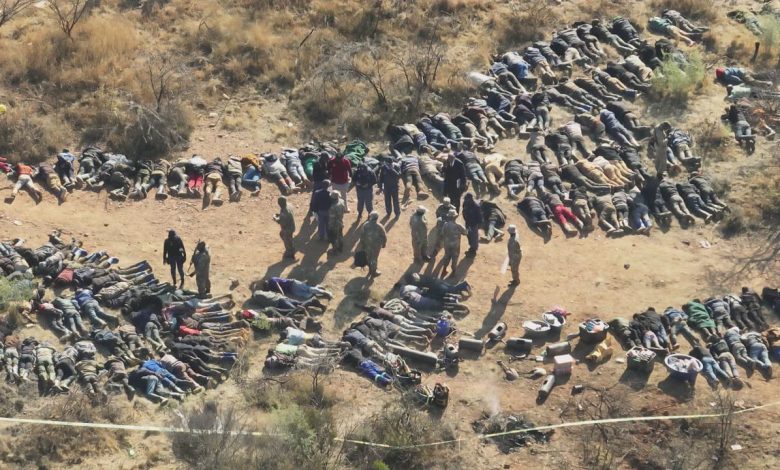
On Tuesday, July 7, the South African Police Service (SAPS), working alongside the South African National Defence Force (SANDF), Sibanye Protection Services and Fidelity Specialised Services, conducted #OperationProsper at Losberg Kloof Mine in Westonaria, resulting in the arrest of 217 suspects.
The operation targeted illegal mining activities and related criminal offences in the area. Police said the suspects included undocumented foreign nationals from Lesotho, Mozambique and Zimbabwe, while two additional suspects were arrested for possession of ammunition and allegedly aiding and abetting undocumented immigrants.
Authorities also recovered equipment commonly used in illegal mining, including phendukas (portable winches), as well as food supplies and alcohol. Officers seized a 9mm pistol, two magazines and 118 rounds of AK-47 ammunition.
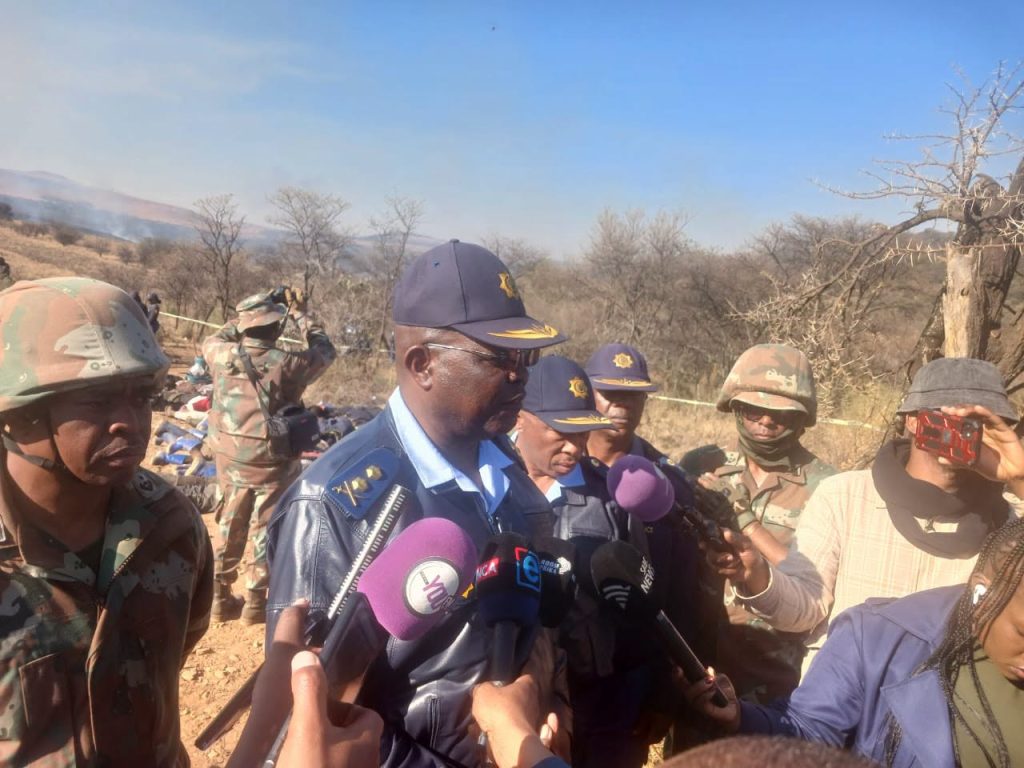
Addressing the media after the operation, Major General Patrick Kekana said the raid followed more than six months of intelligence gathering after police identified Losberg Kloof Mine as a hotspot for illegal mining.
According to Kekana, an earlier operation conducted two months ago yielded limited success, with police recovering approximately 600 rounds of AK-47 ammunition, two abandoned assault rifles and arresting around 30 undocumented individuals. Following that operation, authorities reviewed their strategy and intensified surveillance using drones, aerial support and intelligence operations before launching Tuesday’s raid.
“We monitored the area extensively using electronic drones, chopper capable of capturing video footage and intelligence resources to ensure we gathered as much information as possible before executing the operation,” Kekana said.
The coordinated operation began at approximately 3am.
Kekana said police initially arrested more than 198 suspects, including over 100 Lesotho nationals, more than 50 Mozambican nationals, several Zimbabwean nationals and South African citizens. He added that four South Africans are expected to face charges for allegedly harbouring undocumented immigrants, while more than 170 suspects are expected to be charged for contravening South Africa’s immigration laws after allegedly failing to produce passports, asylum permits or other legal documentation permitting them to remain in the country.
The operation forms part of ongoing efforts by law enforcement agencies to combat illegal mining and organised criminal activity across Gauteng.
The arrests have once again drawn attention to the role undocumented migration plays in some illegal mining operations. While some undocumented migrants are not involved in criminal activity, law enforcement agencies have repeatedly stated that organised illegal mining syndicates recruit foreign nationals to work in dangerous underground conditions, often under the control of heavily armed criminal networks. This presents significant challenges for border security, policing and community safety.
The operation has generated mixed public reaction. While some South Africans praised the police and their partners for disrupting illegal mining activities, others argued that meaningful progress will only be achieved by dismantling the criminal syndicates and financiers who organise and profit from zama-zama operations.
This concern was echoed at the recent Mine Security Conference and Tech Expo, where industry leaders and security experts emphasised that law enforcement efforts should focus not only on illegal miners themselves but also on the syndicate leaders who finance, equip and coordinate these operations. They argued that targeting these kingpins remains essential to finding a long-term solution to South Africa’s illegal mining crisis.