
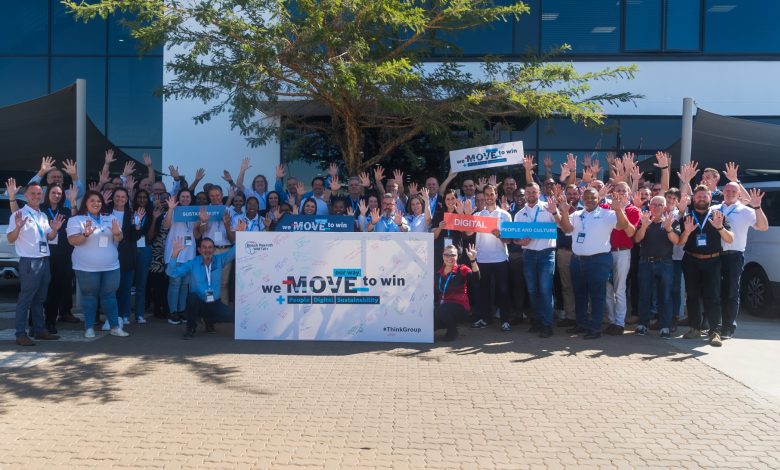
Bosch Rexroth Africa celebrated its 60th anniversary on 19 June, marking six decades of operations across the continent and reaffirming its commitment to innovation, customer service and tailored industrial solutions.
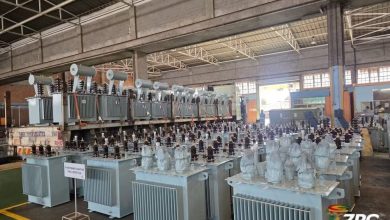
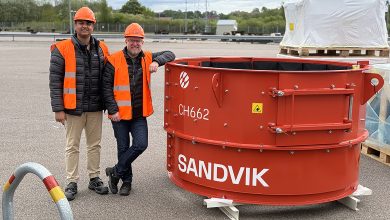
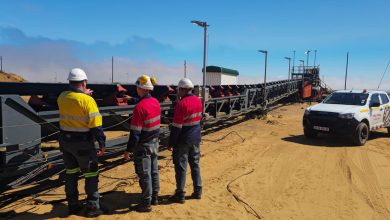
The celebrations began with a tour of the company’s facilities, where guests were given a closer look at several customised machines and solutions developed to meet the unique requirements of African industries, particularly the mining industry.
Speaking during the event, Chris Riley, Regional President of Bosch Rexroth Africa and Chief Executive Officer of Bosch Rexroth South Africa, highlighted customisation as one of the company’s key differentiators.
“One of the things that has made us successful is customisation,” Riley said. “Globally, Bosch Rexroth supplies products to major original equipment manufacturers (OEMs) in sectors such as mining, agriculture and automotive. However, Africa is different. We are largely an end-user-focused market, supporting equipment that has been imported onto the continent.”

According to Riley, this has enabled the company to develop solutions tailored to local operating conditions rather than relying solely on standardised global offerings.
Beyond technology and products, Riley believes the company’s longevity has been driven by its close relationships with customers.
“One of our hashtags is ‘closer than you think’,” he said. “That’s really about getting close to customers, understanding their pain points and helping them solve problems.”
He explained that the company’s approach often begins with addressing a specific operational challenge before expanding support services.
“If a mine is experiencing downtime because of hydraulic hose failures, we’ll bring hose stock onto the site, place a technician there and ensure the problem is resolved quickly. From there, we identify other areas where we can add value, whether it’s filtration, spare parts or pumps. We don’t rush it. It’s slow and steady.”
As industries increasingly explore the potential of artificial intelligence (AI), Bosch Rexroth Africa is also integrating digital technologies into its operations and training programmes. However, Riley noted that significant challenges remain in implementing AI-driven solutions in African mining environments. One of the biggest barriers is connectivity.
Riley cited the example of the company’s Smart Inspect system, which guides technicians through equipment inspections using QR-code-based digital workflows.
“When we first introduced the application, it required continuous online connectivity. The reality is that many mining operations have little or no connectivity underground or in operational areas,” he said.
To address this, Bosch Rexroth redesigned the application so that data can be captured offline and uploaded once technicians return to an area with Wi-Fi or cellular coverage.
Beyond connectivity, Riley identified data privacy as another critical concern.
“If I can monitor a customer’s equipment online, I can potentially gain insights into production levels and operational performance. Customers become uncomfortable when that data sits on someone else’s server,” he said.
While AI and connected technologies continue to gain momentum globally, Riley believes adoption in Africa will follow a different trajectory.
“AI in a highly connected European environment is one thing, but Africa operates in a different context. Connectivity infrastructure and data concerns mean we’re not there yet. In time, it will come, but for now the realities are different.”
As Bosch Rexroth Africa enters its seventh decade, the company remains focused on delivering customised solutions, building strong customer partnerships and adapting global technologies to suit the realities of African industry.