By Jimmy Swira
Africa is endowed with abundant mineral resources, but many countries have derived little value from them. This should change.
The challenge has been how to exploit them for the benefit of all stakeholders equitably.
This has to change.
There is a need for solutions that could unlock the untapped opportunities lying buried in African mining and turn potential into reality.
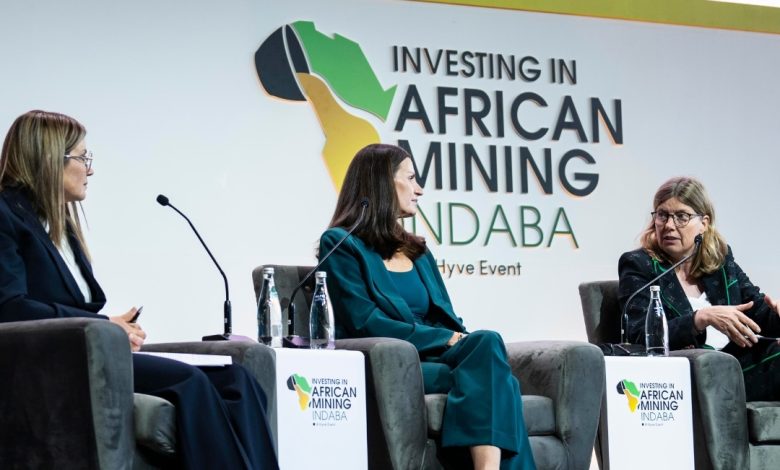
The theme of the 2026 Investing in African Mining Indaba encapsulates the approach that the continent needs to take if it is to turn potential into tangible benefits for all: Stronger Together: Progress through Partnership. The relevance of this theme was underlined at the Pre-Mining Indaba Press Briefing in early November 2025.
What was stressed is that this is more than a slogan but a call to action: the urgent need for a unified strategy if the continent is to unlock mining-led growth.
Appropriate timing
The timing for this call couldn’t have been more appropriate.
Factors favour African mining, and it is the opportune time for stakeholders in African mining to seize the moment.
Key factors
Based on recent developments, two key factors stand out and are worth highlighting:
1. Critical Minerals and the Clean Energy Transition
Critical minerals have become the new gold – no pun intended.
There is rising demand for so-called critical minerals, which are vital in defence, renewable energy (e.g., wind turbines and EV motors), clean energy transitions, and high-tech industries: Rare Earth Elements (REEs), lithium, cobalt, nickel, graphite, gallium, germanium, tantalum, niobium, tungsten, and PGMs (Platinum Group Metals like platinum, palladium, rhodium).
The International Energy Agency (IEA) Global Critical Minerals Outlook 2025 predicts strong growth in demand. Providing some context, the outlook explains: “Battery deployment in electric vehicles (EVs) and storage applications drives strong demand growth for these minerals. Meanwhile, expanding construction and the electrification of grids and industrial equipment are fuelling increased demand for copper. Growing demand for permanent magnets, particularly from EVs and wind power, boosts the need for magnet rare earths.”
Results from recent mineral exploration projects indicate that Africa holds a significant portion of these critical minerals in abundance, with tonnes of deposits indicating long life-of-mine operations. The following countries are major players, powering the global green energy transition and tech industries:
· DR Congo (cobalt, copper)
· South Africa (platinum, manganese, chromium, cobalt, copper)
· Zambia (copper, cobalt)
· Zimbabwe (lithium, graphite, cobalt, copper, platinum)
· Guinea (bauxite)
· Gabon (manganese)
· Mozambique (graphite, lithium)
· Tanzania (nickel, rare earths)
· Madagascar (nickel, cobalt)
What is more, ongoing exploration efforts indicate the promise of big discoveries on the continent.
2. Geopolitical realignment and the long-haul gold rally
Ongoing changes in the global economy – which are conspicuously ignored in mainstream media – have significantly triggered increasing demand for gold.
Countries are stockpiling gold as a safe haven from dollar-denominated assets that are increasingly seen as high-risk due to the US government’s exposure to ballooning public debt. Some analysts fear the potential default on treasury bond repayments. In addition, there is also the controversial freezing of foreign government assets for alleged breaches of international regulations.
As of now, China is leading the charge, stockpiling a record amount of gold and buying more. Official estimates put the country’s gold reserves at 2,303.5 tons (as of late 2025), but unofficial figures suggest it could be higher. This is according to various reports, including Fortune Magazine discussions on China’s gold strategy in late 2025. Other countries are following suit.
As a result of this development, the world gold price is at the highest ever in recent history. As of January 14, 2026, it peaked around $4,635 per ounce (with intraday highs near $4,642), far breaching the 2020 high of $2,000–$2,100 per ounce (set in 2020 and revisited in later years).
So, what do these developments mean for the African mining sector?
Truth be told, they could mean much more if African countries take action.
Time to seize the opportunity
Evidently, this is the time for stakeholders in African mining to seize the moment, now or never.
It is clear that previous methods mining jurisdictions have employed have not served the desired purpose. Hence, the first step is to revise the approach; otherwise, in years to come, this will be another missed opportunity.
The regional integration path
It has to be acknowledged that the main oversight of mineral-rich countries has been working individually to further their aspirations. Dr. Marit Kitaw, Economic Affairs Officer at the United Nations and member of the Mining Indaba Executive Advisory Board, pointed this out.
Kitaw applauded that most of Africa’s 20 major mineral-producing countries have revised their policies around the Africa Mining Vision. However, she contended that the real inflection point lies in continental alignment.
That is why, unanimously, the experts at the press briefing underscored that regional integration could be the engine that will determine whether the continent as a whole captures the full economic, industrial, and societal value of its mineral endowments.
Kitaw stated: “Investors aren’t only chasing minerals; they’re chasing markets, corridors, scale, and stability. A single country cannot secure bargaining power alone. Africa must act as a unified economic bloc.”
She raised an undeniable fact: the next decade of mining-led growth hinges on political alignment, cross-border collaboration, industrial connectivity, and a decisive shift from dialogue to action. For this reason, regional integration should not be treated as a mere policy aspiration but a reality.
From aspiration to reality
So, what are the key priorities to turn this aspiration into a reality?
Many points were raised, all of them interesting, but the Mining Business Africa team cherry-picked two critical ones:
1. Accelerating policy execution
Frans Baleni, Chairman of the Mining Indaba Executive Advisory Board, noted that while Africa has the frameworks and ambition, what has been lacking is coordinated delivery, while other regions have moved faster. Cognisant of this, he made a firm call to accelerate policy execution across the continent.
“Africa must close the policy execution gap. Regional integration makes good policy easier, more predictable, and truly investor-ready.” — Frans Baleni, Chairman, Executive Advisory Board, Mining Indaba
Echoing Baleni, Dr. Kitaw added: “We don’t lack frameworks; we lack coordinated implementation. Regional infrastructure, energy, logistics, technology, and skills development are the backbone of value addition.”
2. Shared and sustainable development
Dr. Marit Kitaw stressed that Africa’s mineral wealth must translate into shared and sustainable development.
So, where does the Mining Indaba fit in this narrative/drive?
Shifting from Aspiration to Action
Dr. Kitaw brought up Indaba as the platform that could facilitate the shift from aspiration to action. Zeinab El-Sayed, Head of Government Partnerships at Mining Indaba, mentioned that this is what the 2026 programme has been intentionally designed to achieve: driving collaboration across governments, regions, and private sector partners.
“Integration is the thread connecting mining to energy, energy to infrastructure, and infrastructure to manufacturing, creating the scale needed for African competitiveness.”
True to form, the 2026 Ministerial Symposium underpins this commitment to regional integration. The Symposium will convene leaders from South Africa, Ghana, Zambia, DRC, Botswana, Angola, and others to showcase real models of cross-border collaboration—from shared energy projects to harmonised policy frameworks and interconnected transport corridors.
“Progress cannot happen in isolation. This year, we are aligning ecosystems, timelines, and national priorities to unlock scale. Regional integration is the blueprint.”
Driving the shift
Mining Indaba 2026 will be the platform driving the shift towards regional integration through bold dialogue, cross-border partnerships, deal-making, and
policy harmonisation—all under the unifying theme: “Stronger Together: Progress Through Partnership.”
This is where Africa’s mining transformation blueprint will be shaped and where stakeholders across the value chain will be called upon to commit, collaborate, and deliver.
Reshaping the Trajectory
Providing more context, Mining Indaba’s Product
Director, Laura Nicholson, affirmed that MI26 represents a pivotal moment in how the continent defines and advances its mining future. “Mining Indaba is no longer just where people meet; it’s where Africa’s mining trajectory is reshaped. We are enabling meaningful dialogue that changes the narrative of what Africa can achieve.”
Indisputably, this shift is reflected in the growing stakeholder universe now participating at the Indaba. This now includes governments, investors, miners, OEMs, communities, youth, and downstream industries—all forming part of a “connected value chain that is critical for Africa’s industrialisation.”
Collective execution
Yes, with everyone aboard, Africa can develop. Why not? The continent has the resources, the policy frameworks, and the continental vision. The next frontier is collective execution.