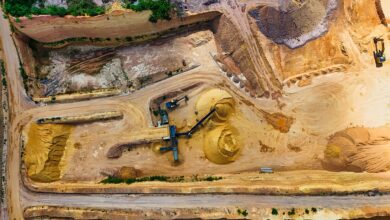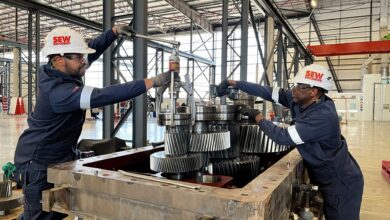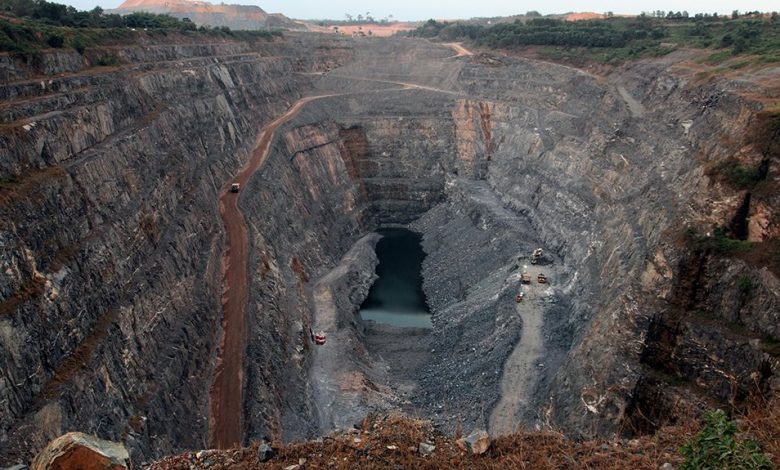
George Charamba, Deputy Chief Secretary for Presidential Communications in the Office of the President and Cabinet, has welcomed the government’s decision to restrict the export of raw minerals.
The Zimbabwean government suspended the lithium concentrate exports in February this year.
The policy forms part of the country’s National Development Strategy 2 (NDS2), which spans from 2026 to 2030.
By processing minerals locally, Zimbabwe aims to transform its mining sector from an extraction-based industry into a value-added powerhouse.
“We have disallowed mineral oils from being sent abroad in their raw form. What that means is we have insisted that those minerals must be processed at home, but once they are processed, that’s not the result. We want now to see how that processed product feeds into our industrialisation ambition as a nation, which means in respect of practically every mineral we must have a value addition chain that translates into an industry,” Chambara says.
He adds that the new policy is critical for restructuring Zimbabwe’s economy from a primary to a more advanced, tertiary level. However, this shift presents challenges, particularly the need to prioritise skills development to support local mineral processing.
Previously, countries importing minerals from Zimbabwe often benefited more than they paid for, as multiple valuable minerals could be extracted from a single ore body. This is one of the key reasons Zimbabwe has moved to process its minerals locally before export.
“Geologically, Zimbabwe is in a unique position where you never have any one mineral existing singly. All our minerals are always co-extensive, which means you find your gold, silver, iron, aluminium and lithium in one ore body. Now, when you send resources in that unprocessed way, what it means is that beyond the jurisdiction of Zimbabwe, the receiving jurisdiction then separates and ends up having more than 3,4,5 minerals out of the same ore-body. And in that way, we are being prejudiced,” says Charamba.