Women’s Month may be over, but the questions facing women in mining cannot be confined to August.
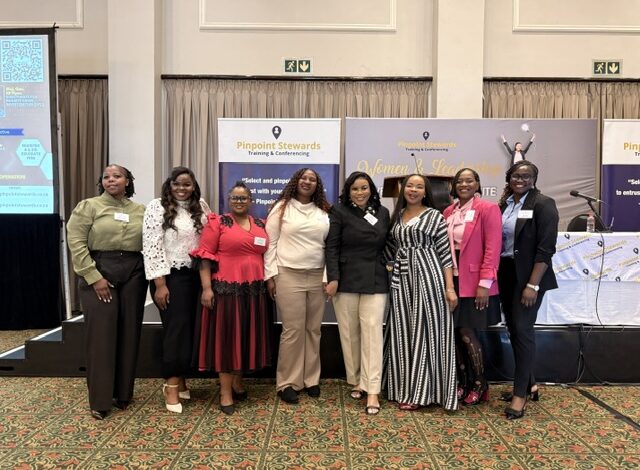
At the fifth annual Women & Leadership in Mining conference in Johannesburg this week, women working across the industry challenged one another to look beyond representation and focus on the role they can play in changing how mining operates.
The two-day conference, hosted by Pinpoint Stewards Training & Conferencing at the Indaba Hotel on September 1 and 2, brought together women from mining companies, suppliers and other parts of the industry to develop, unite and empower one another.
One of the central questions was what women can do with the positions they have gained and how they can use them to create opportunities for others.
From participation to influence
Wilhemina Ngcobo of Richards Bay Minerals said women have opportunities to influence more than their own careers, particularly through procurement, infrastructure and skills development.
“We allow contracts, we deal a lot with suppliers, we invest in infrastructure and skills development in communities. Each of these activities give us an opportunity to broaden women’s economy participation,” said Ngcobo.
Ngcobo, who has risen to senior leadership at Richards Bay Minerals, has previously spoken about the importance of women creating opportunities to lead and thrive in mining. Her current role includes responsibility for major operational functions at the business.
What will women leave behind?
For Rebecca Sebelebele, chief mine planner at Gold Fields, the conversation needs to go beyond women’s representation and look at what kind of industry they are helping to build.
She challenged women to think about social sustainability and the legacy they want to leave behind.
“We are still solving the same problems, including safety. We need to ask ourselves how do we position mining to contribute to the economy of AI instead of just adapting to it,” she said.
Sebelebele also questioned the development of mining towns, pointing to Johannesburg’s transformation from a mining town into a major city.
She said many other mining towns have not followed the same path and that the industry needs to consider what happens to these communities as mining changes or eventually comes to an end.
Technology is only useful if people use it well
For Nandi Ziphethe, senior process manager at Seriti Power, having access to the same equipment and technology does not necessarily make mining companies equally successful.
She said the difference often lies in how well those tools are used.
Ziphethe also stressed the importance of speaking up, particularly when safety is concerned. When people with the right expertise are not heard, the consequences can be serious.
Her conference session focused on the relationship between leadership, safety and high-performing teams, a theme she has also been associated with in her work at Seriti Power.
The motherhood penalty remains a problem
Nanji Sheni of MEAC Wood Group turned the conversation towards one of the challenges that can affect women’s careers long after they have entered the industry: motherhood.
She spoke about the motherhood penalty and the need for women already in mining to help change the conditions faced by those coming behind them.
Sheni said the decisions women make today will help determine what the industry looks like for the next generation.
Her conference contribution also focused on cultural resistance and the deep-seated biases women can encounter at the rock face.
From general worker to mining leader
Mulalo Olga Mudau of Valterra Platinum offered a personal example of what career progression in mining can look like.
Mudau shared how she entered the industry as a general worker and eventually moved into senior operational roles, and eventually starting her own company.
Her career includes experience in load and haul mining operations, with previous roles at companies including Exxaro and Anglo American.
Her story placed the focus on what can happen when women are given opportunities to develop within the industry, instead of being defined by where they started.
Speaking up requires a safe workplace
The conversation returned to workplace culture when Lebogang Makinita of WCM Samancor addressed what she described as the silent struggles and pressures faced by women.
Makinita argued that women should protect their reputations, but also made it clear that the responsibility for creating a safe workplace cannot sit with women alone.
Leaders, she said, need to ensure recruitment processes are transparent, promotions are fair, reporting mechanisms are safe, mentorship works and misconduct is dealt with.
“Don’t tell women to speak up. Create an environment where it is safe to speak,” she said.
That message perhaps captured the broader discussion at the conference: women need to speak, but the industry also needs to create workplaces where those voices can be heard without putting careers or safety at risk.
With women still making up only about 15% of South Africa’s mining workforce, the challenge is not simply getting more women into mining. It is ensuring that those already in the industry have enough influence to change it.
A survey was conducted in closing of the conference as well as outcomes to show how serious women are not to keep the strategic conversations in the room but to share with authorities and bring positive change in their workplace.