SNIM expands port and rail capacity to boost iron ore exports
Mauritania’s state-owned miner strengthens production, logistics and sustainability strategy
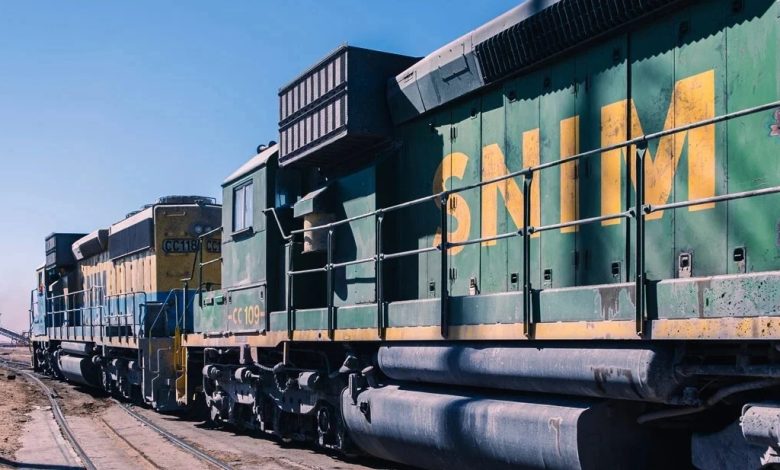
Mauritania’s state-owned mining company, Société Nationale Industrielle et Minière (SNIM), is accelerating major upgrades across its operations as it strengthens the country’s iron ore industry and reinforces its role as a key driver of national economic growth.
At the centre of the expansion is a significant improvement at the mineral export terminal in Nouadhibou. A newly dredged 25-kilometre shipping channel now allows larger vessels to access the port, dramatically increasing export capacity. Ships can now carry up to 230,000 tonnes of iron ore; a major increase compared with previous limits caused by shallow waters.
The deeper channel removes one of the most critical logistical constraints that previously slowed exports, enabling SNIM to move larger volumes of iron ore to international markets more efficiently.
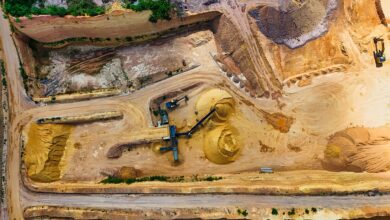
The port upgrade forms part of a broader investment strategy aimed at strengthening SNIM’s entire mining logistics chain, from extraction in the Sahara Desert to export through Mauritania’s Atlantic coast.
A key component of this network is the company’s 700-kilometre railway, which transports iron ore from remote mining sites in the desert to the port of Nouadhibou. The rail system has been modernised with new locomotives designed to haul heavier loads while improving reliability and efficiency along the route.
These improvements have supported SNIM’s steady production growth. Annual output has increased significantly from about 10 million tonnes in the 1980s, and the company is now targeting a medium-term production level of 45 million tonnes.
In addition to higher production volumes, the company has improved ore quality, achieving iron content levels of up to 66 percent before export, helping Mauritania remain competitive in global iron ore markets.
SNIM’s development has been supported by long-term partnerships with investors and financial institutions. The African Development Bank Group has played a particularly important role, mobilising around $500 million since 1978 to support infrastructure expansion, new equipment and technological improvements.
Sustainability has also become a central part of the company’s strategy. SNIM has introduced renewable energy into its operations, installing 19 megawatts of solar and wind power capacity to reduce reliance on conventional energy sources.
A wind farm in Nouadhibou now provides nearly 30 percent of the electricity required for plant operations, cutting annual carbon dioxide emissions by an estimated 12,000 tonnes.
The company remains one of Mauritania’s largest employers, with nearly 7,000 workers across its mining sites, railway operations and port facilities. SNIM contributes roughly 9 percent of the country’s gross domestic product, highlighting its importance to Mauritania’s economic development.
As iron ore shipments leave the port of Nouadhibou bound for global markets, they represent more than mineral exports. They reflect decades of strategic investment, infrastructure development and operational improvements that continue to strengthen Mauritania’s position in the global mining sector.