
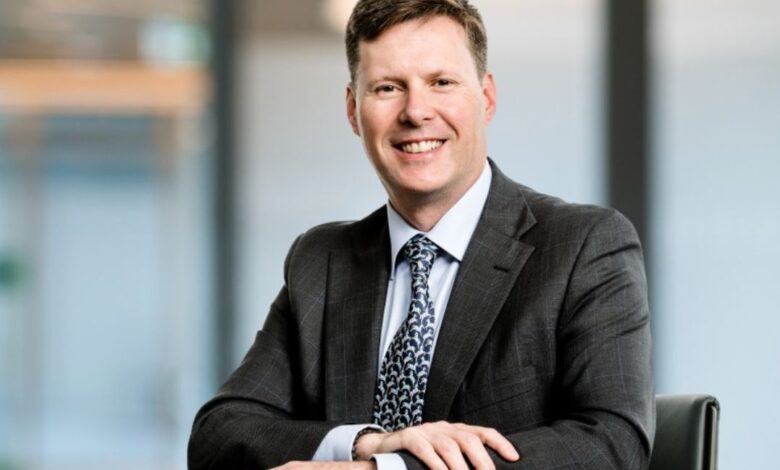
Keynote address by Anglo American CEO Duncan Wanblad at Mining Indaba 2025
Investing in African Mining Indaba 2025
Theme: Future-Proofing African Mining, Today!
Acknowledgements
- Minister Gwede Mantashe
- Honourable Ministers from the various countries represented here today
- Members of the diplomatic corps
- Captains of industry, ladies and gentlemen, distinguished guests and delegates; a very good afternoon.
Introduction
A lot has happened since we were last here together at the Mining Indaba a year ago. People in dozens of countries representing more than half of the world’s population have been to the polls, with radical implications, as the battles over tradition and change resulted in numerous shifts from left to right, and vice versa.
Inflation and interest rate volatility, as well as China’s protracted economic recovery, remain persistent themes. And the race for critical minerals as the world decarbonises, urbanises, and digitises, has driven shifting economic and geo- political strategies affecting many sectors, not least mining. And, of course, we have been busy here at Anglo American, accelerating our shift to a much more focused and highly valued copper, premium iron ore and crop nutrients business.
As I stand here today and reflect on that fast evolving macro picture, I am both encouraged and excited by the opportunities ahead. Mining is more than just an industry: it is at the heart of economic growth; it enables innovation and some extraordinary technologies in the world around us; and it is essential to sustainable development. And, here in Africa, mining is the bedrock of numerous economies and still offers enormous potential for those countries and their people to thrive.
South Africa is on a new path to prosperity
Without a doubt, unleashing our continent’s potential requires a concerted effort. I was recently asked what gives me hope for the mining industry. The answer is also the reason why I continue to choose to dedicate my career to mining.
Simply put, mining is foundational to human development. We all have loved ones – we all want them to enjoy and succeed in life. But what does ‘success’ mean? For most of us, it involves an expectation of access to basic necessities such as shelter and food, the ability to move around, and to communicate. According to a recent World Bank report, almost 3.5 billion people still live on less than $7 per day.
The mining industry is uniquely positioned to supply the raw ingredients to improve people’s lives – to bring energy and clean water, build homes and transport infrastructure, develop appliances and phones and, of course, produce food. It is that simple!
I’m also hopeful for the mining industry, given positive developments right here at home, in South Africa. The Government of National Unity, and successful public-private partnerships like Business For South Africa, demonstrate what can be achieved when we focus on addressing shared challenges.
In the last year, the country has experienced a vast improvement in energy supply. We have also seen wait-times at ports showing some improvement. The Network Statement published by Transnet, and the establishment of the Public Sector Participation Unit, are critical steps towards restoring rail performance and further unlocking South Africa’s rail potential. Furthermore – the improving capability for commercial crime prosecution and establishing the National Water Infrastructure Agency are additional signs that reforms aimed at addressing pressing challenges, are now taking hold.
The markets have noticed! The Rand’s performance among emerging market currencies for 2024 is not merely a statistic – it shows growing confidence in the country’s reforms. The increase in fixed investment projects from 2023 to 24 represents real capital, creating real opportunities. We’re pleased to see the likes of S&P revising South Africa’s outlook to “positive.”
This progress is encouraging! However, not everything is so rosy. There’s still a lot of heavy lifting to do on critical challenges. Personally, I am proud that Anglo American catalysed what we now see being delivered by the B4SA partnership withgovernment. And I am very encouraged by the latest meeting that we had with President Ramaphosa last month, and the ongoing commitment on both sides to continue working at speed – acknowledging that we must continue to press ahead towards our goals as a country.
South Africa is at the heart of Anglo American. It has been for more than a century and will continue to do so, given our physical and economic footprint and the wider role that we play in the country’s progress.
As we have done for so long, we will continue to leverage our global expertise in mining, processing, and sustainability to support mining in the country and inclusive economic growth more broadly. South Africa would continue as our platform to drive our strategic agenda across Southern Africa, where we believe we have a rare set of capabilities to bring to bear for the right opportunities. South Africa’s success is deeply intertwined with our own.
Changing gears, South Africa’s presidency of the G20 this year provides a valuable platform to champion the broader Africa agenda. We are of course playing our role in supporting the country’s leadership to facilitate these important dialogues and events. Alongside the G20 is the ever-critical B20, and I’m delighted that not only is Anglo American a lead sponsor of this business collective, but that myself, Nolitha Fakude as well as Mpumi Zikalala – will be co-chairing some of the workstreams and serving on the B20’s advisory council.
Africa’s time is now
In many ways, what’s happening in South Africa also exemplifies the opportunities and challenges we see across the continent. To future-proof African mining, we must look beyond any singular country or moment in time and instead ask more broadly how it could sustain continental growth for many generations to come. There are at least three fundamentals to address here.
First – the critical minerals opportunity
As the world decarbonises, economies develop and populations grow, the demand for critical minerals will only increase. Africa is home to some of the largest deposits of these minerals, positioning the continent as a leading enabler. But this will only transpire if the deposits can be developed and brought to market, which in turn requires stable regulatory and fiscal environments in which to invest.
For example, to achieve the United Nation’s poverty elimination goals requires increasing global installed copper from 61kg per capita today to over 200kg. That’s a more than three-fold increase. This is a huge opportunity and it’s our collective responsibility to bring those resources to market in a sustainable way.
However, the reality is, we’re leaving billions of dollars in mineral value untapped because of infrastructure constraints, for example. If we look at the Copperbelt, as just one such example, restricted port and rail capacity is still constraining the region’s ability to capitalise on growing copper demand.
We cannot discuss Africa’s mining future without acknowledging the shifts in global mineral politics. The race for critical minerals has sparked resource protectionism among major powers and we are seeing countries impose tariffs and export bans on critical materials to protect their own industrial sectors.
This isn’t just about country-on-country tensions. Western democracies are forming new alliances and financing networks that are designed to direct capital towards critical minerals projects to strengthen their position in the global economy. We’re seeing governments accuse each other of weaponising trade and industry under the guise of national security. These geopolitical tensions have fuelled a rise in state interventions and protectionism in Western democracies not seen in most of our lifetimes.
For Africa, this is both a challenge and an opportunity
The challenge is for African nations and mining companies to navigate between attractive incentives on the one hand, and risks from geopolitical tensions that could block access to key markets, on the other. Africa’s abundance in critical minerals, positions it to be more than just another supplier in global value chains, and so nations must become comfortable as strategic partners. But African governments, as is the case anywhere else in the world, also need to provide fiscal and regulatory stability, aided by the rule of law, in order to attract investment. Recent developments in Mali, for example, are of grave concern to any prospective mining investor.
This is not about choosing sides, but instead securing Africa’s interests through frameworks that promote value addition, support knowledge liberation and application, and ensure that African nations realise their fair share of value. It is in this complex global context that the transformation of partnerships becomes crucial, which is our second fundamental.
The Lobito Corridor Project, a railway extending from Zambia and the DRC to Angola, alongside the growing investment interests from the Emirates in Zambia and the DRC, and the growing strategic interests of Saudi Arabia, Japan, and China, all exemplify this change.
These go beyond mere investments and indeed represent votes of confidence in Africa’s mining future. But, for Africa to genuinely and fully engage and benefit, we must foster a fresh and deeper dialogue between businesses and governments that prioritises shared responsibility, mutual benefit, and long-term value creation.
This leads to the third fundamental: policy harmonisation across the continent.
Integrated industrial strategies and trade partnerships – such the African Continental Free Trade Agreement (AfCFTA) or the African Growth and Opportunity Act, known as AGOA – are powerful mechanisms to unlock the competitiveness of the continent. These are vital frameworks for enhancing market access, reducing regulatory uncertainty, and driving industrialisation.
Macro trends reinforce the urgency of this work. A growing global population, set to reach 10 billion people by 2080, will drive demand for improved living standards, food security, and sustainable infrastructure. Africa has a central role to play here –not just as a supplier of resources, but as a driver of the economy of the future.
The power of interconnected value chains across Africa and the rest of the world, cannot be overstated. When we think beyond individual mines and individual countries, we see enormous multiplier effects.
This is more than a theory. The African Development Bank estimates that regional value chains could generate over $100 billion in additional value for this continent, not only creating more jobs and economic value, but improving the competitiveness of the continent overall.
Partnerships will power the future
To navigate such complexity, we need bold partnerships, innovative funding models, and a commitment to reducing red tape, while upholding commitments to responsible mining. Governments can create more conducive environments for investment. This means streamlining regulatory processes, providing policy certainty, and unlocking investment in critical infrastructure – rail, ports, and water. As for the private sector, we must not only invest, but also act as partners in development.
Resource nationalism is a crucial consideration here. African leaders are rightly advocating for more significant equitable participation in the mining value chain. This presents an opportunity to create jobs, develop industries, and ensure that the benefits of mining are experienced locally.
However, governments must share revenue and risk fairly, for these partnerships to succeed. Governments need assurances that they will benefit appropriately from the rich land sources of their own countries, while businesses need the confidence that their mining licences and returns will be secure for the expected time horizon.
The De Beers-Botswana partnership agreement stands as an excellent example of how these negotiations can work when both parties engage with a deep understanding of what’s at stake and the opportunity on offer. I congratulate the new government in Botswana for concluding negotiations with De Beers within its first 100 days of governing.
We’ve got to combat Illegal mining
We must also confront head-on one of the most serious challenges facing our industry: illegal mining. This is not merely a security issue; it represents a humanitarian challenge that threatens legitimate mining operations and undermines the foundations of our industry’s social licence to operate.
I cannot be ambiguous here: Illegal mining is precisely that – it is illegal. However, to address it effectively, we must understand its complexity. This challenge is driven by poverty and desperation on one end, and control by sophisticated criminal syndicates on the other. These operations are worth billions of dollars annually and have connections to broader criminal networks and corruption.
The consequences are severe and far-reaching. The human cost is devastating –from fatalities in disused mines to the exploitation of vulnerable communities. However, the impact extends far beyond this immediate human toll, and of course also deprives national treasuries of precious revenues.
I should caveat that this is not about legitimate artisanal and small-scale mining, which all play an important part in our industry. Instead, it’s about addressing both the criminal syndicates that threaten livelihoods and the socio-economic conditions that make illegal mining attractive to vulnerable populations. So, even as we strengthen our infrastructure and security, we must also maintain our commitment to human rights and dignity. This is another area for collaboration across governments in Africa to share learnings – and also for organised business forums like the Minerals Council South Africa to get involved.
Where to from here?
So, what does all of that mean right now?
Through all our engagements with governments around the world, east and west, north and south, it is clear they are seeking out experienced mining companies that have proven track records spanning technical capability, sustainability and governance. “We need mining” they say, “and we need it done responsibly”. That is the message coming across loud and clear.
Amongst what I believe is a small handful of such companies, Anglo American is rare in our depth of experience in Africa, spanning South Africa, Botswana, Namibia, Zimbabwe, Zambia and Angola. We are also at the forefront of how we innovate to create a different and genuinely sustainable future for mining.
The mines that we are developing today are unrecognisable from what mining looks like in most people’s minds. What we refer to as FutureSmart Mines are completely changing – for the better – the physical and socio-economic footprint of mining. Our brand new 300,000 tonne per year copper mine in Peru is the first example of this, and we are taking this approach to our new crop nutrient mine which we are building in the UK and then our next copper growth option in Finland. This is how mines should and will be built.
I’m also particularly proud of the progress we have made in recent years with Inclusion at Anglo American. We strive for diversity in all its forms, and we want our employees to be representative of the markets where we operate – in gender, race, religion, culture, and sexual orientation. We still have some way to go, but we are making good progress. We are determined to create an environment in which diversity is celebrated and valued and where everyone can bring their whole self to work. We are convinced that diversity enables better decision-making, which leads to improved business performance.
And then, in case I haven’t made this point enough, partnerships. And let’s be clear, when we speak about commitment, in the context of partnerships, we must also demonstrate it – building mutual trust between businesses, governments, and communities for the long term.
Conclusion
I’m sure you’re all dying to hear my thoughts on industry consolidation. Everyone here has a view and every bank has a pitch book, but let me assure you that we are singularly focused on unlocking the enormous value we see in this company – both in the businesses we are separating and those that form the future of Anglo American. We have made rapid progress and are seeing the benefits coming through.
In closing, future-proofing African mining means collaborating like never before to make it happen. Critical minerals aren’t just an economic opportunity – they are an imperative for addressing climate change and a chance to raise the living standards of billions of people, while building out a legacy of shared prosperity. We cannot succeed unless Africa succeeds; and Africa cannot reach its full potential without a thriving mining sector.
After all, mining is not just about extracting resources from the earth; it’s about unearthing the potential within us to build, innovate, and transform the world for the benefit of current and future generations – it is about inspiring each other to succeed.
I thank you!