
Geoscience and skills drive the future mining

At the recent 2026 Mining Skills Lekgotla held at Gallagher Estate in Midrand, Mosa Mabuza, Chief Executive Officer of the Council for Geoscience, highlighted the pivotal role of geoscience and skills development in shaping a modern mining sector.
He stated that access to credible geoscientific information enables evidence-based decision-making, which in turn supports informed choices about resource utilisation and economic growth.
Mabuza further noted that sustainable mining extends beyond mineral extraction and relies on skilled people, resilient communities, and institutions capable of adapting to technological change. While global discussions increasingly focus on lists of critical minerals, he questioned whether such narrow definitions fully capture the broader developmental value of mineral resources.
In his view, all minerals are critical, with their value shaped by society’s developmental trajectory and technological ambitions. South Africa’s geology, he argued, remains vastly underexplored despite nearly two centuries of formal mining. As the world moves toward net-zero emissions by 2050, demand for minerals such as copper and lithium is set to multiply. Meeting these targets will require unprecedented exploration success and a far more agile mineral discovery pipeline.

For Mabuza, this underscores the importance of investing in advanced geoscientific skills. From digital mapping and data analytics to integrated geological modelling, the country must deliberately build a critical mass of geoscientists capable of reducing the traditional 20- to 30-year exploration-to-development timeline to seven years or less.
The recent characterisation of lithium-bearing rock in the Northern Cape, he noted, illustrates how technological progress can unlock previously overlooked resources.
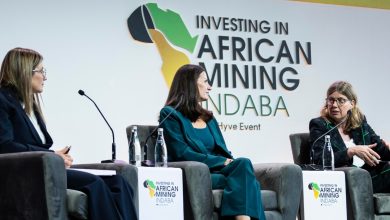
During a panel discussion at the Lekgotla on advancing technological skills in the mining sector, Mustak Ally, Head of Skills Development and HR at the Minerals Council South Africa, who acted as moderator, highlighted that automation, artificial intelligence, robotics, and advanced sensing technologies are creating new demands for skills training in the mining industry.
The panel emphasised that the sector’s technological transition is characterised by augmentation rather than replacement, with traditional mining roles evolving rather than disappearing. From mine managers to artisans and technicians, existing occupations are being reshaped by digitalization.
Production supervisors are increasingly required to interpret data-driven dashboards, engineers and geologists must operate within autonomous and remotely managed systems, and artisans are expected to become digitally fluent, capable of working with predictive maintenance tools and sensor-based technologies.
The panel stressed that curriculum reform is therefore urgent. Qualifications and skills programs must integrate automation, systems integration, cybersecurity, and remote operations. At the same time, soft skills such as leadership and adaptability are equally vital to steering technological transition responsibly.
Collaboration was identified as non-negotiable, with industry, training institutions, government, and quality assurance bodies required to co-own curriculum design, workplace training, and assessment.
Technical and Vocational Education and Training (TVET) colleges must also be encouraged to deepen partnerships with mining companies to ensure learners gain meaningful workplace exposure and lecturers remain current with industry practices. Importantly, the conversation extended beyond compliance and clean audits.
The need to measure impact was stressed, specifically, whether training translates into competence, productivity, and broader economic resilience. Skills development must strengthen not only mine-site performance but also adjacent economies within mining communities, from supplier development to digital service platforms.
The Lekgotla, which also marked the 30th anniversary of the Mining Qualifications Authority (MQA), concluded with the signing of a pledge by organised labour, community representatives, employers, and the state. In its preamble, the social partners of South Africa’s mining and minerals sector reaffirmed their commitment to building a capable, inclusive, and future-oriented skills ecosystem that supports growth, social justice, and economic transformation.
Recognising technological change, the Just Energy Transition, and persistent inequalities affecting workers, women, youth, and mining-affected communities, the signatories entered a renewed social compact anchored in partnership, accountability, and shared value creation.