
Women and skills positioned at the heart of Africa’s mining future
Skills, capability, and transformation: Dr Phumzile Mlambo-Ngcuka’s vision for women in mining
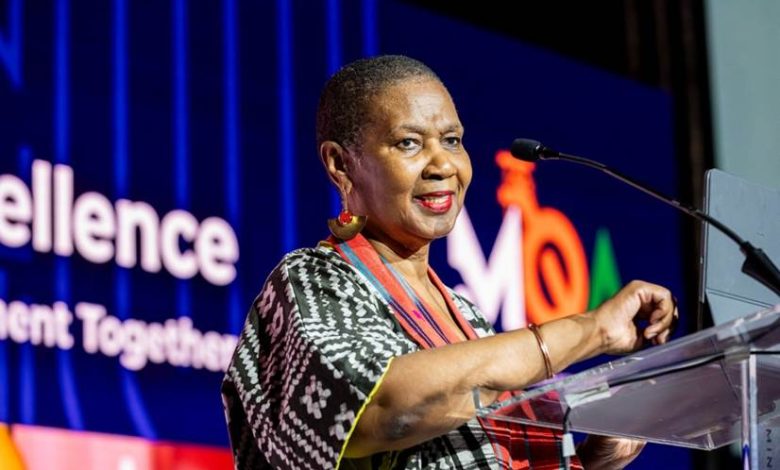
At a time when Africa’s mineral wealth is once again at the centre of global competition, Dr Phumzile Mlambo-Ngcuka, Chancellor of the University of Johannesburg, delivered a forthright address at the recent Mining Skills Lekgotla held at the Gallagher Convention Centre in Midrand.
Focusing on opportunities for women in mining and the future of transformation in the sector, her message went beyond representation to a deeper call for capability, strategic positioning, and continental self-determination. She underscored that the pathway to meaningful transformation in mining begins and ends with skills.
Addressing the leadership of the Mining Qualifications Authority (MQA) on its 30th anniversary, along with industry stakeholders, Mlambo-Ngcuka reflected on her longstanding association with the institution as former Minister of Minerals and Energy.
She commended the MQA for its steadfast commitment to equipping South Africans with the skills required to participate meaningfully in the mining economy, cautioning that the country cannot afford to lose the struggle to build a technically proficient and capable workforce. Her remarks framed mining within a rapidly evolving global context, where climate change, the green transition, technological disruption, and geopolitical instability are redefining the sector.
Africa’s minerals are critical to clean energy systems, battery technologies, and advanced manufacturing. Mlambo-Ngcuka warned of the growing risk of what she termed mineral colonisation, a renewed scramble for Africa’s resources driven by intensifying global competition.
With the continent holding around 48% of global cobalt reserves, significant manganese deposits, and approximately 12% of global copper concentrated in the Democratic Republic of Congo and Zambia, Africa occupies a strategic position in the global economy. She stressed the importance of coordinated policy across African states to avoid fragmentation that undermines collective bargaining power in global markets.
“However, mineral abundance has not translated into shared prosperity. Poverty persists across much of the continent, and women disproportionately bear its burden. This disconnect underscores the urgency of placing skilled African women at the centre of the mining value chain,” said Mlambo-Ngcuka.
She challenged young women to see themselves in all dimensions of the sector, including ownership, engineering, finance, law, policy, and environmental management. Mining, she argued, requires formidable engineers, financially literate leaders, legal experts, and policy specialists who understand both domestic regulatory frameworks and international trade complexities.
Transformation, therefore, must be anchored in deep technical competence. Africa must move beyond extraction to beneficiation and downstream manufacturing to capture greater value and create sustainable employment.
Women, she emphasised, should not be confined to peripheral roles but actively involved in shaping and running mining operations. Beyond economics, Mlambo-Ngcuka highlighted the moral imperatives facing the sector. While acknowledging progress in safety standards, she stressed that vigilance must remain uncompromising. Environmental stewardship, too, must be a core competency.
Post-mining wastelands and polluted communities, she warned, represent failures of governance and technical planning. Skills in environmental protection and rehabilitation, she argued, are central to mining’s social licence to operate.
Addressing the younger generation, Mlambo-Ngcuka emphasised that mining underpins modern life, as everything consumed is either mined or planted, bringing both responsibility and opportunity. She urged students to use their youth strategically, acquire skills aligned with future industry needs, and raise the bar for leadership and innovation.
“If Africa is to avoid repeating the patterns of its past, where vast mineral wealth coexisted with poverty and limited local beneficiation, it will do so not through rhetoric, but through a generation of highly skilled women and men prepared to shape the mining industry on their own terms,” said Mlambo-Ngcuka.