
SAIPEC 2026: Turning energy opportunity into investment
Energy addition, LNG growth and de-risking strategies in focus at Africa’s premier petroleum conference
Africa’s energy priorities are shifting from transition to energy addition, placing capital mobilisation and risk management at the centre of the conversation. These themes will take centre stage at the Sub-Saharan Africa International Petroleum Exhibition and Conference (SAIPEC), running from 10–12 February 2026 at the Eko Convention Centre in Lagos, Nigeria.
As the premier pan-African energy event, SAIPEC brings together governments, financiers and energy companies to drive collaboration and shape Africa’s energy future.
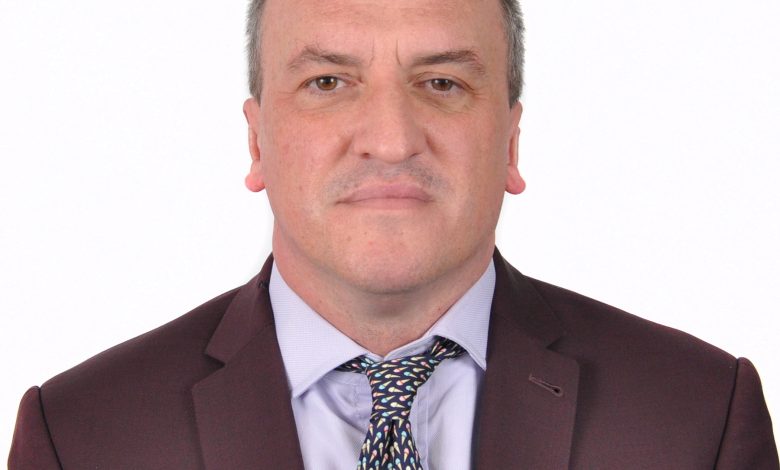
Ahead of the event, we spoke to Paul Eardley-Taylor, Oil and Gas Sector Lead at Standard Bank South Africa, who will participate in the panel, “Independent Operators & Investment Forum: De-Risking Investments in African Oil and Gas Projects”. He shared insights from his work across the sector and discussed how independent operators can be empowered to drive Africa’s next phase of energy development and industrial growth.
Assessing Africa’s LNG and Gas Landscape
Responding to how he currently assesses Africa’s liquefied natural gas landscape and where the greatest opportunities and risks lie, Eardley-Taylor said:
“Globally, over 200 million tonnes per annum (MTPA) of LNG capacity is under construction, compared with LNG trade of around 430 MTPA in 2025. This is likely to result in a period of oversupply in the late 2020s, creating challenges for exporters but attractive opportunities for LNG imports into Africa. Currently, LNG imports on the continent are limited to Egypt and Senegal, but this is expected to expand.
On the supply side, Mozambique’s LNG projects are strategically important, with the potential to supply gas or power to up to 11 neighbouring countries. Despite short-term oversupply risks, African LNG export projects continue to progress. Nigeria LNG Train 7 is nearing completion, alongside multiple floating liquefied natural gas (FLNG) projects. Overall, the African LNG sector faces a dynamic and opportunity-rich period ahead.”
Gas and Renewables from a Financing Perspective
On the role of gas alongside renewables in Africa’s energy transition from a financing perspective, he explained:
“As has been seen globally (e.g., the UK, Germany, Texas, and California), variable renewable energy (VRE) and gas have a highly complementary relationship. In winter, in the evenings, or on low-wind days, gas typically picks up the shortfall in VRE supply. VRE is cheap at the point of production but is inherently intermittent and needs a supporting source of generation.
Within Africa, the key issue remains economic development and industrialisation. In developed markets, VRE has largely been introduced into already industrialised economies. As such, in Africa, it will be important to build gas-to-power and VRE in parallel to facilitate industrialisation and economic growth.”
Setting the Agenda for SAIPEC 2026
With SAIPEC bringing together governments, financiers and energy companies, Eardley-Taylor believes alignment around delivery is critical.
“Against this backdrop, where gas supports reliability, industrial growth and the scaling of renewables, SAIPEC plays a critical role in aligning governments, financiers and energy companies around delivery.
Globally, energy addition, the need for more energy in multiple forms has overtaken the energy transition as the primary driver of investment. While AI is often cited as an example, in Africa the priority is economic development and industrialisation, particularly as Western markets refocus on energy security.
This is translating into concrete opportunities across African LNG, small-scale LNG (SSLNG) and natural gas markets, including LNG imports in Morocco and South Africa, FLNG developments in Nigeria, regional gas sales from Mozambique, and expanding SSLNG applications across multiple markets.
“The key agenda for SAIPEC should be how to translate these opportunities into bankable, investable projects at scale,” he stated.