
Responsible mining and environmental protection can move forward together, says Aucamp
Environmental certainty and collaboration take centre stage at Mining Indaba
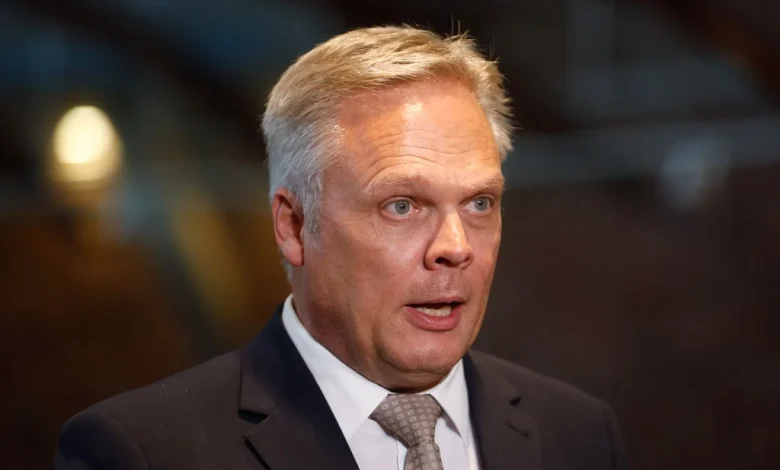
A clear and optimistic message emerged from Mining Indaba as South Africa’s Minister of Forestry, Fisheries and the Environment, Willie Aucamp, assured the mining community that environmental legislation is not a brake on development, but a vital enabler of long term, sustainable growth.
Far from standing in opposition to mining, Aucamp emphasised that environmental regulation and economic development are deeply connected and, when aligned, can deliver meaningful benefits for all South Africans.
“In fact, they are inseparable and can yield much-needed economic benefit for all South Africans. Striking the balance is often difficult because South Africans need and want economic development, but not at the expense of the environment,” the Minister said on Sunday.
Aucamp was addressing the Mining Indaba Critical Minerals Ministerial Roundtable in Cape Town, where African leaders, investors and industry stakeholders came together to explore how the continent’s mineral wealth can be developed responsibly amid a complex and uncertain global landscape.

Environmental Certainty as a Catalyst for Growth
Central to the Minister’s address was the idea that strong environmental governance creates confidence rather than delays. He reiterated his department’s constitutional and legislative mandate to protect the environment while ensuring sustainability is embedded across economic sectors, including mining.
“In line with the department’s mandate, I have a constitutional and legislative mandate to protect the environment, enforce environmental laws, and integrate sustainability into various economic sectors. This includes the mining sector. In this regard, I serve as the appeal authority for Environmental Authorisations issued for prospecting and mining activities,” Aucamp said.
In practical terms, this means ensuring that environmental authorisations are credible, transparent and legally defensible, while protecting water resources, ecosystems and biodiversity. It also includes enforcing rehabilitation commitments, supporting climate change mitigation and adaptation, and ensuring that environmental processes contribute to investment certainty rather than unnecessary bottlenecks.
Importantly, Aucamp stressed that collaboration between government departments is already gaining momentum.
“I remain fully committed to working closely with the Department of Minerals and Petroleum (DMPR) to improve alignment and streamline processes and timeframes, where possible, within the environmental management sector,” he said.
He confirmed that his department is actively engaging with the DMPR, including ongoing collaboration on the revised Mineral Resources Development Bill. Published in May 2025, the Bill aims to restructure the Mineral and Petroleum Resources Development Act of 2002, introducing updated definitions and provisions for small scale and artisanal mining, among other reforms.
Looking ahead, the Minister struck a hopeful and inclusive note.
“Together we can ensure that South Africa’s mining sector grows in a manner that support’s economic development, protect our natural heritage and delivers lasting benefits for generations to come,” Aucamp said.
The theme of partnership echoed across the Indaba. Speaking at the Ministerial Symposium, Mineral and Petroleum Resources Minister Gwede Mantashe called on delegates to focus on collaboration that unlocks the full potential of critical minerals for the benefit of all people.