Ramaphosa hails Vedanta’s investment delivery as Gamsberg Phase 2 opens
The expansion marks progress on a commitment made at the 2018 South Africa Investment Conference, while renewed calls for local mineral beneficiation put the spotlight on how South Africa can retain more value from its mineral resources
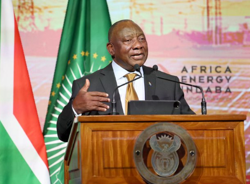
South African President Cyril Ramaphosa has praised Vedanta Zinc International’s (VZI) Gamsberg Phase 2 expansion, saying it’s evidence that investment commitments made at South Africa’s investment conferences can translate into tangible economic activity, as government intensifies its push for mineral beneficiation within the country.
Speaking at the official inauguration of the Gamsberg Phase 2 concentrator plant in Aggeneys, Northern Cape, on October 16, 2026, Ramaphosa said the project demonstrated that companies could deliver on their investment pledges.
“This is a fulfilment of the commitment that Vedanta made at the investment conference,” he said.
The commitment dates back to the inaugural South Africa Investment Conference in October 2018, where Vedanta pledged approximately R21 billion towards its South African operations, including the development of Gamsberg. The company subsequently completed Phase 1 and advanced the second phase of the zinc mine’s development.

Ramaphosa said the project challenged criticism that investment conference pledges amounted to little more than announcements.
“It does show that companies that make commitments do live up to those commitments, whilst critics often dismiss commitments that are made in conferences,” he said.
According to the President, Vedanta has invested R89 billion in South Africa, contributing to economic development and employment. He said the progress at Gamsberg was particularly significant for the Northern Cape, a province with substantial mineral resources but persistent development and employment challenges.
The Phase 2 expansion increases Gamsberg’s annual zinc-in-concentrate production capacity to approximately 500 000 tonnes, positioning the operation to become one of the world’s major zinc-producing mines. The project is also expected to sustain between 800 and 1 000 jobs during operations, with recruitment predominantly from the Northern Cape.
Beyond expanding production, Ramaphosa highlighted the importance of processing minerals locally instead of exporting them for further processing abroad.
He said Vedanta’s intention to move towards beneficiation aligned with government’s broader industrialisation agenda.
“Right now, they are mining zinc, they are exporting the mineral ore all the way to India. They now have decided that they want to beneficiate it here,” he said.
The President added that companies investing in South Africa should establish beneficiation plants and processes close to their mining operations.
“The ore that is produced or extracted here should be beneficiated and value must be added,” he said, emphasising that the resulting economic benefits should extend to surrounding communities and the country as a whole.
Mineral beneficiation remains a key part of South Africa’s efforts to deepen its industrial base, create employment and capture more economic value from its mineral resources. Local processing can support downstream manufacturing and related industries, although the scale of these benefits depends on investment in infrastructure, skills, energy supply and viable markets.
For the Northern Cape, which hosts significant deposits of zinc, manganese, iron ore and other minerals, the challenge is to translate mining investment into broader regional development.