
PGM Industry Day highlights urgency for policy reform and investment growth
Paul Dunne calls for regularity certainty and investment-friendly policies to unlock South Africa's PGM sector growth at Industry Day.
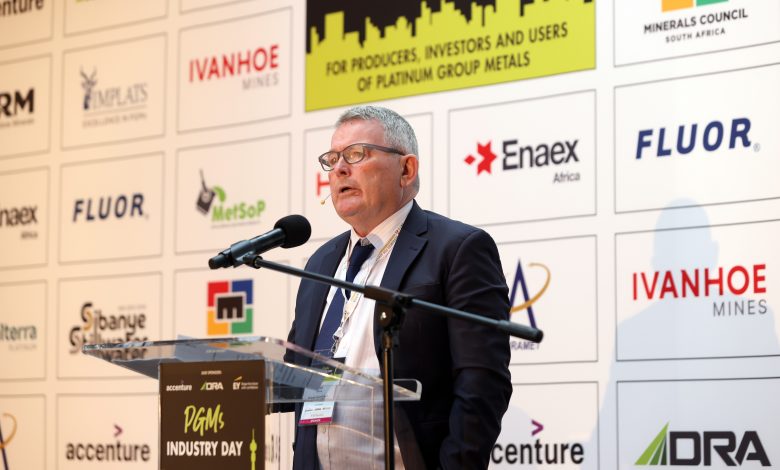
The PGM Industry Day brought together key stakeholders from across the global platinum group metals value chain, reinforcing both the strength of South Africa’s sector and the urgent need to resolve policy and structural constraints.
Addressing delegates on behalf of the Minerals Council South Africa, Paul Dunne highlighted the global significance of the country’s PGM industry and the importance of international collaboration.
“It is really pleasing to see many of our international colleagues participating in this industry day,” he said.
Dunne emphasised that mining remains a cornerstone of the South African economy, underlining its contribution to employment, exports and broader economic activity. The PGM sector alone employs around 170,000 people and supports millions more through its extended value chain. More broadly, mining contributes 6.2 percent to GDP and generates R816 billion in export revenue, accounting for nearly half of the country’s total exports.
“Mining matters is not just a slogan, it is a fact,” Dunne said, pointing to the industry’s role not only in economic output but also in social development. Through Social and Labour Plans, mining companies continue to invest in infrastructure, education and healthcare, often in remote communities where few other economic opportunities exist.
At the heart of his address was a strong call for regulatory certainty. Dunne stressed that growth in the PGM sector and the transformation of the South African economy are closely linked and cannot be achieved in isolation.
“We need a stable, predictable regulatory environment that promotes both growth and transformation,” he said.
He raised concerns about the proposed Mineral Resources Development Bill, noting that in its current form it may deter investment rather than encourage it. While the Minerals Council South Africa has submitted detailed feedback, Dunne acknowledged ongoing engagement with government and expressed cautious optimism that industry concerns are being heard.
The scale and complexity of mining investment further highlight the need for policy stability. According to Dunne, developing a new mine can cost at least R20 billion and take up to ten years, making investor confidence critical.
“Providers of capital will not put their money into risky jurisdictions where returns are threatened by regulatory uncertainty, crime and corruption and failing infrastructure,” he said.
He also pointed to persistent challenges such as rising energy costs, unreliable electricity supply and logistics constraints, which continue to weigh on the sector’s competitiveness. Energy in particular remains a key concern.
“Energy availability and its cost are the foundation of a country’s competitiveness,” Dunne noted, calling for reforms that enable greater efficiency and competition in the energy sector.
Despite these challenges, the long-term outlook for PGMs remains strong. Demand for these critical minerals is expected to grow, positioning South Africa to benefit significantly if the right conditions are created.
“Hard commodities in general and PGMs in particular have a very bright future ahead,” Dunne said, adding that obstacles to investment must be removed rather than created.
He concluded by emphasising the industry’s willingness to work collaboratively with government to unlock this potential and ensure sustainable growth.
“Mining is a very people centric industry, and we are deeply connected to the fabric of society. It is important that we succeed.”
As discussions at PGM Industry Day made clear, the path forward will depend on clear, coherent policy and a shared commitment to strengthening one of South Africa’s most important economic sectors.