
Parliament raises concerns over Richards Bay Minerals’ local impact
Adil Nchabeleng urges stronger oversight of RBM operations, highlighting ecological damage and limited local economic benefits.
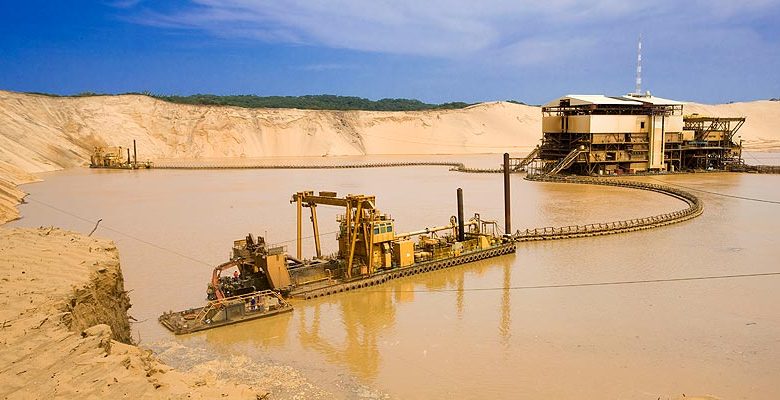
Richards Bay Minerals RBM sits on some of the world’s most valuable mineral sands the kind that power smartphones smart screens and high-tech manufacturing across the globe. Yet as billions flow through global supply chains communities living closest to the mine say the promised prosperity has failed to reach their doorsteps.
That disconnect was sharply highlighted this week in Parliament.
During an oversight session Member of the National Assembly Adil Nchabeleng delivered a pointed critique of both mining companies and government regulators accusing them of failing to ensure that mining wealth translates into meaningful economic benefits for communities surrounding Richards Bay.
“You don’t mine to build a house this is rare earth minerals” Nchabeleng said. “RBM is one of the largest contributors in the world. This is smart screen technology advanced mining and refining.”
Yet he asked where the impact on ordinary people is.
“We’re not seeing the economic benefit and value of it at community level” he said voicing a frustration long echoed by residents near the mining operations.
RBM is a major employer and a key contributor to South Africa’s mining economy. But its footprint in KwaZulu Natal has become a lightning rod for disputes over community trusts environmental damage and the role of the state in managing conflict between mining interests and traditional authorities.
Oversight Gaps and a Growing Crisis
Nchabeleng questioned the visibility and effectiveness of government intervention as tensions around RBM continue to surface before multiple investigative bodies.
“It is currently the focus of debate at the Madlala Commission and the Ad Hoc Commission” he said. “Where is the department in this whole crisis of Richards Bay Minerals”
His remarks point to a broader concern that while mining disputes escalate into national crises accountability from regulators often appears muted or delayed.
Environmental damage has further fuelled anger on the ground. According to Nchabeleng communities accuse RBM of causing extensive harm to sensitive coastal ecosystems including dune forests and sand dunes.
“They are mining shore sand” he said describing how coastal material is processed to extract minerals such as zircon and titanium. “They are heavily heavily causing a huge number of problems in the area.”
The criticism carries added weight he noted because RBM’s ownership and scale place it firmly among global mining giants’ companies expected to meet higher environmental and social standards.
Trusts Courts and Traditional Authority
At the heart of the community dispute lies the governance of mining trusts meant to channel benefits to local residents.
The parliamentary Portfolio Committee on Mineral and Petroleum Resources has recently welcomed progress in resolving tensions between RBM and traditional leaders over the administration of a community mining trust. Committee members stressed that a fully functional trust is essential if mining benefits are ever to reach households in a meaningful way.
However, concerns remain. Lawmakers flagged unfinished infrastructure projects linked to RBM’s Social and Labour Plans warning that delays undermine both legal compliance and community confidence.
RBM’s efforts to reform trust governance have also hit legal roadblocks. In a recent ruling a court dismissed the company’s application to amend trust deeds reinforcing the authority of amakhosi over land and resource matters. The decision underscored the uneasy balance between corporate governance models and traditional leadership structures.
RBM managing director Werner Duvenhage has said the company remains committed to reforming trust governance arguing that transparency and accountability are critical to long term community benefit.
Mining Environment and the Green Pivot
While environmental damage dominates local criticism RBM has sought to position itself as part of South Africa’s energy transition.
In June 2024 the company signed a renewable energy power purchase agreement with the Khangela Emoyeni Wind Farm securing up to 140 MW of wind power. The deal is expected to cut RBM’s annual carbon emissions by around 20 percent.
This follows earlier investments in large scale solar power in Limpopo and forms part of a broader strategy to reduce dependence on coal generated electricity. RBM has also promoted these projects as opportunities for job creation and skills development in nearby communities.
For critics however cleaner energy does not erase local environmental damage or unresolved social disputes.
RBM remains a pillar of South Africa’s mining sector contributing taxes exports and thousands of jobs. But for communities living alongside mined dunes and contested land the question is not whether mining brings wealth it is who ultimately benefits from it.
Environmental rehabilitation transparent trust governance and real access to jobs remain central demands. Rebuilding trust will require more than policy statements or renewable energy deals. It will demand visible change on the ground and sustained cooperation between RBM government departments and traditional leaders.
Until then Richards Bay Minerals stands as a symbol of South Africa’s enduring mining paradox immense wealth beneath the sand and unresolved questions above it.