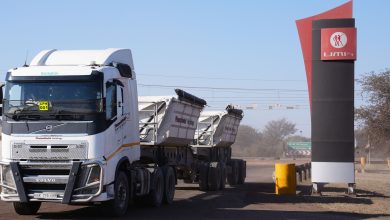


Mining and AI go hand in hand
Mining is where the world’s heftiest problems meet the world’s heaviest machines and that means it has always been at the cutting edge of technology.
From the early adoption of mechanised drilling rigs to today’s sophisticated geological modelling, few industries are as reliant on engineering and digital innovation. Artificial Intelligence (AI) is the latest chapter in this history and is used to predict ore grades, optimise supply chains, improve worker safety, and even run autonomous trucks and robots deep underground. The mining industry is where applied AI learns some of its most useful lessons and many of those lessons have been learned inside mines in South Africa.
South Africa, with its mineral wealth and deep-level mines, became a natural testing ground for these technologies. Anglo American, one of the world’s most powerful mining houses, invested heavily in AI applications to improve efficiency and sustainability. For engineers and data scientists trained in Johannesburg, Rustenburg, or Kathu, mining is as much about extracting resources as it is about working at the frontier of applied AI.
Our mines in Africa have been the classrooms, the laboratories, and the launchpads for a new generation of technological skill and innovation. Our African brothers and sisters have been at the forefront of that progress.
But what happens when an industry giant like Anglo American suddenly decides to pull out and relocate its headquarters in Canada?
There is a long colonial lineage in which resource wealth was telescoped into foreign profit and dependency back home. But the story of modern mining in South Africa has also offered the country something better.
When global mining houses embedded deep research teams, engineering hubs and digital labs here, they also created many ecosystems of skills across the board. The machines and the people who operate them create a learning curve on the upward trajectory.
Likewise, the associated apprenticeships, university partnerships and on-site labs have produced expertise that travelled in both directions, from global headquarters to the veld, and from the South African office desks back into the company’s global playbook.
So, when a titan like Anglo American does depart to Canada, how do we prepare also for the departure of one of the country’s most powerful platforms for developing practical, applied AI and various technologies?
The proposed departure may take with it the balance sheets, but more importantly will this mean a reduction in knowledge ecosystems and the lived experience of scientists, engineers and AI technicians working on real-world problems.
Anglo American CEO Duncan Wanblad is surely a mentor to many veteran and young industry players, and is certainly an inspiration to many young black entrepreneurs who aspire to make such a massive impact in South Africa. But, if we have a drain of mentors then we erase many apprenticeship pathways, and that too could be a massive interruption of datasets that taught AI how to work at scale and inspire African youth to excel.
AI evolves where there is messy, stubborn, real-world data and users who need it to perform under immense pressure – nowhere is this better than in the vast depths underground. The complexity of mining operations, supply a perfect environment for AI to be put to the ultimate test and if the users of this kind of technology advancement start to disappear, then AI loses its testbeds and the learning cycle changes.
Lessons From Elsewhere
We have seen this story before, when General Motors left Australia in 2017, the immediate impact was factory closures and job losses. But the deeper consequence was the collapse of an entire ecosystem of automotive engineering, robotics, and technical apprenticeships. In South Africa, the closure of textile mills and the decline of rail manufacturing left similar voids with whole generations of skill development and technological adaptation simply evaporated.
Consider Sasol, South Africa’s long-standing petrochemicals and energy giant. Though it has not abruptly abandoned its roots, Sasol has restructured its U.S. operations, shedding roles in its Lake Charles plant, taking multi-billion-rand impairments in its American chemical division, and exploring a revival or spin-off of its international chemical business as margins weaken.
If South Africa loses another industrial giant we lose our place in the global chain of innovation, and rebuilding that place is far harder than attracting investment capital.
South Africa’s Critical Juncture
When Anglo American fulfils its proposed move to Vancouver, can the country retain and redeploy the knowledge base that Anglo helped cultivate? Can universities, smaller mining houses, or even state-owned companies step in to keep AI applications alive in the sector? Or will the expertise disperse with engineers and data scientists leaving for Canada, Australia, the UK or Chile, taking with them the South Africa’s future potential?
At precisely the moment when AI requires diverse, global application to avoid becoming the narrow preserve of Silicon Valley, South Africa risks being written out of a narrative we have been contributing to on African soil.
Written by Reginald Letsholo, who is a youth development activist and works with civil society originations from various sectors in South Africa, including mining affected communities. He is a Co-Founder of the Tlou Mogale Foundation.