
Lubrication’s role in achieving operational sustainability goals
Sustainability isn’t just something that happens at the macro level of business decision-making, it’s a key principle that companies need to apply across their organisations. For those in machine-intensive sectors, which can include everything from mining to port operations, manufacturing, construction and beyond, equipment lubrication is an important area to consider in terms of sustainability.
One of the key means of improving sustainability around equipment lubrication is by using the right products. Gavin Ford, National Marketing Manager at Lubrication Engineers (LE) South Africa, says this has multiple benefits. Higher quality lubricants extend the life of equipment, which reduces waste; they help it to run more efficiently, often resulting in reductions in power usage; they last longer, so overall consumption quantities are reduced; and importantly, the composition of the lubricants themselves are often more considered and have a lower direct environmental impact.
As an example, for applications on or near water, the Earthwise EAL Wire Rope Grease (3353) from LE’s Earthwise range is a certified environmentally acceptable lubricant that is biodegradable, has minimal aquatic toxicity, and will not build up in fish and other aquatic life forms’ bodies.
Cleaning solutions
Another important aspect of sustainability in terms of lubrication is how to deal with lubrication spills and cleaning requirements. Oil spills can cause significant environmental damage, kill microscopic organisms and harm entire food chains. “We offer a really effective solution to help with oil spills, called Oil Spill Eater II (OSE II),” says Ford. Approved by the US Environmental Protection Agency and the UK Marine Management Organisation, OSE II has been used to clean up tens of thousands of spills since it was developed in the late 1980s. “It converts waste into a natural food source for bacteria found in aquatic environments. Because it does this by using a biological enzyme for the conversion, unlike other supposed bioremediation oil clean-up techniques, OSE II is not a bacterium, a fertilizer or dispersant product,” explains Ford. process for the mitigation of large or small hazardous waste, spills and contamination. It can bioremediate most organic-based compounds and almost all hydrogen-based compounds.

“OSE II contains nutrients that attract indigenous bacteria. These then rapidly multiply, which speeds up the natural spill remediation process as the bacteria release enzymes and biosurfactants that attack the spill. The biosurfactants emulsify the spill, breaking it down to be used as a food source for the bacteria, with the end products being CO2 and water.”
OSE II is and extremely environmentally safe and cost-effective bioremediation
“Often, clients use OSE II in tandem with our Greentastic industrial cleaner, which is a powerful and water-based liquid concentrate cleaner,” says Ford. “Greentastic is also free from phosphates and phosphorous, making it a better choice for the environment.”
It is effective for cleaning like degreasing parts, washing trucks and tractors, and cleaning food manufacturing equipment and concrete surfaces. “It is non-caustic, non-acidic, non-flammable and contains no abrasives, all of which are important factors for sustainability,” says Ford.
Finding the right sustainability partner
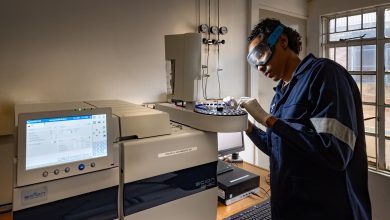
Ford says that LE, which has ISO9001 certification for cleanliness, can also help companies with setting up full lubrication systems. This includes everything from safe lubricant storage and application that minimises spills and cross-contamination, to finding the right high-quality lubrication products and additives, applied in the right amounts and at the right frequency, to improve efficiency and minimise wastage.
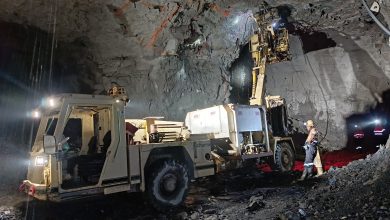
“We offer a range of products and services that have been specifically designed to help businesses embed sustainability at every level,” says Ford. For LE, this has included developing oils and greases to help customers improve their energy and fuel efficiency, as well as creating eco-wise products, like OSE II, that are environmentally friendly. “Our solutions can help cut down on energy use, reduce emissions through improved efficiency and protect the environment. This can help mines and other large-scale organisations to meet their sustainability targets,” he adds.