
Illegal mining drains billions from South Africa’s economy, Mantashe warns
Minister warns illegal mining is bleeding the economy and threatening safety as government tightens enforcement
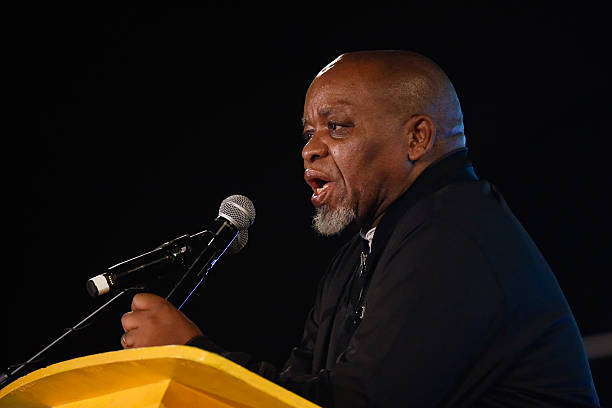
Illegal mining remains one of the most pressing challenges facing South Africa’s mining sector, costing the economy billions of rand in lost revenue, Mineral and Petroleum Resources Minister Gwede Mantashe has warned.
The Minister was delivering remarks at the South African Human Rights Commission National Inquiry into the Policy Framework around Artisanal Mining. The inquiry, now in its second phase, is investigating the policy framework around artisanal mining, the impact of artisanal mining on the human rights of surrounding communities, and the scope and tactics employed in Operation Vala Umgodi.
Reflecting on South Africa’s democratic transition, Mantashe said, “The dawn of democracy in 1994 marked a decisive break with this past. It ushered in a constitutional order grounded in human dignity, equality, and freedom, and it gave us the opportunity and the responsibility to correct historical injustices.”
He added that for the mining industry, this shift meant “developing a regulatory framework that promotes meaningful participation of historically disadvantaged persons, ensures responsible and sustainable mining, and drives socio economic development”.

While progress has been made since 1994, the Minister cautioned that major challenges remain. “While progress has been made, significant challenges remain. One of the most pressing challenges confronting the sector is illegal mining, which is often conflated with artisanal and small-scale mining,” Mantashe said.
He emphasised the fundamental differences between illegal mining and artisanal and small-scale mining, warning against treating the two as the same. Illegal mining, he explained, is “a criminal activity conducted in direct contravention of South African law” and forms part of broader organised economic crimes. These activities are often linked to “illicit financial flows, extreme violence, human trafficking, gender-based violence and femicide, as well as the smuggling of weapons and explosives”.
By contrast, artisanal and small-scale mining is a legitimate and formalised economic activity, usually undertaken by citizens or legally documented residents within a regulated framework.
Mantashe also noted a “disturbing trend” emerging from recent illegal mining incidents, particularly the involvement of undocumented foreign nationals. He cited the Stilfontein incident, where 1 826 illegal miners surfaced from underground, the majority of whom were undocumented nationals from Mozambique, Zimbabwe, and Lesotho. In Barberton, approximately 1 000 illegal miners were arrested, many of whom were also undocumented foreign nationals from the same countries.
“We must be clear: an individual who enters the country illegally and engages in unlawful economic activity cannot be sanitised or reclassified as an artisanal and small-scale miner,” the Minister said.
He further warned that illegal mining is no longer confined to abandoned sites. “Whereas illegal mining was once largely confined to derelict and ownerless mines, it is now increasingly encroaching on operational and licensed mines, posing serious risks to safety, security, and economic stability,” Mantashe said.
Turning to the economic impact, the Minister told the inquiry that illegal mining cost the South African economy and the mining sector an estimated R49 billion in 2019.
In response, government has adopted a multi-pronged strategy that includes accelerating the rehabilitation of derelict and ownerless mines, implementing Operation Vala Umgodi to clamp down on illegal mining activities, and streamlining the regulatory framework to formalise artisanal and small-scale mining while strengthening sanctions against illegal mining.
Progress has been made in the rehabilitation of derelict and ownerless mines, with at least four asbestos mines rehabilitated and 280 mine openings closed. “This was made possible by an additional funding of R180 million allocated to the programme in the previous financial year,” Mantashe said.
“For the current financial year, a further R134.7 million was transferred to Mintek to continue this important work. It is important for the commission to note that the annual number of mines to be rehabilitated is dictated by the annual budget allocation received from the National Treasury,” he added.
Mantashe said the Department is also closely monitoring the rehabilitation and safe closure of operational mines to prevent these operations from becoming a burden on the state and future generations.
He further noted that a review of the Mineral and Petroleum Resources Development Act is underway, which seeks to formalise artisanal and small-scale mining, prohibit illegal mining, and criminalise the transportation and trade of minerals without prescribed documentation.
“Even as this review continues, the Department has already acted,” Mantashe said. “In 2022, we published the Policy on Artisanal and Small-Scale Mining for implementation. This policy provides a framework to formalise the sector and enable lawful economic participation, primarily for South African citizens and legally documented individuals.”
He concluded by stressing that the policy does not legitimise criminal activity. “Let me be clear: this policy does not legitimise illegal mining. It creates pathways for lawful, regulated participation while ensuring that criminal activity is firmly and decisively addressed,” Mantashe said.