
Government says reopening refineries not a short-term fix for fuel prices
DMPR and industry warn global oil dependence will continue to drive costs despite calls to revive local refining capacity
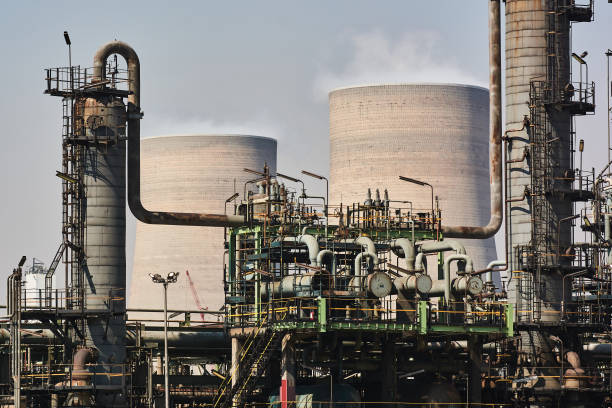
The Department of Mineral and Petroleum Resources has signalled that reopening South Africa’s closed oil refineries will not provide a short-term solution to rising fuel prices and supply concerns, despite growing public debate around energy security.
Speaking alongside the Fuels Industry Association of South Africa, officials stressed that the country would remain exposed to global oil market volatility even if refining operations were restored.
Global Dependence Still a Key Risk
According to Fiasa CEO Fani Tshifularo, most of South Africa’s closed facilities are crude oil refineries, meaning they depend on imported feedstock. This limits their ability to shield the country from global price shocks.
“Even if those refineries were operational today, they would still be dependent on imported crude oil and subject to the same global price shocks,” he said.

“I don’t think they were going to be like a solution as long as you are dependent on imported crude oil. It will be a very different conversation if you have a local crude oil. And not only local crude oil, if that crude oil is owned by a government, it will be a very different conversation.”
South Africa currently imports most of its refined fuel, with the Basic Fuel Price accounting for about 43% of the pump price. This makes local fuel costs highly sensitive to global supply disruptions, exchange rate movements and shipping costs.
Recent price increases have been linked to geopolitical instability affecting key supply routes such as the Strait of Hormuz, as well as broader global supply and demand pressures.
Long Term Strategy, Not Immediate Relief
Calls to revive domestic refining capacity have intensified, but Tshifularo warned that reopening refineries is a complex and lengthy process.
“Reopening a refinery is not something that can be done in weeks or months. It requires significant capital investment and long-term planning,” he said.
Some facilities have already been converted into storage infrastructure, while others have suffered extensive damage, including flooding, making them difficult to restore. In many cases, redevelopment would require large scale greenfield investment, further delaying any benefits.
However, government and industry stakeholders agree that rebuilding refining capacity remains strategically important over the long term. Plans are being considered to revive the Sapref refinery, now owned by the Central Energy Fund, as part of efforts to recover lost capacity.
South Africa has lost nearly half of its refining capability in recent years, estimated at around 300,000 barrels per day, increasing reliance on imports.
Raphi Maake said future refinery investments would ideally be supported by local oil and gas resources, including potential discoveries in the Orange Basin.
“There is potential in local oil and gas exploration, which could be a game changer if successfully developed,” Maake said.
“Investment in a refinery, of course, there’s no doubt that we need to invest in a refinery, provided we have this local feedstock that we can then use and then convert that refinery into finished product.”
Supply Stable Despite Pressure
In the short term, the government maintains that fuel supply remains stable, despite isolated shortages at some service stations. These have been attributed to logistical constraints and increased demand, particularly for diesel.
The DMPR confirmed that South Africa continues to source crude oil and refined fuels from a diverse range of suppliers, including Nigeria, Angola and Ghana, as well as international markets beyond the continent.
Ultimately, Tshifularo emphasised that while reopening refineries is part of a broader energy strategy, it will not ease current price pressures.
“Fuel prices will continue to be driven by global factors for the foreseeable future,” he said.