Ghana aims to stop exporting minerals by 2030
President John Dramani Mahama says Ghana will phase out raw mineral exports to encourage local processing, create jobs and retain more value from its mineral resources
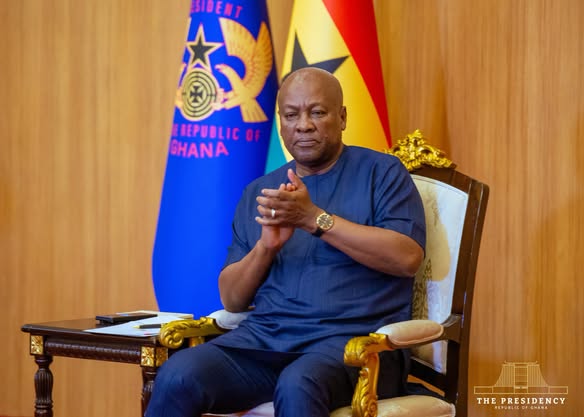
Ghana wants to end exports of unprocessed minerals by 2030, as the government accelerates efforts in local processing to ensure that more of the value generated by the country’s mineral resources stays within its borders.
Speaking at the second Mining in Motion Summit in Accra, President John Dramani Mahama said Ghana must move away from exporting raw mineral ores and build the capacity to process them locally.
The three-day summit, running from October 19-21 under the theme “One Continent, One Voice on Minerals,” is led by His Majesty Otumfuo Osei Tutu II, the Asantehene.
Delivering the welcome address under the theme “Accra Reset and Africa’s Mineral Sovereignty,” Mahama set 2030 as the target for ending exports of unprocessed bauxite, manganese, iron ore, lithium and other minerals.
“I’ve set a clear goal that by 2030, raw mineral ores should no longer leave our shores. Our bauxite, manganese, iron, lithium, and other minerals must support processing and industrial development here at home,” he said.
Mahama said the government would introduce the measures in phases, taking into account the legal requirements and processing needs associated with different minerals. The approach will also include clear implementation timelines.
“We will pursue a phased prohibition on exports of unprocessed ores, supported by the necessary legal measures, mineral-specific requirements, and transparent implementation timetables,” he said.
He added that Ghana had already banned exports of iron scrap and non-ferrous metals, signalling the government’s intention to strengthen controls on the export of certain raw materials.
“We have already imposed a ban on the export of iron scrap and non-ferrous metals. Investors must understand the processing obligations associated with access to our resources,” he said.
The proposed export restrictions are part of Ghana’s broader push to develop domestic mineral-processing capacity, attract investment in downstream industries and create employment beyond extraction.
Processing minerals locally can allow producing countries to capture a greater share of the value chain, although achieving this requires investment in infrastructure, reliable and affordable electricity, technical skills and processing facilities.