
Ghana powers up its grid to fuel gold mining growth
Energy reforms and infrastructure upgrades aim to secure reliable electricity for gold producers
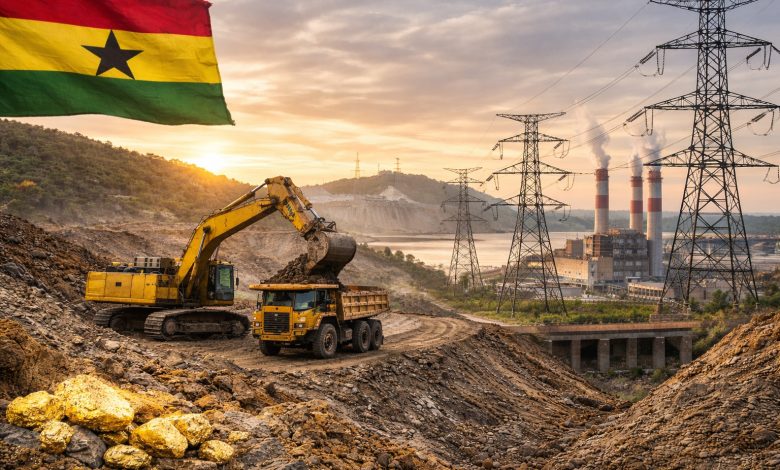
Ghana, Africa’s largest gold producer, is accelerating the modernisation of its electricity grid to ensure reliable and affordable power for mining companies, a move central to its broader strategy to maximise growth across the extractive sector.
Reliable energy supply has become a critical enabler as the country seeks to maintain its leadership position in gold production while attracting new investment.
In November 2025, the government announced a GH¢22 billion energy sector reform programme designed to clear legacy debts, stabilise long-term power contracts and strengthen the link between the energy and mining industries.
Of the total allocation, GH¢15.2 billion is earmarked to address accumulated shortfall payments in the energy sector, while GH¢4.8 billion will be used to settle legacy debts owed to independent power producers. These measures are expected to support uninterrupted electricity supply to mines and the wider economy.
A further GH¢2 billion will finance Phase 1 of the Rural Electricity Acceleration and Urban Intensification Initiative. This component is particularly important for the mining industry, as many gold operations are located in remote regions where grid reliability has historically been a challenge.
The reform package also underpins Ghana’s gas-to-power strategy. Plans include the construction of a 1,200 MW thermal power plant scheduled to begin in 2026.
The facility will utilise domestically sourced gas from the Offshore Cape Three Points fields and the Ghana Gas Processing Plant, a move expected to improve energy affordability while enhancing operational profitability for mining companies.
In parallel, state-owned Ghana Grid Company (GRIDCo), working with Turkey’s AKSA Enerji, is finalising the integration of the 141 MW AKSA Anwomaso power plant into the national grid. This addition will further strengthen electricity supply and system resilience.
Transmission infrastructure upgrades are another priority area. Ghana is rolling out approximately 200 new transformers across major urban centres to reinforce nationwide transmission capacity. At a regional level, GRIDCo and Ivory Coast’s state utility CI-ENERGIES launched a 330 kV double-circuit interconnection reinforcement project in mid-2025.
Funded by the World Bank, the project includes new high-capacity transmission lines and substations linking Dunkwa to Elubo in Ghana and extending to Bingerville in the Ivory Coast.
Once completed, the interconnection is expected to enable Ghana to draw additional electricity from the West African Power Pool, supporting growing power demand from the mining sector and other industries.
With Ghana’s mining sector attracting US$1.2 billion in foreign direct investment in 2024, efforts to secure reliable and resilient electricity supplies are set to further strengthen investor confidence and accelerate industry expansion.
African Mining Week provides a leading platform for engaging with mining opportunities across the continent. The event will be held alongside African Energy Week: Invest in African Energies 2026 from October 12–16 in Cape Town, bringing together stakeholders across mining, energy, and infrastructure value chains.