
From the pit to policy: Turning South Africa’s Africa Mining Vision assessment into community impact
How evidence-based governance, community implementation and just energy transition can reshape South Africea's mining sector
By Rejoice Ndlovu
As South Africa evaluates its mining sector through the lens of the Africa Mining Vision (AMV), the assessment process is doing more than measuring policy alignment. It is surfacing a central question: how can mining governance translate into real benefits for communities on the ground?
Adopted by the African Union in 2009, the Africa Mining Vision was designed to ensure that Africa’s mineral wealth drives sustainable development, industrialisation, and inclusive growth. Yet, despite the continent holding nearly a third of the world’s mineral reserves, poverty, inequality, and limited local value addition persist in many mining regions.
According to Mkhululi Ncube, Programme Officer at the African Minerals Development Centre (AMDC), the starting point for addressing these contradictions is evidence.
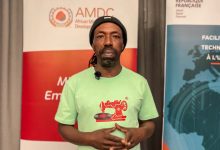
“The idea has always been for the mineral governance framework assessment to provide a diagnostic of how far a country is in implementing the Africa Mining Vision,” Ncube explains.
An Empirical Diagnostic and a Clear Starting Point
South Africa’s participation in the 2024–2025 AMDC national assessment cycle has provided a detailed, evidence-based picture of the country’s mining governance landscape. The assessment highlights areas of strength, such as diversification and beneficiation, while also revealing gaps that require urgent attention.
“For South Africa, this has given us an empirical diagnostic. We now know where to start, how to start, and what needs to be prioritised,” says Ncube.
One of the most notable gaps identified relates to artisanal and small-scale mining. While historically overshadowed by large-scale corporate mining, this segment is increasingly shaping socio-economic dynamics, particularly in poverty-stricken communities. Managing this reality requires governance approaches that are both inclusive and practical.
From Policy Commitments to Local Reality
For Claudius Chikozho, a social scientist with more than two decades of experience in African research and development and a member of the AMV assessment team, the challenge is not a lack of policy commitments but weak implementation.
“Based on this particular assessment, one of the things that should be done is to make sure that mining companies actually implement the strategies, especially the social and labour plan they submit when applying for a permit or licence,” Chikozho says.
Social and labour plans are intended to anchor mining operations in local economic development and job creation. However, without consistent monitoring and enforcement, their impact remains limited.
“There needs to be follow-up to ensure that the plans included in applications are implemented. Otherwise, it becomes a formality, and we don’t see local economic development taking place in reality,” he adds.
For communities living alongside mining operations, this gap between policy and practice can determine whether mining becomes a catalyst for development or a missed opportunity.
Why Multi-Stakeholder Engagement Matters
Validating assessment findings through multi-stakeholder workshops is therefore critical. As Ncube notes, the AMV deliberately positions mining within a broader development framework.
“The Africa Mining Vision is not a mining document. It is a development policy framework,” he says.
This approach reframes mining as part of a wider system that includes industrial linkages, social inclusion, environmental stewardship, and long-term economic planning.
“When we talk about development policy linked to equitable, resource-based industrialisation, we are talking about inclusivity. Women, youth, persons with disabilities, and addressing gender biases within and beyond the mineral sector,” Ncube adds.
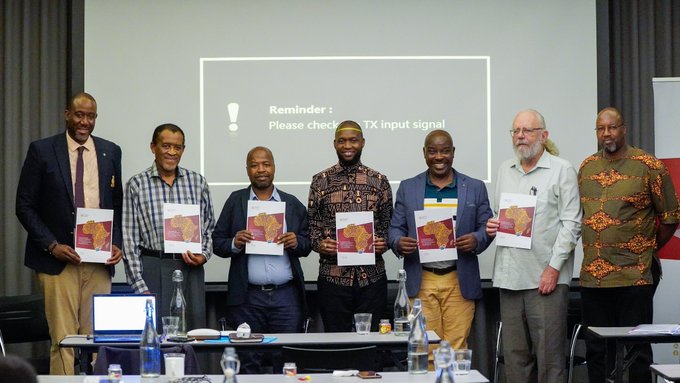
By bringing government, industry, researchers, and communities together, the assessment process aims to build shared ownership of both the challenges and the solutions.
Mining, Communities, and the Just Energy Transition
The assessment also intersects with one of South Africa’s most pressing challenges, the just energy transition. For Chikozho, this is where mining governance must look beyond extraction and short-term returns.
“A just energy transition is a much bigger topic that requires a lot of thinking. It is a relatively new area of focus for South Africa and other countries,” he explains.
As the country moves away from coal towards green minerals and renewable energy, the social consequences of transition cannot be ignored.
“Some municipalities can become ghost towns if coal mines or coal-fired power stations are closed without a plan to sustain the local economy,” Chikozho warns.
The justice component of the transition lies in ensuring that workers and communities are supported beyond coal.
“That justice part is about making sure communities and workers continue to have ways of sustaining their economic needs once we transition away from coal,” he says.
Encouragingly, some mining operations are already exploring innovative pathways.
“There are discussions around repurposing mines and coal-fired power stations into renewable energy projects, which can create new economic opportunities for workers already in the coal sector,” Chikozho notes.
Sustainability Beyond the Life of the Mine
At the heart of the Africa Mining Vision is the idea that mining must deliver benefits that outlast the resource itself. Ncube emphasises that sustainability must be embedded from the outset.
“Mining should not be viewed in isolation. It is part of a broader developmental approach aimed at improving communities and ensuring people are better off even after the resources are depleted,” he says.
South Africa’s integrated environmental governance framework provides a foundation for aligning mining activities with broader natural resource management and community development goals, but only if policies are consistently applied.
From Assessment to Action
As South Africa moves to validate and act on the findings of its Africa Mining Vision assessment, the message from experts involved in the process is clear. Diagnosis is only the first step.
Turning the Africa Mining Vision into lived reality will depend on implementation, accountability, and collaboration, ensuring that mineral wealth supports jobs, communities, and sustainable development long after the last tonne is extracted