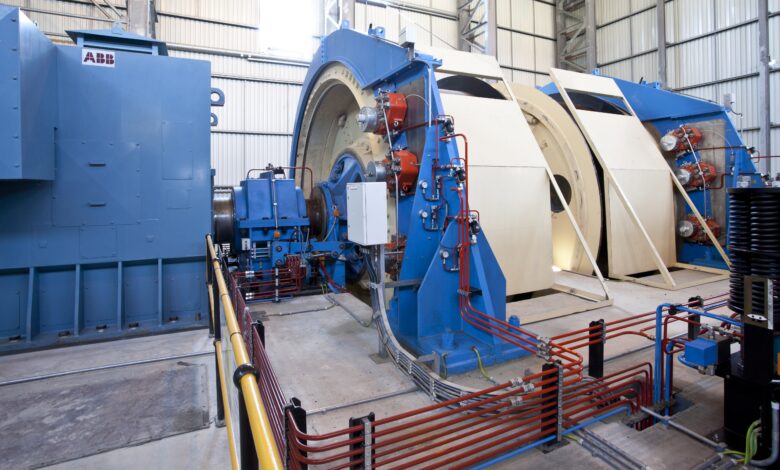
Although most South African mines have access to increasingly sophisticated automation and digital technologies, some operations still face challenges when it comes to connecting existing systems and investments into a longer-term transformation strategy.
Charl Marais, Local Division Manager for ABB South Africa’s Process Automation Process Industries division, says some mines remain caught between isolated automation systems because they lack a clear roadmap for how the operation should evolve.
“The biggest barrier is the lack of a clear, long-term roadmap for how the mine wants to transform. Technology is increasingly available, but without a clear direction, investments can remain focused on solving individual operational problems.
“The opportunity now is to move from optimizing individual processes to understanding the mine as an integrated operation.”

Marais says the objective should not be to replace every legacy system, but to understand what is already delivering value, where the limitations lie and how systems can progressively be connected.
When production, energy, maintenance and equipment data can move between systems, mines gain a more complete picture of how different parts of the operation affect one another. This can support better decisions while improving operational performance.
The business case for this transformation, however, still comes down to familiar mining measures: tonnes, uptime and cost.
According to Marais, the clearest returns from automation and digitalisation are currently being seen through reduced unplanned downtime, improved asset availability and utilisation, greater process productivity and better management of energy consumption.
“These are improvements that can be measured in uptime, tonnes and operating costs. The industry needs to be careful not to pursue technology for its own sake.
“There is understandably a lot of interest in AI, digital twins and autonomy, but these technologies need to address a specific operational requirement and have a measurable outcome,” he says.

For mines operating infrastructure that is decades old, this does not necessarily mean embarking on an expensive replacement programme. Marais advocates a phased approach, beginning with an assessment of the existing automation architecture.
Mines need to identify which systems are limiting performance, where connectivity and data gaps exist and which improvements could deliver the greatest value with the least disruption. Changes can then be introduced during planned maintenance and upgrade windows while production continues.
This approach also allows mines to protect existing investments while gradually introducing new capabilities.
Safety and energy efficiency provide another area where connected automation could have a direct operational impact, particularly in underground mining. Marais points to ABB Ability Ventilation Optimizer, which can be integrated into ABB Ability System 800xA.
Instead of ventilating the entire operation at the same level, the system uses real-time information on people, equipment and air quality to regulate ventilation according to where and when it is required.
For Sub-Saharan Africa, Marais sees the region’s automation journey as a combination of adopting proven technologies and developing solutions around distinctly African operating conditions.
“The difference between being a technology adopter and a technology leader will come down to how we approach that opportunity. We need to invest in the right digital infrastructure, develop the skills to operate and manage these technologies, and have longer-term automation roadmaps.
“Most importantly, we need to move beyond implementing individual technologies and focus on how they work together across the operation.”
He adds that the opportunity for African mining lies not only in adopting technologies developed elsewhere, but in applying them to the region’s own challenges.
If mines can build the necessary digital infrastructure, skills and long-term strategies, Marais argues, Africa can move from implementing individual technologies towards shaping how connected and integrated mining operations develop in the future.