
DRC positions itself as a strategic force in the global energy transition
Mining reforms, battery ambitions and global partnerships place the DRC at the centre of the new mineral economy
The Democratic Republic of Congo is stepping confidently onto the global stage as a strategic partner in the energy transition and an increasingly attractive destination for investment in critical minerals.
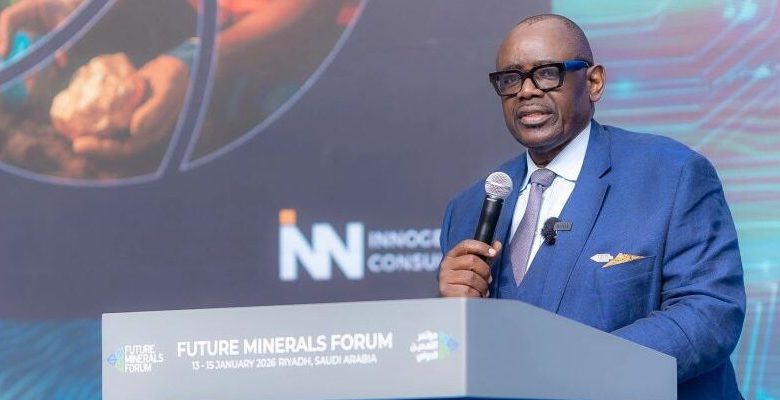
This message was clearly delivered by Minister of Mines Louis Watum during the DRC Country Showcase at the Future Minerals Forum in Riyadh, where he outlined the country’s vision for value driven, partnership-based growth in the new mineral economy.
Addressing global investors and policymakers, Watum spoke from Riyadh, which he described as “a city of vision and industrial strategy,” and emphasised the DRC’s readiness to play a central role in powering the world’s clean energy future.
He acknowledged Saudi Arabia’s leadership in the new mineral economy and invited the Kingdom to collaborate in creating an investment corridor that connects Saudi capital with Congolese mineral resources.

“For too long, the world viewed the DRC through a pit-to-port lens, exporting our minerals and jobs, while leaving us with infrastructure deficits,” he said, adding that “that era is over.”
According to the Minister, the DRC is moving beyond being a supplier of raw materials and is positioning itself as a hub for in-country refining, processing, and industrial transformation.
The DRC’s importance to the global energy transition is underpinned by its mineral endowment. Watum highlighted that the country is a global leader in copper and cobalt production, both of which are essential to electric vehicles, renewable energy systems, and battery storage.
He said the national ambition is to transform the DRC into a global hub for electric vehicle batteries and renewable technologies.
To support this vision, the government is advancing a range of reforms aimed at strengthening transparency and investor confidence. These include the digitisation of the mining cadastre, upgrades to laboratories and alignment with the Extractive Industries Transparency Initiative and other international standards. Together, these measures are designed to create a predictable and transparent investment climate.
Addressing concerns around investment risk, Watum challenged common perceptions, reiterating comments he made previously on a panel.
“Risk often just means doing your homework.”
He explained that investors who take the time to understand the regulatory framework and how the administration operates often find these structures to be their “best allies.”
“Laws and regulations protect your investments, protect your assets, give you stability in fiscal regime and orders,” he said.
“The administration gives you all the permitting you need for you to deploy capital and technology and execute your business plan with military effectiveness.”
Watum pointed to the success of companies that have already adopted this approach. He cited Ivanhoe Mines, Barrick, and Glencore, noting that together they represent more than $45 billion in investment in the DRC and continue to seek further opportunities.
According to the Minister, companies that respect the law, work closely with local communities, and invest in skills development are achieving both stability and profitability.
He also highlighted the DRC’s strong demographic advantage, with 70 percent of the population under the age of 30 and a mean age of just 18. This youthful population is seen as a key driver of long-term growth.
In addition, Watum announced the development of special economic zones dedicated to battery minerals processing, aimed at lowering investment risk and improving returns.
“In this area of mineral competition, we will not be a battleground,” Watum said. “We want partners, not just buyers.” He added that the DRC’s value proposition extends beyond mining alone, offering investors “a global supply chain solution.”
Concluding his address, Watum urged investors to move decisively. He said investing in the DRC means helping to lead the global energy transition, securing future supply chains, and participating in the country’s growth story.
“We are ambitious. We are open. We are ready,” he said. “Partner with us, secure your place in the new energy era, and begin your investment journey today in the DRC.”