
AI-enabled ore inclusion sorting
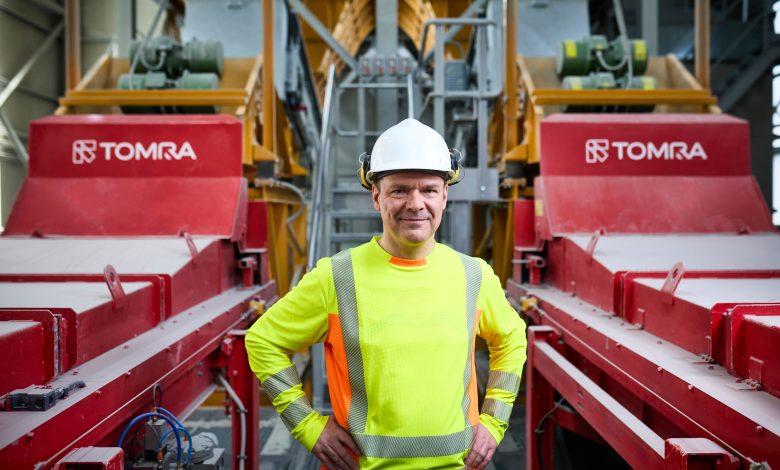
A few months ago, TOMRA unveiled CONTAIN™ to the global mining community’s acclaim. The company regards the African mining sector as a strategic growth market and is committed to helping its clients on the continent derive more value from the recovery (classification) of inclusion-type mineral ore.
What makes the entry of CONTAIN™ significant is the current development within the continent’s mining sector, which mirrors trends in other regions. The African mining industry faces the challenge of depleting high-grade ore at shallow levels, unlike in the past.
In an interview with Mining Business Africa (MBA), Stefan Jürgensen, responsible for developing and integrating software and machine learning solutions for TOMRA Mining, explains how CONTAIN™ will enhance efficiency by complementing the company’s X-ray transmission XRT Ore Sorting to recover more valuable ore that would otherwise be condemned to tailings waste.
MBA: Why are inclusion-type ores difficult to classify with traditional sorting technologies? How does this impact mining operations?

SJ: Inclusion-type ores present a unique challenge for traditional sorting systems because their valuable mineral content is often embedded within host rock structures that appear visually similar in X-ray imaging. Differentiating between benign inhomogeneities and economically valuable inclusions requires a level of pattern recognition that conventional rule-based systems struggle to achieve.
This limitation has historically constrained the application of sensor-based sorting to high-grade ores or narrowly defined grain size ranges. As a result, valuable material is either lost to waste or diluted in the product stream, directly impacting recovery rates, concentrate quality, and overall profitability.
TOMRA has addressed this challenge by developing advanced XRT Ore Sorting techniques, and now, with the introduction of CONTAIN™, we are redefining what is possible in the classification of complex ores.
MBA: CONTAIN™ sorts based on what “it understands, not sees,” improving the classification of inclusion-type ores. Please elaborate, particularly on the role of AI and deep learning.
SJ: Traditional sorting systems rely on predefined rules to interpret X-ray images, but the variability of mineralisation across ore types makes this approach inherently limited. CONTAIN™ uses deep learning to overcome this barrier. Trained on tens of thousands of ore samples, it has developed a statistical understanding of how inclusion-type ores manifest in X-ray imagery – something that would be virtually impossible to encode manually.
Rather than applying rigid logic, CONTAIN™ identifies subtle visual patterns and assigns probability scores to each particle based on its likelihood of containing valuable inclusions. This enables highly accurate, real-time classification – even for ores with complex or low-grade mineralisations. It represents a fundamental shift from deterministic sorting to intelligent, data-driven decision-making.
MBA: How is CONTAIN™ relevant to the current challenges (or obligations) facing the mining sector?
SJ: The mining industry is under increasing pressure to maintain profitability amid declining head grades, rising operational costs, and growing environmental scrutiny. Many operations have already optimised their existing processes, leaving little room for further gains without technological innovation.
CONTAIN™ directly addresses this challenge. By enabling the accurate recovery of valuable inclusions that would otherwise go undetected, it unlocks new efficiencies in ore processing. This not only improves yield and reduces waste but also extends the economic viability of deposits previously considered marginal. In short, CONTAIN™ empowers mining operations to do more with less – an imperative in today’s market.
MBA: Briefly illustrate how CONTAIN™ enables real-time classification.
SJ: CONTAIN™ is embedded within TOMRA’s COM XRT sorters and operates at industrial scale. As each particle passes through the X-ray beam, CONTAIN™ analyses the image in milliseconds, classifies the ore content, and informs the ejection decision in real time.
This data is not only used for immediate sorting but is also aggregated and made available to SCADA systems and TOMRA Insight. This provides operators with a continuous, high-resolution view of material composition, enabling dynamic process optimisation across the plant.
MBA: Beyond accuracy, time is critical. Does CONTAIN™ only analyse static ore, or can it accurately process moving ore?
SJ: CONTAIN™ is not a standalone analysis tool; it is an integral component of TOMRA’s COM XRT sorting system. It is purpose-built for high-throughput environments and processes moving ore streams with pinpoint accuracy. The system maintains performance even under dense, fast-paced conditions, making it ideal for real-world mining operations where speed and consistency are critical.
MBA: CONTAIN™ will support TOMRA’s new sorting equipment. Can it also be integrated into existing systems? Please clarify this aspect.
SJ: While CONTAIN™ is not a default feature on all new sorters, TOMRA has designed its latest COM XRT models to fully support this advanced AI capability. This ensures that customers who require enhanced classification for inclusion-type ores can easily activate CONTAIN™ without hardware replacement.
For many existing systems, retrofitting is also possible. Most previous-generation COM XRT sorters can be upgraded with the necessary deep learning hardware to run both OBTAIN™ and CONTAIN™, unlocking significant performance gains.
We encourage customers to consult with their TOMRA Sales or Service representative to determine the best upgrade path for their specific application and to maximise the potential of their sorting equipment.
MBA: Is CONTAIN™ interoperable with competitor sorting brands (i.e., brand-agnostic)? If so, under what conditions?
SJ: No. CONTAIN™ is a proprietary deep learning solution developed specifically for TOMRA’s COM XRT sorting platform. It is deeply integrated into our hardware and software ecosystem and is not compatible with third-party sorting systems.
MBA: What has been the industry’s response so far, particularly from TOMRA’s current customers?
SJ: The response has been overwhelmingly positive. At Wolfram Bergbau in Austria, for example, CONTAIN™ delivered immediate and measurable improvements: an 8% increase in plant throughput, a 33% reduction in ore mineral losses, and the lowest tails grade in the operation’s history.
In several cases, customers have opted to purchase CONTAIN™ after just a few hours of trial operation, citing performance levels previously thought unattainable at industrial throughputs. The ability to detect deeply embedded inclusions with such precision is seen as a game-changer.
MBA: What else can you share with mining operations in Africa about purchasing TOMRA’s sorting machines with CONTAIN™?
SJ: Africa’s mining sector is rich in complex ore bodies, many of which contain inclusion-type mineralisations that have historically been difficult to process efficiently. With CONTAIN™, TOMRA offers a transformative solution that expands the range of viable deposits and improves the economics of ore recovery.
By combining decades of sensor-based sorting expertise with cutting-edge AI, TOMRA is not just enhancing performance – we are redefining the boundaries of what is possible in mineral processing. For mining operations seeking to future-proof their plants and maximise resource efficiency, CONTAIN™ represents a strategic investment in long-term competitiveness.