
Natural gas key to Africa’s industrial future and energy transition, says Mantshe
South Africa pushes for gas development to secure energy supply, support industrialisation and power a realistic transition to lower-carbon energy.
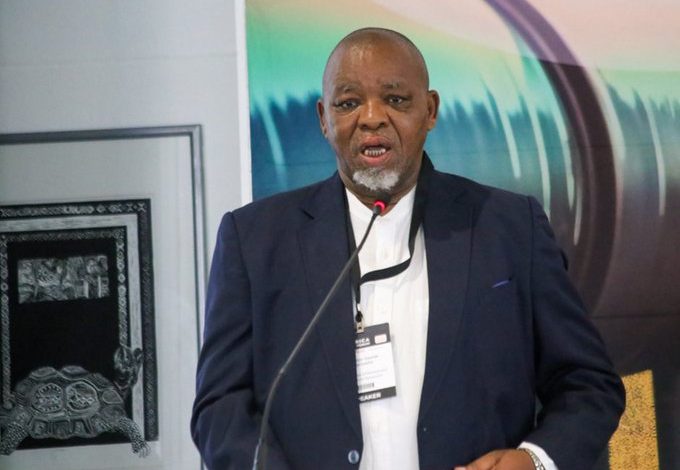
Natural gas development will play a critical role in Africa’s path toward industrialisation and a more balanced energy transition, according to South Africa’s Minister of Mineral and Petroleum Resources, Gwede Mantashe.
According to the International Energy Agency, around 600 million Africans still lack access to electricity. Mantashe described this as not only a social challenge but also a major barrier to economic development.
“Without reliable energy, there can be no manufacturing base, no beneficiation, and no meaningful job creation.
“Addressing this conundrum requires the African continent to redefine its narrative from one of energy deficit to one of proactive industrial enablement. Natural gas must play a central role in that repositioning.

“Africa accounts for 7% of known global gas reserves and contributes less than 4% of global greenhouse gas emissions. In that context, the strategic utilisation of our domestic gas resources is not speculative; it is foundational to a just and realistic energy transition that recognises our socio-economic realities,” Mantashe said.
The minister noted that energy experts increasingly regard natural gas as the most effective transition fuel for Africa as countries move toward cleaner energy systems while still supporting industrial growth.
“It offers reliable, high-density baseload power and materially lower emissions. It is the bridge that allows us to industrialise while reducing carbon intensity.
“This year’s Africa Gas Forum presents a vital platform for African nations to examine our gas potential and determine how it can be catalysed to power industrial growth and economic transformation across the continent,” he said.
South Africa’s Gas Supply Challenges
Mantashe warned that South Africa is approaching a critical point in its gas supply outlook. Production from Mozambique’s Pande Gas Field and Temane Gas Field, which have supplied roughly 90% of South Africa’s gas for more than two decades, is now beginning to decline.
“This is not merely an industry concern; it is a national economic risk. We cannot allow what happened in the electricity sector to be replicated in the gas sector. Accordingly, we are moving with urgency to ensure security of supply.”
To avoid a supply shortfall, the government is pursuing a two-pronged strategy involving short-term imports and accelerated domestic gas development.
Mantashe acknowledged that Sasol has proposed Methane-Rich Gas (MRG) as a bridging solution between 2028 and 2030, providing additional supply while South Africa completes its liquefied natural gas import infrastructure.
“Our strategic LNG hubs are progressing toward implementation. However, the sustainable long-term solution is domestic production.”
Expanding Exploration and Domestic Gas Projects
South Africa is also intensifying exploration efforts along its coastline and inland basins. Offshore exploration activity is continuing despite opposition from environmental groups.
Mantashe highlighted the potential of the Orange Basin, which has gained global attention following major discoveries in neighbouring Namibia. Energy companies including TotalEnergies and Shell are advancing exploration programmes in the region.
Further south, the Outeniqua Basin is also attracting development interest. Africa Energy Corp is accelerating progress on the Brulpadda and Luiperd gas discoveries.
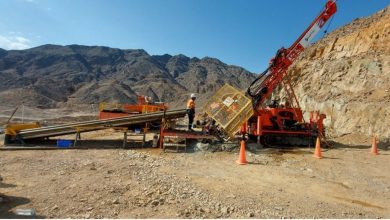
Onshore developments are also gathering pace. The Virginia Gas Project in the Free State has reported a 60% increase in gas throughput since 2025 and maintains an 80% drilling success rate.
Additional progress is being made in coalbed methane developments led by Thungela Resources in Lephalale and by Kinetiko Energy in Mpumalanga, both of which are advancing toward production after successful drilling campaigns.
Meanwhile, a seismic survey conducted in the Central Karoo has improved geological understanding of the basin’s shale gas potential.
“Once the requisite regulations are promulgated, we stand ready to lift the moratorium to unlock the full potential of our basins,” Mantashe said.
Policy Reforms to Support Investment
Supporting these developments are legislative reforms aimed at strengthening regulatory certainty for investors. Central to this effort is the Upstream Petroleum Resources Development Act, which separates petroleum regulation from mining legislation and streamlines exploration and production licensing.
The legislation also introduces a 20% carried interest for the state, ensuring national participation in the value generated from petroleum resources.
Complementing this reform is the proposed South African National Petroleum Company Bill, which aims to establish a unified state-owned company to manage strategic petroleum interests across the petroleum value chain.
Mantashe said these reforms signal the end of prolonged regulatory uncertainty in the sector.
“To investors and partners in this hall, the regulatory framework is stabilising, infrastructure roll-out is underway, and demand fundamentals are policy anchored.
“The next frontier lies in strengthening midstream connectivity and downstream market certainty to convert gas molecules into industrial output, employment and economic resilience.
“Let us build a foundation for prosperity rooted in our own resources. Let us pursue energy security with pragmatism. And let us drill responsibly and strategically for the benefit of South Africa and the African continent,” Mantashe said.